Post 8 min read
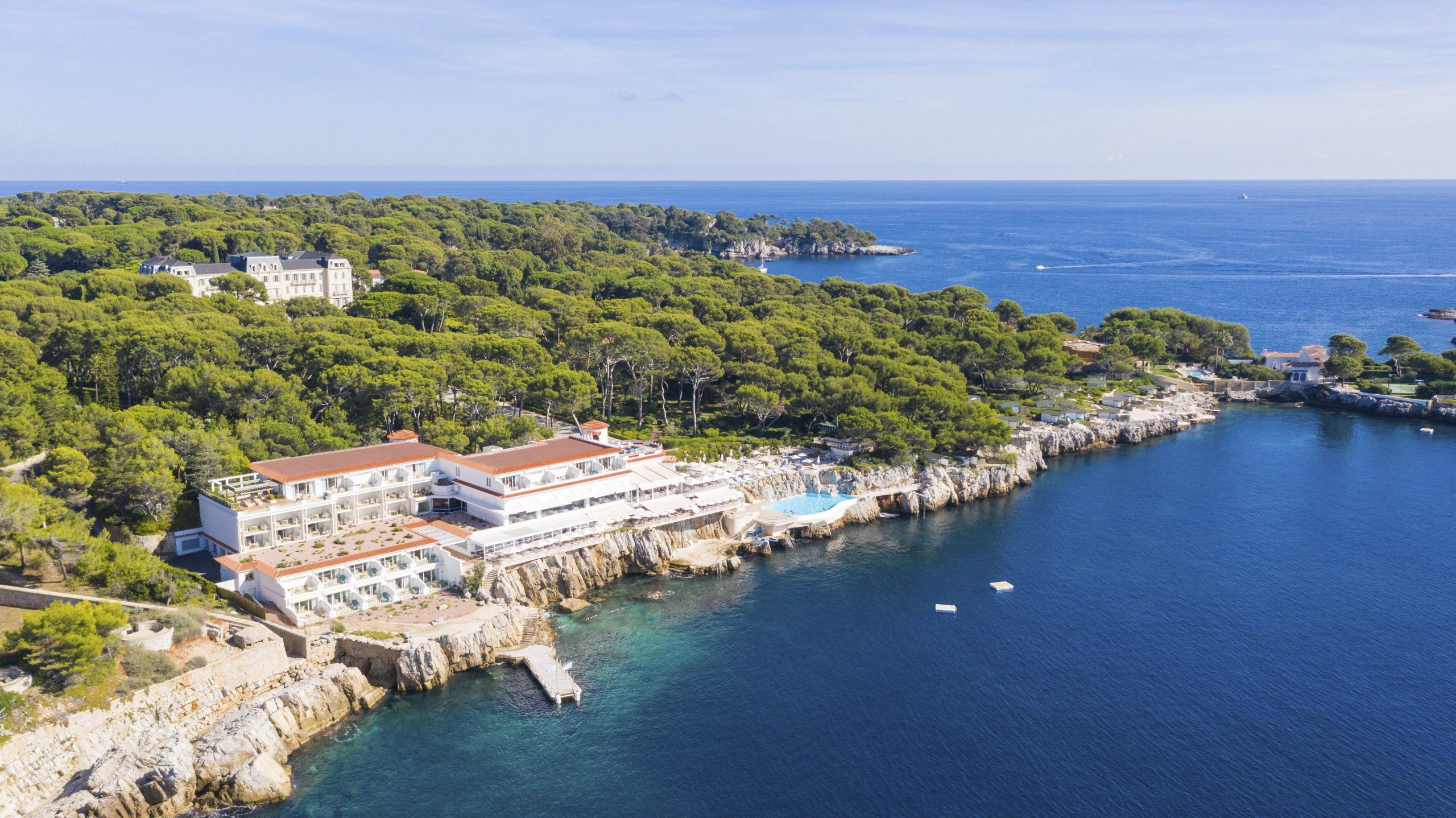
The Oetker family has owned Hôtel du Cap-Eden-Roc since 1969. According to the French business magazine Challenges, it has now paid more than €155 million for the estate next door. It covers nine hectares and five houses, with direct sea access on the Baie des Milliardaires, or Billionaires’ Bay.
The sellers are the heirs of John Latsis, the Greek shipowner whose fleet ranked among the largest under Greek ownership in the 1990s. He died in 2003. Challenges describes the sale as one of the largest transactions on the Côte d’Azur in recent years.
The price is remarkable. The identity of the buyer may matter even more. The family behind the Riviera’s most celebrated hotel now holds a far larger share of the peninsula around it.
The estate sits immediately beside the hotel at the southern tip of the Cap. Divided across the land alone, the reported price works out at more than €17 million per hectare. That is upwards of €1,700 for every square metre of garden, pine and rock.
The Transaction at a Glance
Neither the Oetker group nor the Latsis heirs have published terms or plans. The trade title La Tribune de l’Hôtellerie, relaying the report, notes that no extension project has been officially confirmed.
The hotel’s own park covers about nine hectares. On paper, the purchase roughly doubles the ground the family holds at the end of the peninsula. A holding of that size would be close to impossible to assemble from scratch on Cap d’Antibes today.
The first logic is defensive. A palace hotel sells calm, uninterrupted views and the absence of neighbours it did not choose. Owning the adjacent estate removes the risk of construction, subdivision or a new owner with very different ideas about the shoreline.
The second logic is commercial, and the hotel has done something similar before. In 2019 it bought Villa Sainte-Anne, an Italian Renaissance-style house a few steps from the main building. Founder Antoine Sella had owned it from 1916 to 1921. After a full renovation, it opened as a five-bedroom private villa, according to the hotel’s announcement.
Today the hotel rents four villas alongside 111 rooms and suites, per its official site. These villas serve families and long-staying guests who want palace service with the privacy of a house of their own.
The same pattern runs along the coast. On Saint-Jean-Cap-Ferrat, the Grand-Hôtel du Cap-Ferrat opened two historic villas, Villa Beauchamp and Villa Clair-Soleil, bringing its villa collection to three.
Five houses on nine hectares beside the Eden-Roc fit that model with unusual precision.
No plan has been announced, so any reading remains a projection. Several uses suggest themselves.
The most direct is more villas. The five existing houses could join the hotel’s private-residence collection, booked like a suite but lived in like a home. Palace staff, the seawater pool and the restaurants would sit a short walk away. If all five were added, the hotel would more than double its most exclusive accommodation, which today amounts to four villas.
The estate could also be given over to experiences rather than rooms. Nine hectares of gardens with their own sea access suit private dinners, celebrations and wellness programmes. They could even provide a second, more secluded waterfront away from the Eden-Roc pavilion.
The family may equally change nothing and keep the estate as a green buffer and a long-term holding. Any change of use would in any case have to clear French planning rules, which are demanding on this coastline.
The story starts with Villa Soleil, a Napoleon III mansion built by Hippolyte de Villemessant, founder of Le Figaro, as a retreat for writers. It opened in 1870. The Italian hotelier Antoine Sella reopened it as the Grand Hôtel du Cap in 1889. In 1914 he added the Eden-Roc pavilion at the water’s edge.
After the First World War, Sella cut a seawater pool into the rocks below the pavilion. The Riviera was still a winter resort at the time. Then, in the 1920s, the American couple Gerald and Sara Murphy took the hotel for an entire summer, and their circle followed.
Hemingway came, and so did F. Scott Fitzgerald, who turned the hotel into the Hôtel des Étrangers of Tender Is the Night. That American thread still shapes the coast, as our feature on the American return to the Côte d’Azur explores.
Later guests included Marlene Dietrich, Winston Churchill, a 21-year-old John F. Kennedy, and Elizabeth Taylor with Richard Burton. Marc Chagall sketched in one of the cabanas by the sea. Some habits outlived their era by decades: until 2006, the hotel accepted only cash or a bank transfer sent ahead of arrival.
Atout France lists Hôtel du Cap-Eden-Roc among only 33 hotels in France holding the Palace distinction. The Michelin Guide awards it three Michelin Keys, the guide’s highest hotel distinction, and its Louroc restaurant holds a Michelin star.
Rooms and suites are spread between the original Villa Soleil, the Eden-Roc Pavilion and the Les Deux Fontaines residence. Guests also have a Dior Spa, four restaurants and the famous seawater pool, still cut into the rock and facing the Lérins Islands.
The hotel welcomes guests from mid-April to mid-October and closes for the rest of the year. Within that window it hosts the Cannes Film Festival crowd, including the amfAR gala and auction, held at the hotel for roughly two decades. Availability is scarce by design.
While many Riviera hotels court social media, the Cap has moved the other way. Organised photo shoots now require prior approval, professional cameras are banned and phone use is restricted around the pool, MisterTravel reports. The rules appear on a card in every room, and staff restate them at check-in.
Guests may still take their own pictures, and the concierge can arrange a partner photographer, according to La Revue des Hôtels. Hotel director Sophie Volant has explained the change through the regulars. They treat the property as their summer residence and want it to stay private. Buying the estate next door carries that same instinct beyond the hotel gates.
Rudolf August Oetker and his wife Maja first saw the house from the sea in 1964 and bought it five years later. The family’s group, renamed Oetker Hotels in 2025, now runs properties from Le Bristol in Paris to The Vineta in Palm Beach. It still dates its own hospitality history to Villa Soleil.
Few hotel owners anywhere work on such long cycles. A nine-hectare purchase at the tip of the Cap is entirely consistent with that horizon.
Land at the southern tip of Cap d’Antibes is finite and almost never offered. With their park and the former Latsis estate combined, the hotel’s owners now hold close to 18 hectares there. For guests, that means a wider buffer of pines and silence. For buyers hoping to secure a waterfront estate on this stretch of coast, it means one fewer property in circulation.
Transactions at this level rarely touch a public listing. The Latsis sale surfaced through a press report rather than a brochure. That is typical of how trophy assets trade off-market across the Riviera and Monaco.
It also shows who competes for the coast’s legendary estates. Private families, family offices and long-horizon hotel groups all chase a fixed supply, as the histories of Villa Leopolda and Villa Les Cèdres illustrate. Capital from the Gulf adds another serious bidder, a shift we examine in how Gulf capital is reshaping the French Riviera.
At more than €17 million per hectare, the price becomes a reference point that owners on the Cap will cite for years. It also measures something sellers there rarely get to test: what sea access beside an icon is worth to the one buyer who needs it most.
The German Oetker family, since 1969. The hotel is run by the family’s hospitality group, Oetker Hotels, previously known as Oetker Collection.
According to Challenges, the Oetker group bought the nine-hectare estate from the heirs of John Latsis for more than €155 million.
No plans have been announced, and no extension of the hotel has been officially confirmed. Additional bookable villas, new guest spaces or a simple long-term holding are all plausible.
Seasonally, from mid-April to mid-October. The hotel closes for roughly six months each winter.
Personal photos are allowed. Organised shoots need prior approval from the hotel, and professional cameras are not permitted.
Private Advisory
The Riviera’s finest estates change hands away from public view.
Baldo Realty Group advises private clients and family offices on off-market villas and estates across Monaco and the French Riviera, from Cap d’Antibes to Cap-Ferrat. Our team works with complete discretion from first conversation to completion.
Sources