Post 9 min read
The Château de l’Horizon sits on the shore of the Golfe-Juan at Vallauris, a Modernist villa built in 1932 by the American architect Barry Dierks for the actress Maxine Elliott. Winston Churchill was a regular guest through the 1930s. Prince Aly Khan bought it in 1948 and married Rita Hayworth there the following year. The Saudi royal family acquired it in 1979, and for the past four decades the villa has served as King Salman’s summer residence on the Côte d’Azur, its kilometre of coastline accessed by a tunnel beneath the railway. One house, four eras, each reflecting who holds the wealth on this coast and in what proportions.
For a quarter-century, the largest of those proportions belonged to Russia. That chapter is now closed. Middle Eastern buyers on the French Riviera are filling the space Russian capital left behind, but they are doing so in a way that looks nothing like what came before.
Russian money arrived on the Côte d’Azur shortly after the fall of the Soviet Union, drawn by memories of the pre-revolutionary aristocracy that had wintered here a century earlier. By the 2000s, buyers from former Soviet states were, in the words of the president of Côte d’Azur Sotheby’s International Realty, “driving the real estate market on all levels.” Cap Ferrat, Cap d’Antibes, Saint-Tropez and the so-called Bay of Billionaires between Antibes and Villefranche all carried significant Russian-held inventory, and prices at the top of the market reflected it.
Two rounds of sanctions dismantled that presence. The first, following the annexation of Crimea in 2014, slowed buying to a near-halt. By 2018, the same Sotheby’s executive told the press that the single biggest impact on pricing had been the absence of Russian purchasers. The second round, after February 2022, went further: France froze over half a billion euros in Russian-owned real estate, covering roughly thirty properties, and extended the net to families and associates of sanctioned individuals. An estimated two thousand or more villas on the Riviera remain in Russian hands, many now unsellable at the prices their owners paid, because the buyers willing to pay those prices were other Russians who are themselves no longer in the market. The pandemic added an 80 per cent drop in Russian tourism to the region on top of the sanctions effect. What was once the dominant force in Riviera luxury real estate is now, for practical purposes, frozen in place.
The capital arriving from the Gulf does not resemble the money it is replacing. Henley & Partners’ 2026 research is the most useful frame available, because it measures behaviour across borders. The United Arab Emirates has ranked as the firm’s second-largest address country for outbound applications since 2023, yet the applicants filing from Emirati addresses hold around thirty different nationalities. The Gulf works as a gathering point for internationally mobile wealth. Henley describes families approaching Europe “through a diversification and optionality lens”, keeping the business and tax base in the Gulf while adding residence rights, education options and assets across multiple continents. A house on the Côte d’Azur belongs to that additive logic: one holding inside a portfolio of jurisdictions, which is why the buyer is seldom in a hurry and almost never leveraged.
Lars Christiaanse, group director of sales at Caudwell, the developer restoring Le Provençal on Cap d’Antibes, told The National that 40 per cent of enquiries on large residences now come from the Middle East, up from 20 per cent at the start of 2024. The families are led by high-net-worth households from the UAE, Saudi Arabia and Kuwait. Two profiles recur: families with school-age children where the parents are in their thirties and forties, and couples who stopped working early, in their late fifties and early sixties. The working budget runs from roughly 8 million to 80 million euros. Christiaanse put the international share of buyers above the 10 million euro mark at around 70 per cent. These are estimates from inside the trade, and they carry the limits of any figure supplied by a party with something to sell, but they match what the market shows.
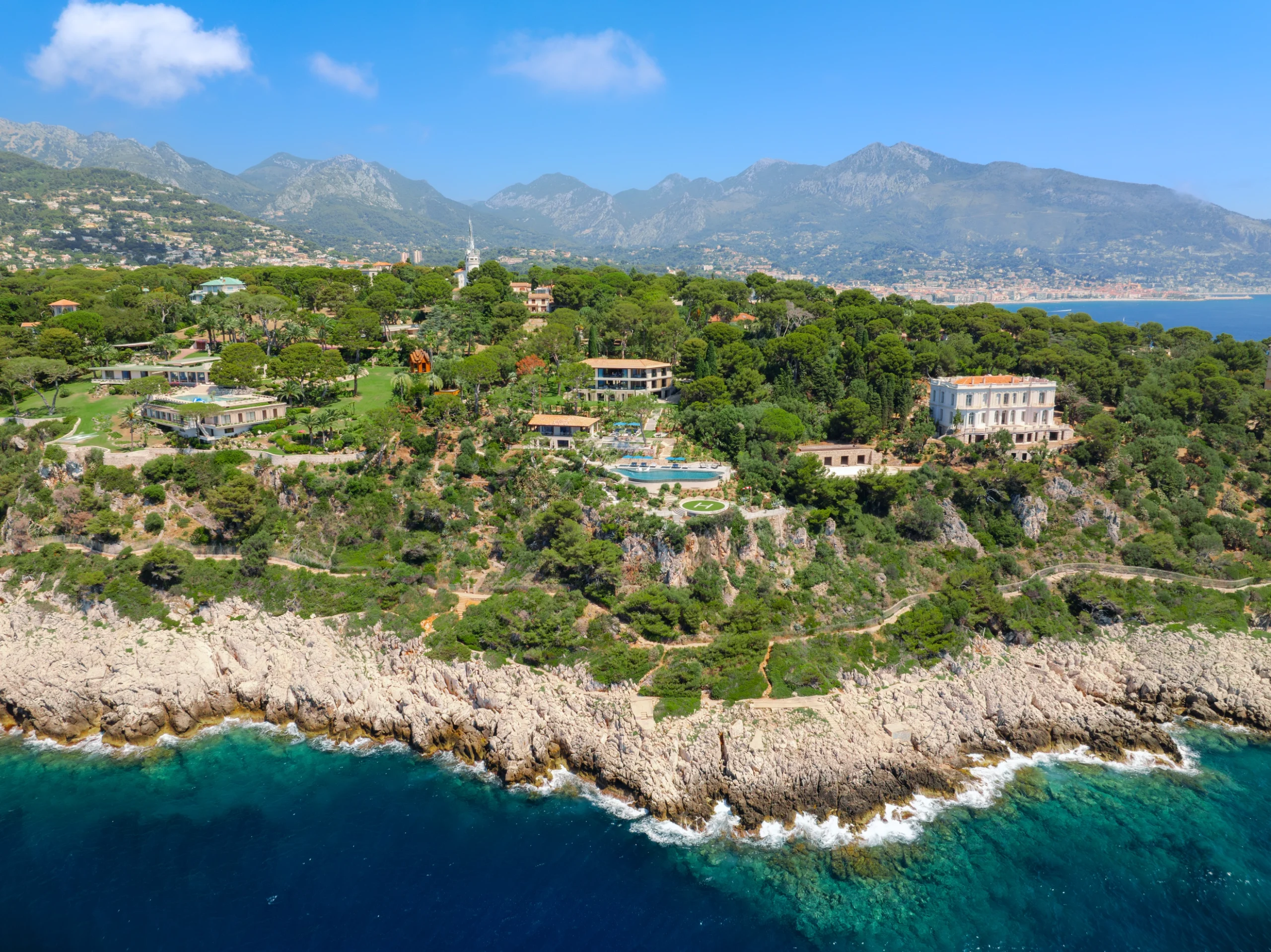
Demand concentrates on a familiar set of addresses running from east to west along the coast. Saint-Jean-Cap-Ferrat remains the most prestigious by common consent, with villas starting around twenty million euros and passing two hundred million at the very top. Cap d’Antibes and the Bay of Billionaires between Antibes and Villefranche carry names that have appeared on sanctions lists and society pages in roughly equal measure. Super Cannes and La Californie above Cannes offer secured private estates with hotel-grade services. Beaulieu-sur-Mer and Villefranche-sur-Mer fill the stretch between Cap Ferrat and Monaco. Further west, Mougins and the Cannes backcountry appeal to families who want proximity to Cannes without the density.
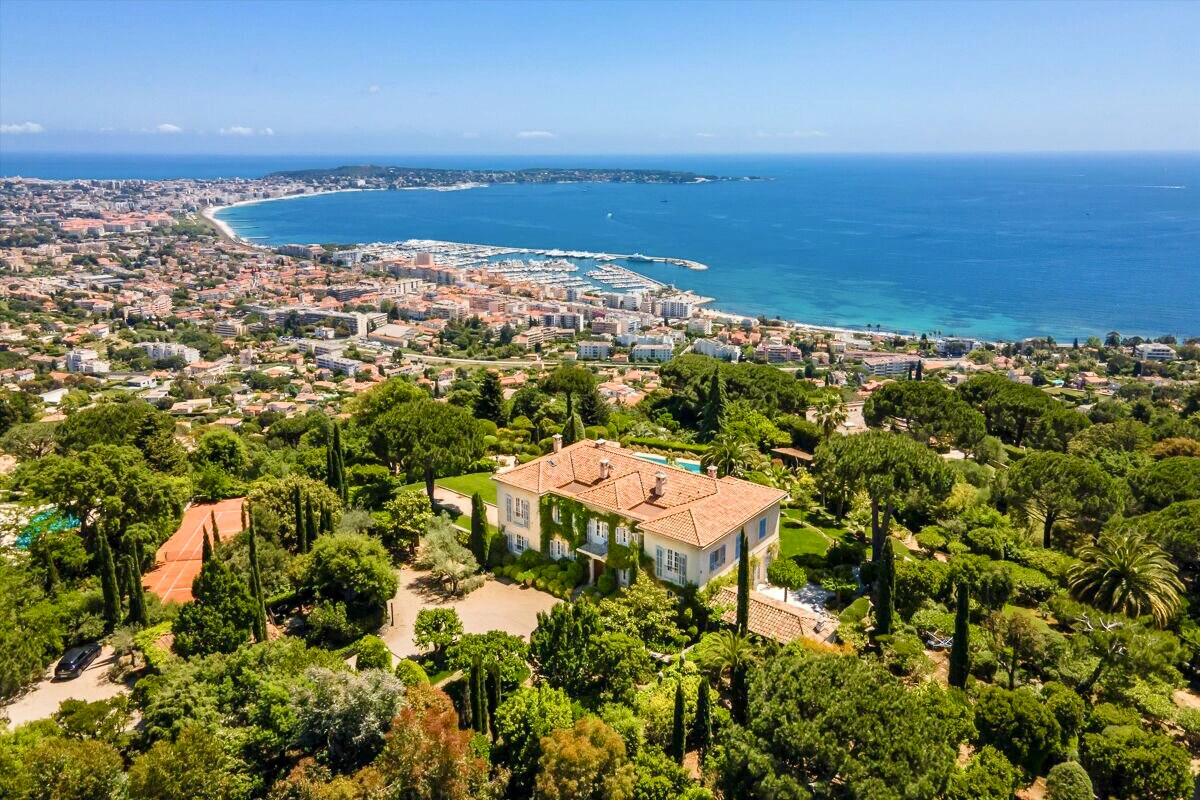
The Côte d’Azur has topped Savills’ index of prime second-home locations, and inside it each of the caps holds the scarcest ground of all. These are peninsulas with a finite number of waterfront parcels, divided a century ago and barely moved since. New supply is close to zero, and what exists is almost always a resale of something built in a different era. For families who also hold an address in Monaco, the villa answers a different question from the one the Principality apartment answers. Monaco supplies density, banking, schooling and a walkable radius. The villa supplies land, a pool, staff quarters and a degree of separation between public and private life that two square kilometres will not produce. The two assets divide the calendar between them, and the searches frequently run in parallel with the same advisers reading both files.
The specification is consistent across the corridor. Bedrooms in quantity, terraces deep enough to dine on, unobstructed sea views, and grounds that can absorb a full household. Staff accommodation carries more weight here than it does for most buyers, because the household arriving with a Gulf family is larger and stays longer. Separate quarters are a condition of the family’s own privacy, and a house without them tends to be eliminated in the first week.
One feature of this buyer changes the economics of the house and is routinely missed. Gulf families occupy the Riviera in July and August precisely because those are the months the Gulf becomes uninhabitable. That is the inverse of the Northern European owner, who wants May and September and is content to let the property through the peak. The Gulf buyer needs the peak. Rental income that offsets running costs for other owners is simply unavailable here. Staffing runs at full establishment for three or four months, and the house is maintained all year for an occupancy that is short, dense and immovable. Berths on this coast are allocated by port authorities and concession holders, and a berth does not transfer with the house. That is a separate negotiation, and often a longer one than the purchase itself.
The most expensive assumption a buyer can bring to this coast is that a disappointing house can be demolished and replaced with a better one. French coastal planning makes that improbable and frequently impossible. The Loi Littoral of 3 January 1986 governs roughly twelve hundred coastal communes, including every address mentioned in this article, and it applies on top of the ordinary local plan.
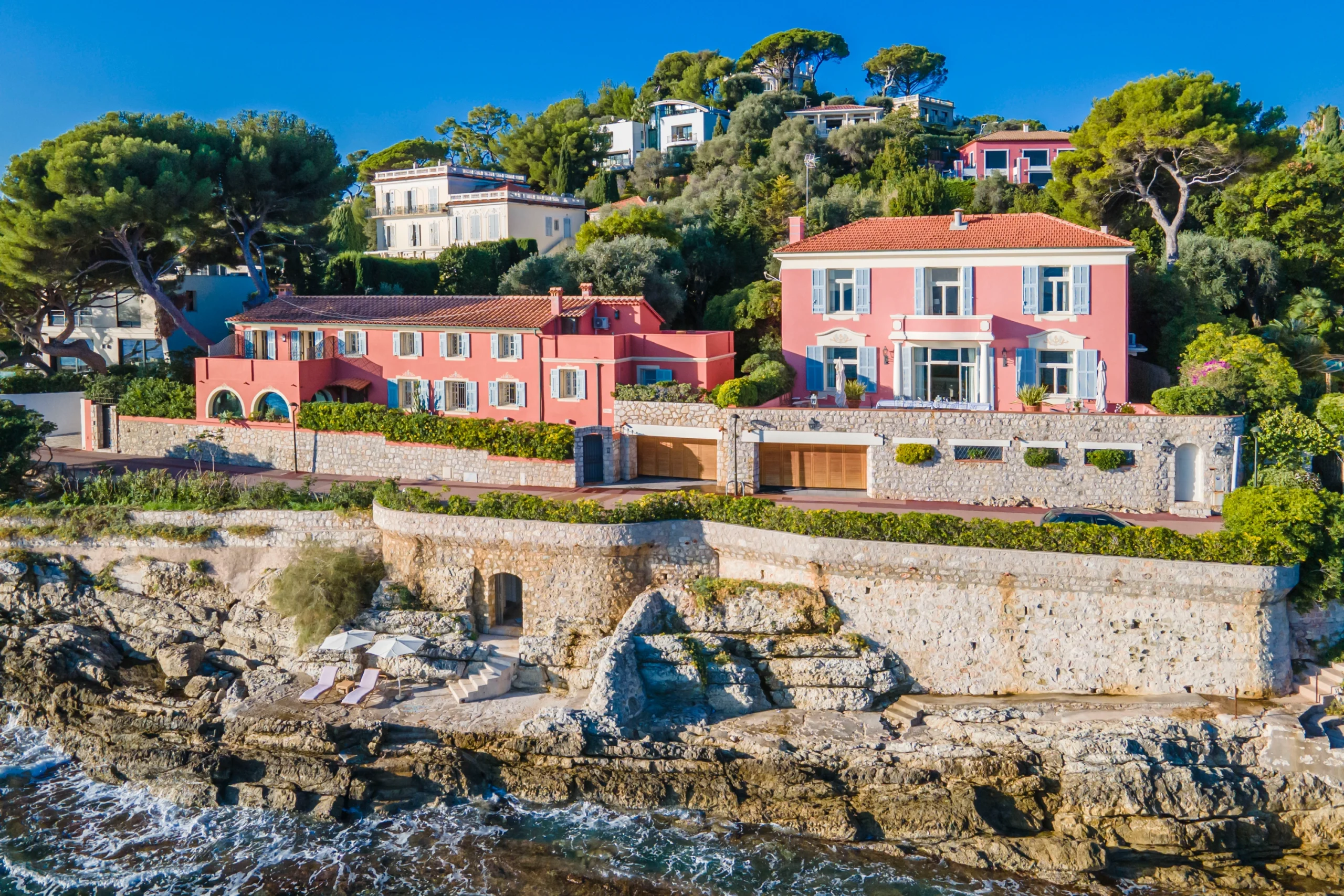
Within a strip of one hundred metres measured from the high-water line, construction and installations are prohibited outside already-urbanised areas. French administrative case law has extended that prohibition to extensions, additional storeys and changes of use of existing structures, which means a waterfront villa can be legally unenlargeable in every direction at once. Beyond the strip, the espaces proches du rivage permit only limited extension of urbanisation, and only in continuity with existing settlement. This is why turnkey commands what it does on the caps, why genuinely new villas are close to nonexistent, and why renovation on this coast requires legal groundwork long before any design work begins. A buyer pricing a property on the strength of a renovation scheme should obtain a certificat d’urbanisme before signing anything.
A villa run at this level employs people, and in France those people are employees carrying the full protection of French employment law. A caretaker couple, a housekeeper, a gardener and a seasonal cook is a modest household by Gulf standards but already four or five employment contracts, each requiring written terms, registration with URSSAF and employer social contributions that typically add 40 to 45 per cent on top of the gross salary. The national collective agreement for domestic employment by private households sets minimum wages, paid leave entitlements, notice periods and severance, and the liability sits with the family personally.
Households arriving from jurisdictions where domestic staffing is arranged along different lines tend to discover the obligations at the point of a dispute or a departure, which is the most expensive moment to learn them. An undeclared employee can bring a claim to the conseil de prud’hommes for up to three years of back wages and contributions, and the penalties for undeclared work in France are criminal. A payroll adviser on this coast costs a few thousand euros a year, which is difficult to notice against the exposure it prevents.
French property held by a non-resident falls within the impôt sur la fortune immobilière. The regime engages once net taxable French real estate exceeds 1.3 million euros on 1 January, the calculation then begins at 800,000 euros, and the bands rise to 1.5 per cent above 10 million. France’s 2026 finance law left the structure untouched. A villa held directly at 25 million euros produces an annual charge of roughly 323,000 euros, payable whether the family visits that year or not.
The heavier trap sits in the ownership structure. Under articles 990 D to 990 H of the Code général des impôts, any legal entity holding French property owes an annual tax of 3 per cent of that property’s market value. The exemption is available to almost every family that wants it, and it is lost through paperwork: an entity that fails to file the annual declaration disclosing its beneficial owners owes 3 per cent of the villa’s full value, which on a 25 million euro house is 750,000 euros a year. Debts taken on to acquire the property are not deductible from that base.
Total acquisition costs on an existing property run to roughly 7 to 8 per cent. The Alpes-Maritimes declined to adopt the increase in departmental transfer duty that most French départements applied, leaving the local rate below those of its neighbours. Living on the Côte d’Azur means accepting French residency and tax rules in full, and they are considerably less forgiving of assumptions than neighbouring Monaco’s.
Almost none of this reaches a public listing. The largest sales on the caps and the headlands move through direct introductions between agencies that already know both sides of the table, and the houses that matter are usually gone before anyone outside a short list has heard the address. Capital continues to arrive from every direction, Dubai and Switzerland included, and the families who do this well have generally spent six weeks on planning law, ownership structure and payroll before anyone mentioned a price.
Russian money dominated this coast for a quarter-century. Two rounds of sanctions and a pandemic later, Gulf families are the new force at the top of the market, buying unleveraged and building portfolios of jurisdictions. The purchase price is the smaller half of the decision: a 25 million euro villa generates around 323,000 euros a year in French wealth tax, and a holding entity that misses one annual filing owes 750,000 euros more.
Families building a presence on the Côte d’Azur are welcome to contact Baldo Realty Group for a confidential, off-market view of what is currently available.
Sources
Henley & Partners, Private Wealth Migration Report 2026, The Gulf Balancing Act
The National, Middle Eastern property buyers on the French Riviera
Savills, prime residential markets of the Riviera
Ministry for Ecological Transition, coastal planning rules under the Loi Littoral
BOFiP, annual 3 per cent tax on French property held by legal entities