Post 11 min read
Drive west from the Italian border, and the best places to live on the French Riviera appear bend by bend. Lemon terraces and Belle Époque palaces give way to the towers of Monte-Carlo. Then come the umbrella pines and long private drives of Cap Ferrat. Each stretch is a separate property market, priced and paced differently from the last.
This guide covers the eleven addresses where Baldo Realty Group is most active, from Menton to Saint-Tropez. Some are towns where families live all year. Others are summer houses in the purest sense, alive in July and August and shuttered for much of the winter. For a wider portrait of daily life on the coast, read our companion piece on the French Riviera lifestyle.
Three questions settle most searches before the first viewing. The first is the border. Monaco residents pay no personal income tax, French nationals excepted. A home in Roquebrune-Cap-Martin or Cap Ferrat, by contrast, makes you a French tax resident. The Principality also runs its own residency process, which shapes the timing of any purchase.
The second is the airport. Nice Côte d’Azur is the busiest airport in France outside Paris. Most of the addresses below sit within 40 minutes of it by car. The third is the calendar. Monaco, Menton and Cannes run all year, whereas Saint-Tropez and parts of Cap d’Antibes slow sharply after the season.
Finally, consider the house itself. Many of the finest villas on the coast date from the early twentieth century. A serious renovation is often part of the plan.
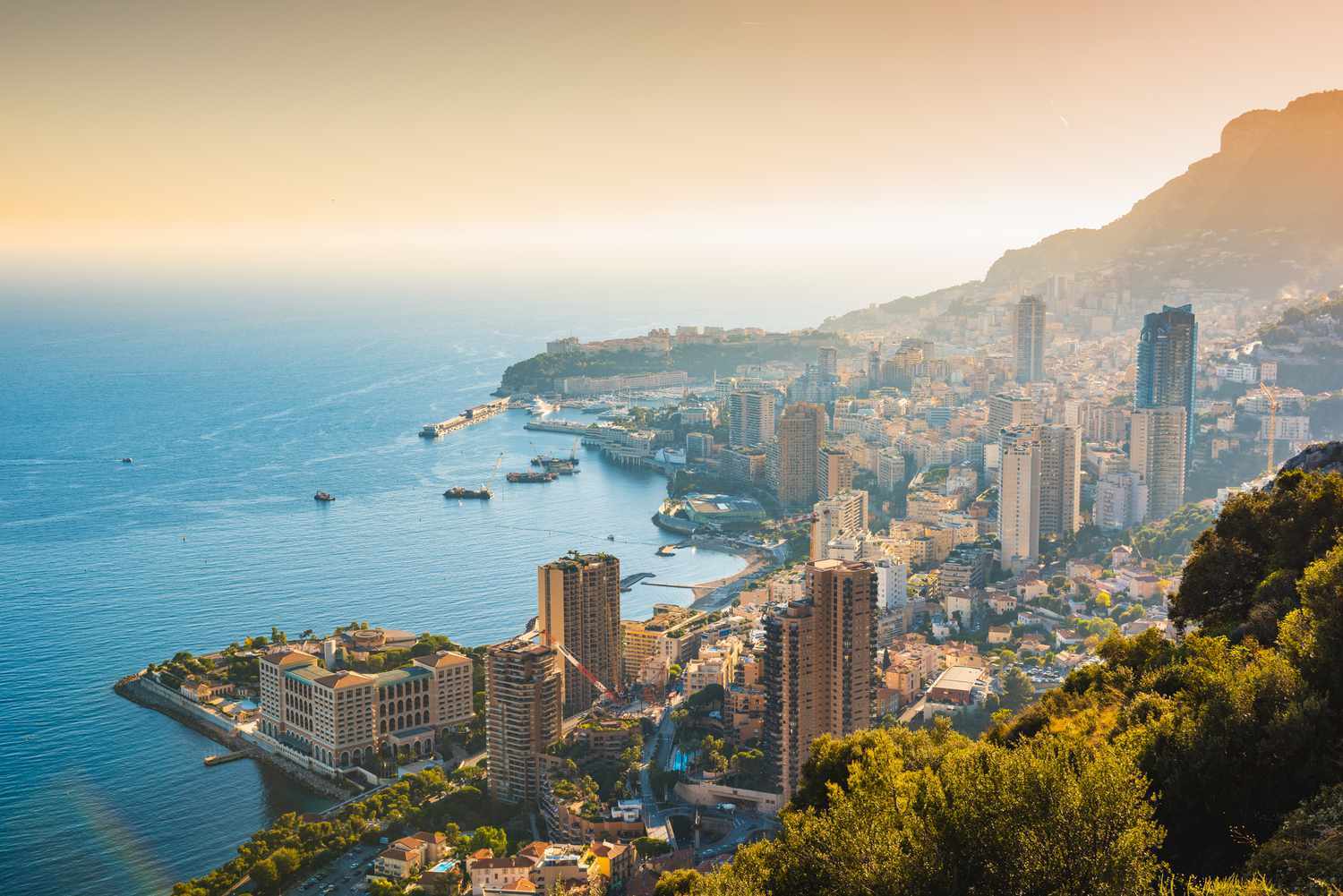
Monaco at golden hour, from Fontvieille to Monte-Carlo.
Smaller than Central Park and home to fewer than 40,000 residents, Monaco sets the reference price for the entire coast. Residents come for its stability and round-the-clock security, with healthcare and schools of international standard.
Above all, space is the scarcest asset in Monaco. IMSEE’s Observatoire de l’Immobilier estimates the average price at more than €57,000 per square metre. In the seafront Larvotto district, it has passed €70,000. New-build sales now average above €40 million. Villas are rarer still: the same report counted just five villa resales in a full year.
When space is this scarce, most buyers choose a neighbourhood before a building. The Carré d’Or wraps around the Casino gardens, and Larvotto opens onto the beach. Mareterra, built on land reclaimed from the sea, has redefined new-build living. Nice airport is about seven minutes away by helicopter. Browse our Monaco properties to see the range.

The coastline below Roquebrune, where the mountains meet the sea.
Cross Monaco’s eastern border and you are in Roquebrune-Cap-Martin almost without noticing. The Monte-Carlo Country Club, home of the Rolex Monte-Carlo Masters, actually stands on French soil here. So does the Monte-Carlo Beach hotel. Until the mid-nineteenth century, the whole commune belonged to the Principality.
Roquebrune has two personalities. Up the hill, a medieval village coils around a tenth-century keep, said to be among France’s oldest feudal castles. Down by the water, Cap Martin is a pine-covered headland of large villas set behind long drives and discreet gates.
Modern architecture left its mark here as well. Eileen Gray built her villa E-1027 on the rocks below the railway. Le Corbusier spent his summers in a small wooden cabin nearby, and both sites can be visited through Cap Moderne. Le Corbusier is buried in the village cemetery, and the coastal path that bears his name runs around the cape. Trains also reach Monaco in minutes. Explore our Roquebrune-Cap-Martin properties.
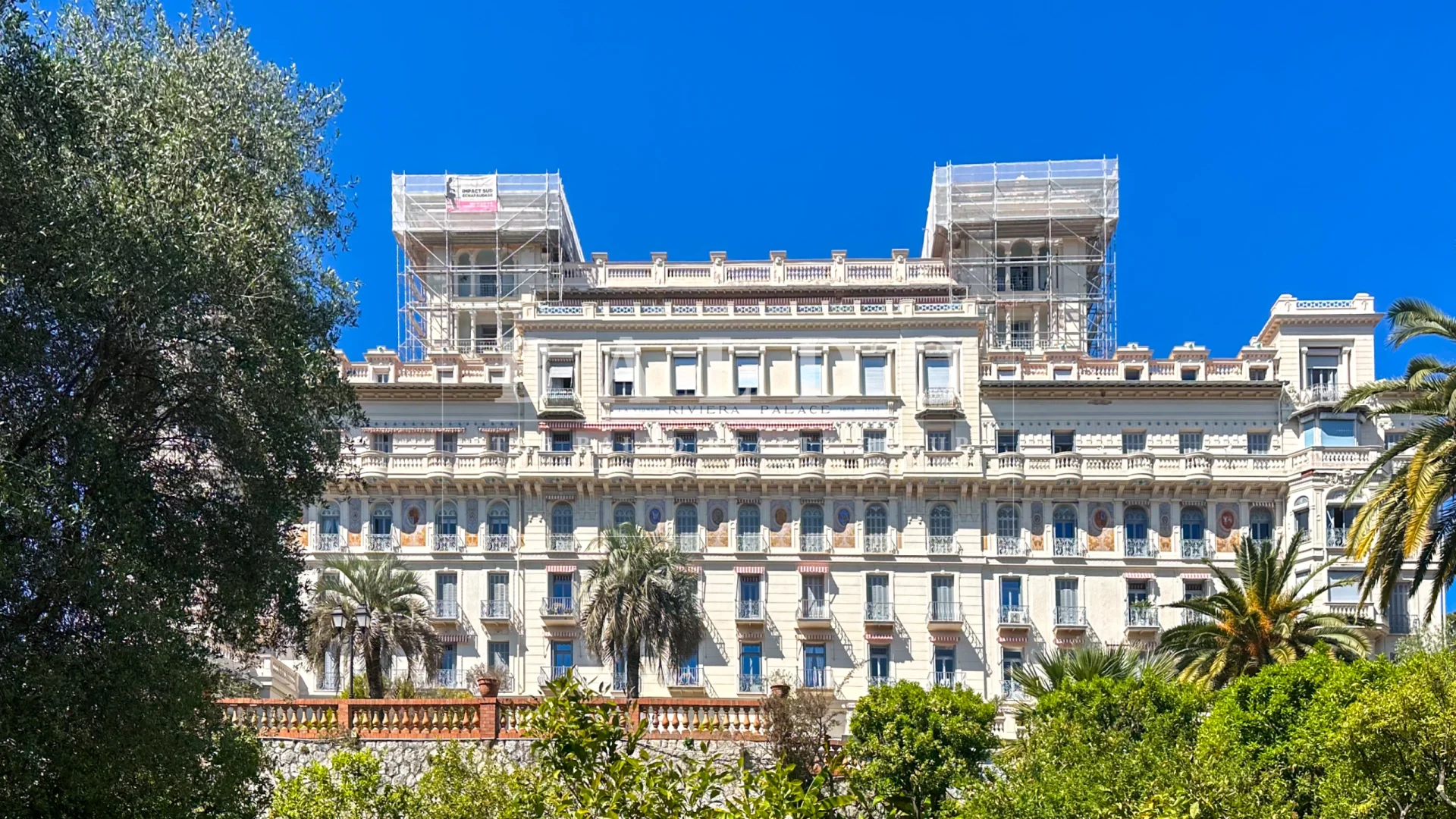
The Riviera Palace, one of the Belle Époque grand hotels that shaped Menton.
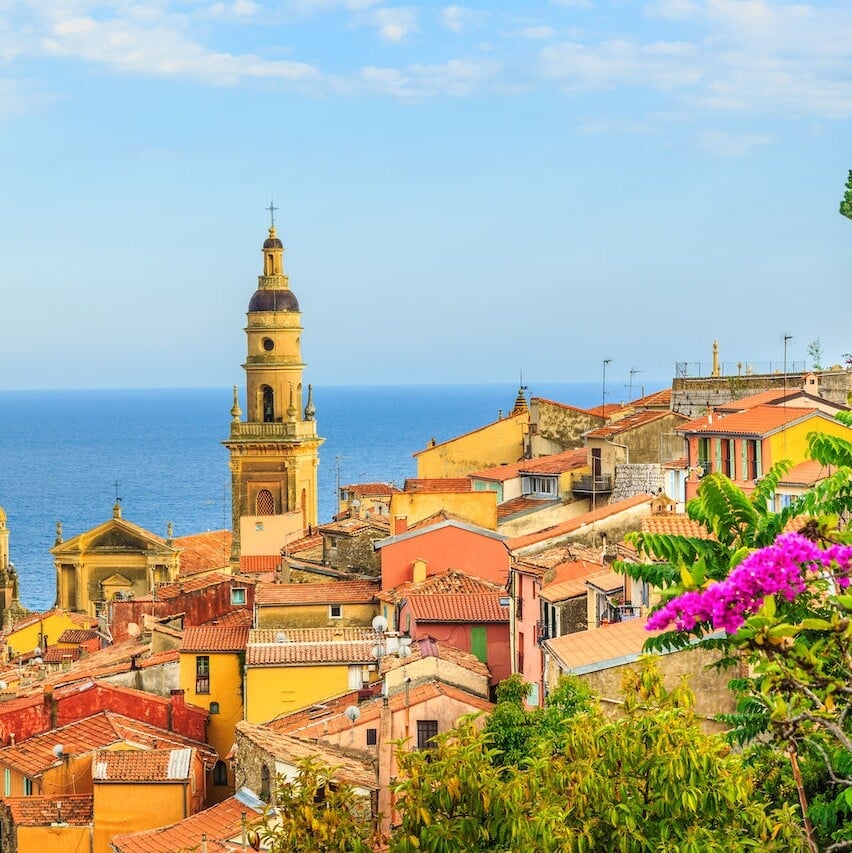
Menton is the last French town before Italy, and it shows. Ochre façades climb from the harbour to the Baroque basilica of Saint-Michel. The border lies at the far end of Garavan, a few minutes’ drive from the old town. Like Roquebrune, Menton was a Monegasque possession until the mid-nineteenth century.
A sheltered position gives the town some of the mildest winters on the coast. That climate made its fortune, first through citrus groves and then through British winter visitors. Every February, the Fête du Citron fills the Biovès gardens with sculptures built from oranges and lemons. Jean Cocteau left a lasting mark too, celebrated at the Musée Jean Cocteau by the sea.
For buyers, Menton offers some of the most accessible prices within ten minutes of Monaco by train. Garavan, closest to the border, is the villa district. Former palace hotels such as the Riviera Palace now hold generous Belle Époque apartments. Discover our Menton properties.
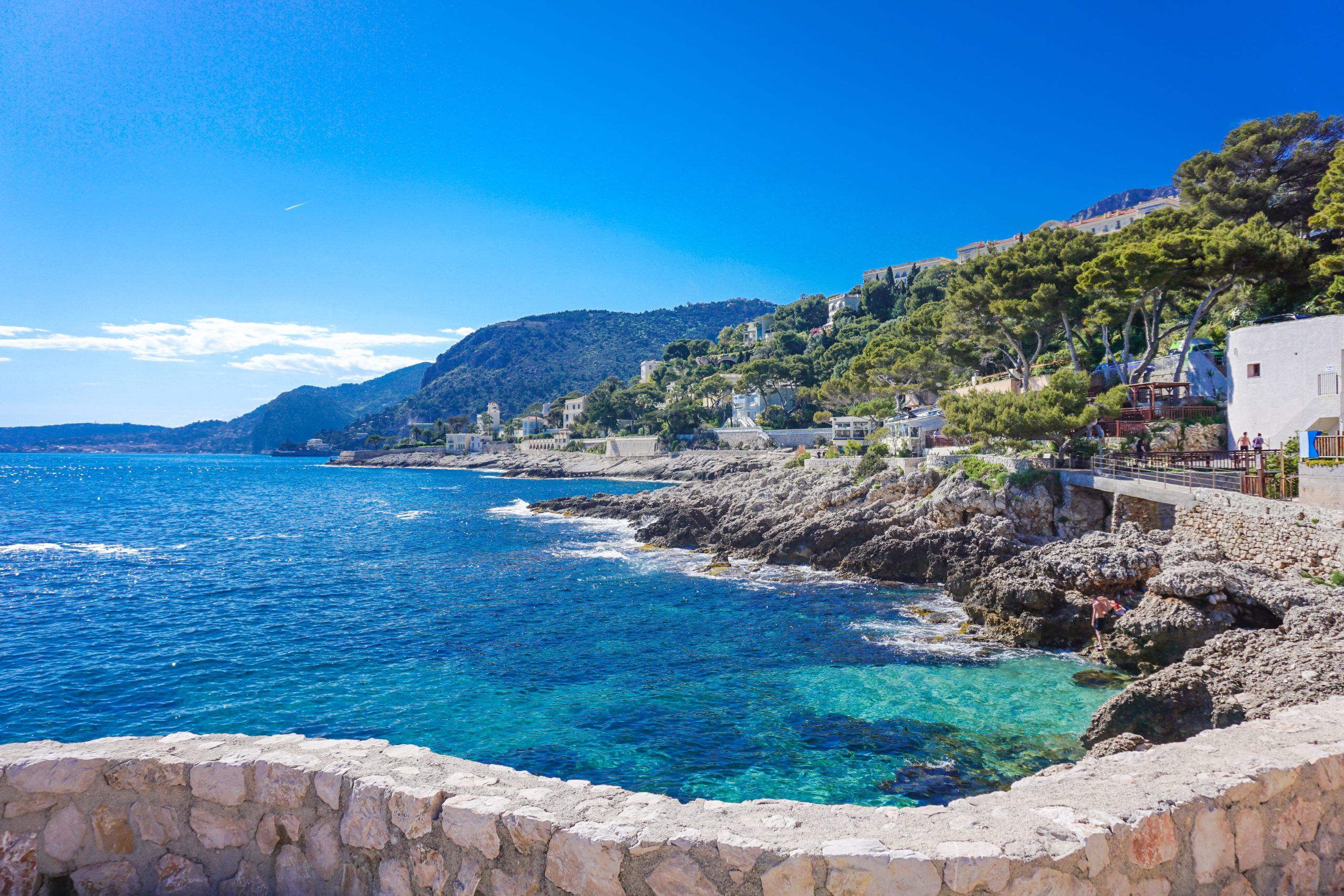
The coastal path of Cap d’Ail, a short walk from Monaco.
On Monaco’s western side, Cap d’Ail begins where Fontvieille ends. Many residents simply walk into the Principality, and the station sits on the line that serves Monaco and Nice.
The town pairs Belle Époque villas on the hillside with a rugged shoreline below. A coastal path leads to Plage Mala, a cove beach at the foot of the cliffs. Each summer it draws swimmers from all along the coast. At sea level, the port of Cap d’Ail adjoins Fontvieille and gives owners a marina on Monaco’s doorstep.
Cap d’Ail therefore suits buyers who want Monaco’s services every day with more space around them. View our Cap d’Ail properties.
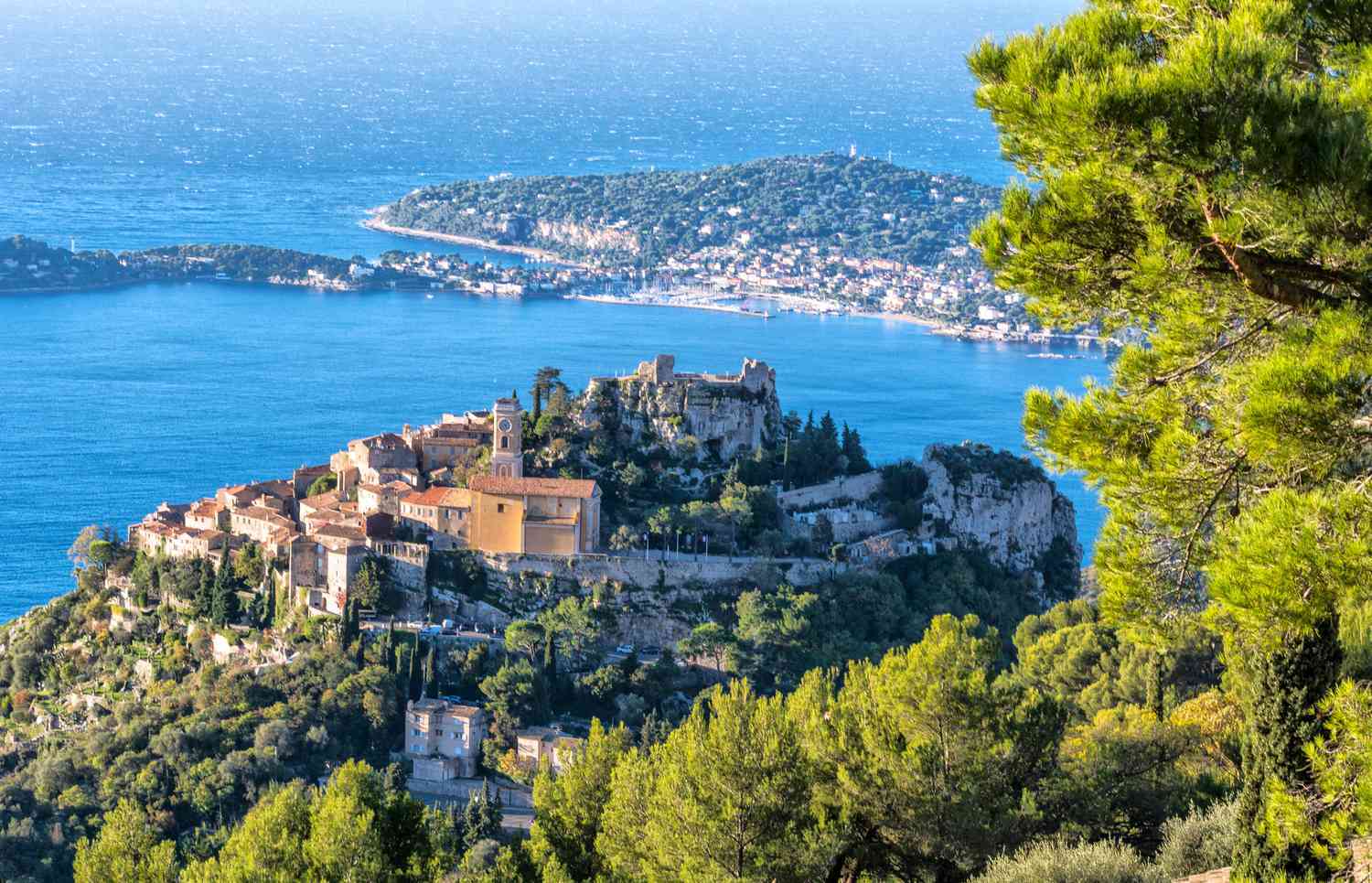
Èze, perched high above the sea, with Cap Ferrat in the distance.
Èze sits more than 400 metres above the sea, a medieval village of stone lanes. At its summit, the Jardin Exotique grows on the ruins of the castle. From there, the view sweeps along Cap Ferrat and far down the coast.
Friedrich Nietzsche worked on part of Thus Spoke Zarathustra while walking the steep path between the sea and the village. The path still carries his name. Two celebrated hotels, the Château de la Chèvre d’Or and the Château Eza, have some of the Riviera’s most romantic terraces.
Property here divides in two. Villas along the corniches above the village trade on privacy and panorama. Down below, Èze-sur-Mer offers houses near the water and its own train station. See our Èze properties.
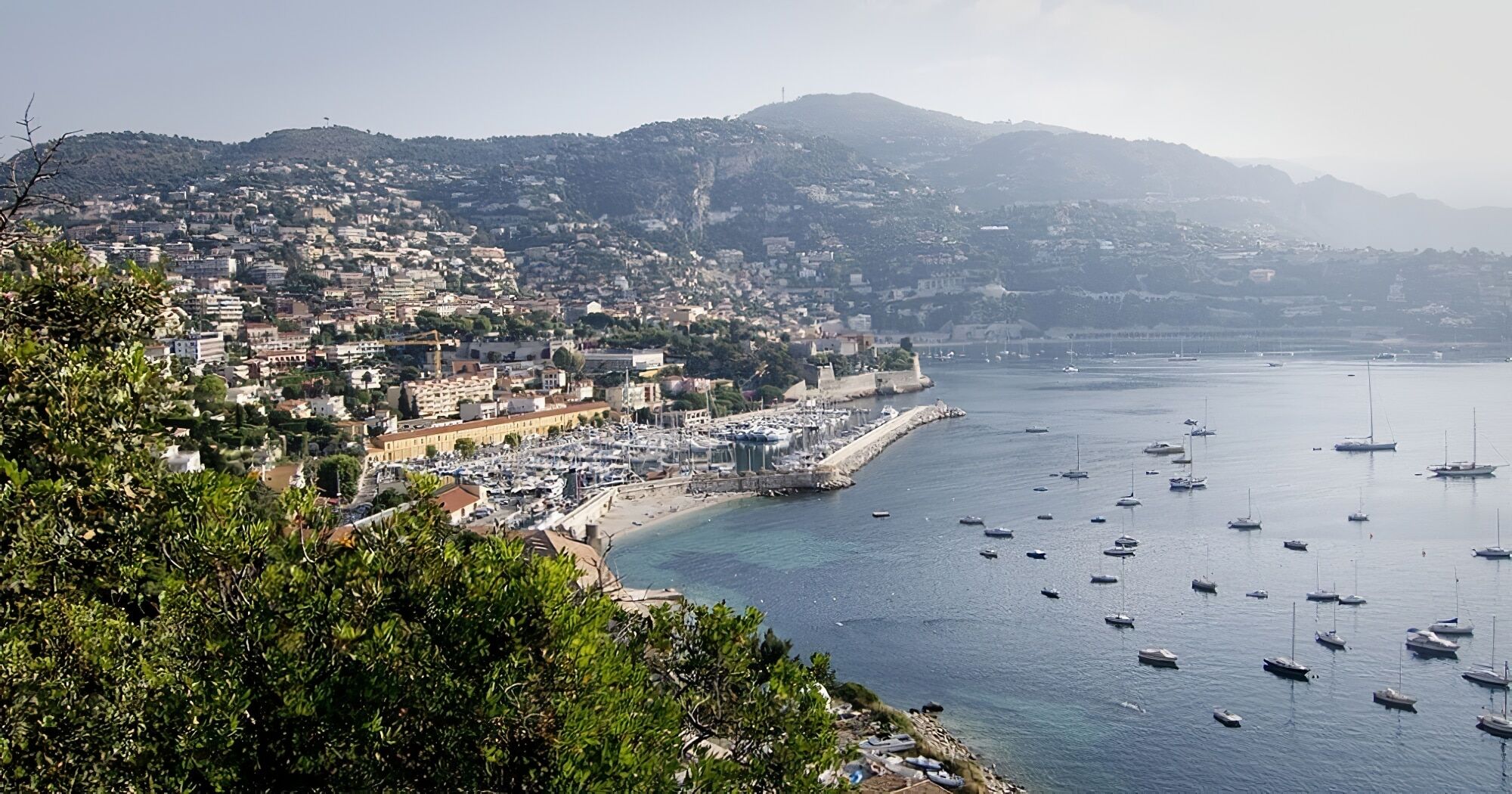
Beaulieu-sur-Mer, sheltered between Cap Ferrat and Èze.
Beaulieu-sur-Mer is one of the few flat, walkable towns on this stretch of coast. That makes it a favourite for year-round living. Cliffs shelter its eastern quarter, known as Petite Afrique, from the wind. The result is one of the warmest winters on the Riviera.
The town has kept its Belle Époque manners. Villa Kérylos, the Greek-style villa built for the archaeologist Théodore Reinach, stands on its own point. From there, a seaside promenade continues to Saint-Jean-Cap-Ferrat. La Réserve de Beaulieu anchors the hotel scene, while the marina lies a short stroll from the station.
Apartments in period buildings make up much of the market, alongside villas set back from the seafront. Prices, however, generally sit below those of neighbouring Cap Ferrat, which is within walking distance.
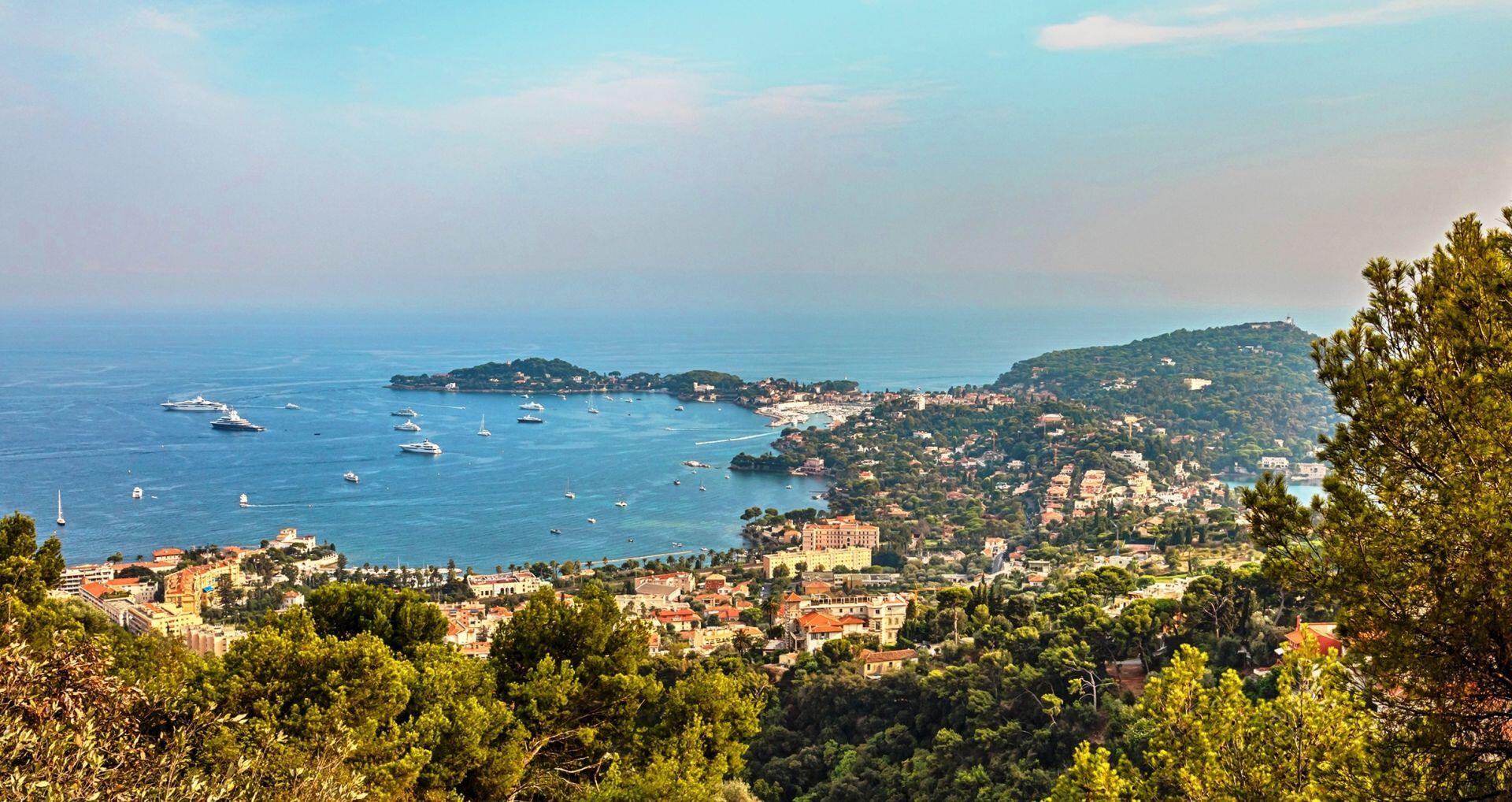
Yachts at anchor between Saint-Jean-Cap-Ferrat and Beaulieu-sur-Mer.
Fewer than 2,000 people live year-round on Saint-Jean-Cap-Ferrat, yet its land values rank among the highest anywhere on the Mediterranean. Indeed, most of the peninsula is private garden, glimpsed through gates and over hedges.
Villa Ephrussi de Rothschild and its nine themed gardens crown the isthmus, while estates such as Villa Les Cèdres have become Riviera legends. The Grand-Hôtel du Cap-Ferrat occupies the tip of the cape, and a coastal path circles the headland past the lighthouse.
Waterfront villas rarely reach the open market, and our in-depth portrait of the peninsula explains how they change hands. You can also browse our Saint-Jean-Cap-Ferrat properties.
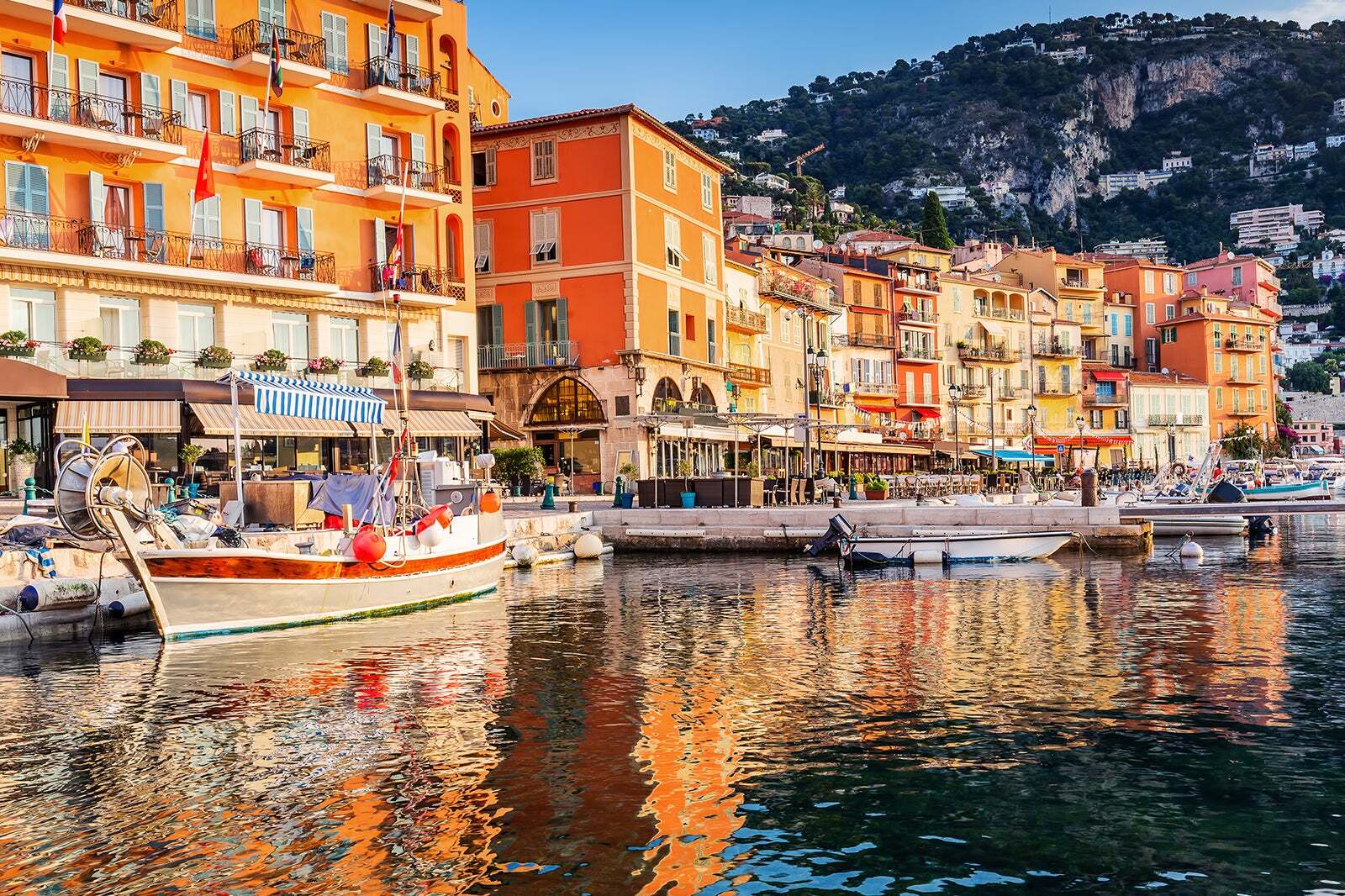
The harbour of Villefranche-sur-Mer and its painted façades.
Villefranche-sur-Mer wraps around one of the deepest natural harbours in the Mediterranean. That depth is why superyachts and cruise ships anchor in its bay.
The old town is a tangle of stairways and painted façades. Its Rue Obscure, a vaulted medieval street, runs beneath the houses. On the quay, Jean Cocteau decorated the little Chapelle Saint-Pierre. Above the harbour, the Citadelle Saint-Elme, built by the Dukes of Savoy, now houses the town hall and several museums.
On the hillside towards Cap Ferrat stands Villa Leopolda, one of the most celebrated private estates in the world. Nice lies ten minutes away, so Villefranche suits buyers who want the city within easy reach. See our Villefranche-sur-Mer properties.

Cap d’Antibes in winter, with the Alps rising beyond the Baie des Anges.
Between Antibes and Juan-les-Pins, Cap d’Antibes is a wooded peninsula of walled estates and private coves. F. Scott Fitzgerald set much of Tender Is the Night in a thinly disguised Hôtel du Cap. The Hôtel du Cap-Eden-Roc still defines the glamour of the cape.
Life here revolves around the water. The Plage de la Garoupe faces the bay, and the coastal path around the tip of the cape rewards an early start. Villa Eilenroc, designed by Charles Garnier, opens its gardens to visitors. In Antibes, the Quai des Milliardaires at Port Vauban berths some of the largest yachts afloat.
Estates on the cape are among the most private on the coast. Even so, Nice airport is only around 25 minutes away by car.
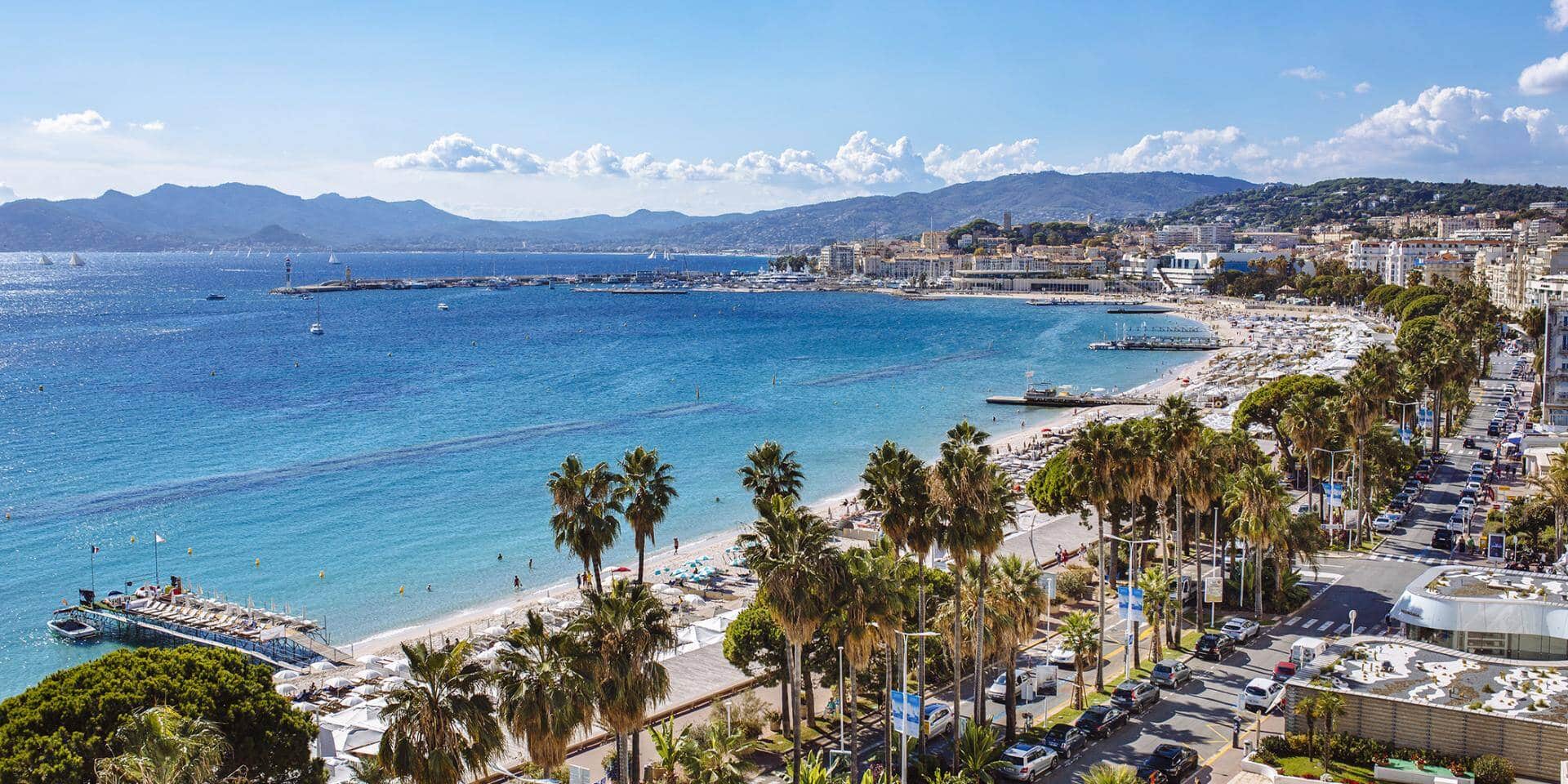
La Croisette, the seafront boulevard of Cannes.
Cannes is a city in the full sense, with schools, business life and a year-round population. Life there goes on long after the Festival de Cannes closes each May.
Its property market, meanwhile, follows the hills. To the east, La Californie and Super-Cannes hold some of the grandest villas on the Riviera. Their terraces look across the bay to the Lérins Islands. The Croisette offers apartments facing the sea, while Le Suquet, the old town, keeps its village scale.
The calendar is also a draw in itself. MIPIM brings the global property industry to the Palais des Festivals every March. In September, the Cannes Yachting Festival fills the Vieux-Port. For private flyers, Cannes-Mandelieu airport handles business aviation minutes from the centre.
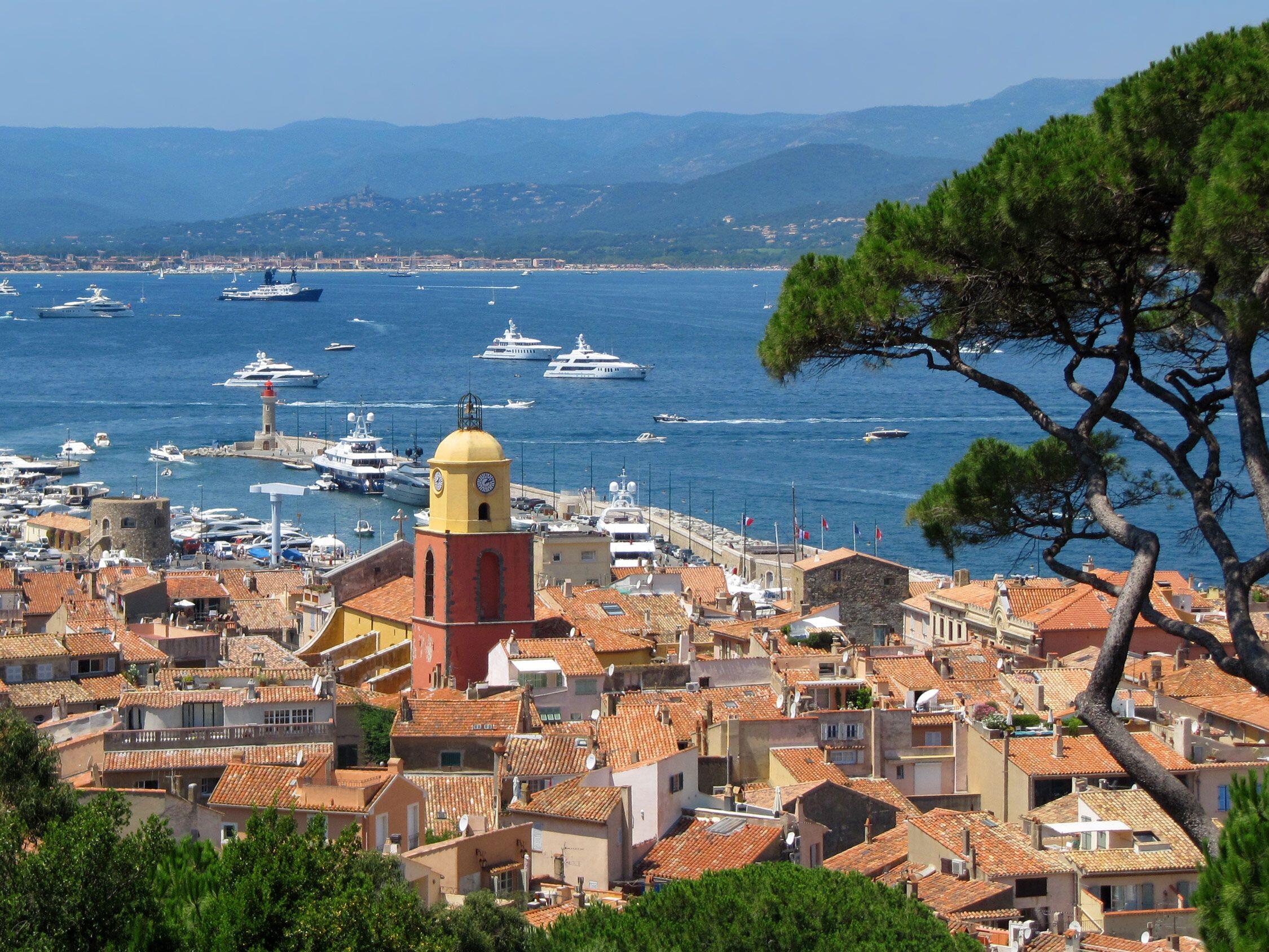
The bell tower of Saint-Tropez and yachts at anchor in the gulf.
Saint-Tropez lies about two hours west of Monaco, in the Var, and it lives by the seasons. In winter, the town of roughly 4,000 residents returns to its fishing-port rhythm, with boules on the Place des Lices. In summer, it becomes the most talked-about address on the coast.
Serious buyers, however, look to the hills and the gated domains. Les Parcs de Saint-Tropez, near the citadel, rank among the most exclusive private estates in France. Further south, vineyards frame the villas above Pampelonne beach, which belongs to neighbouring Ramatuelle rather than to Saint-Tropez itself.
Late September brings Les Voiles de Saint-Tropez, when classic and modern yachts race across the gulf. Most owners arrive by helicopter or private jet through La Môle airport. Explore our Saint-Tropez properties.
The table below compares the best places to live on the French Riviera by lifestyle and by distance. It measures each address against the two hubs that matter most, Monaco and Nice airport.
| Address | Best suited to | To Monaco | To Nice airport |
|---|---|---|---|
| Monaco | Residency, city services, apartments | In town | 30 to 40 min |
| Roquebrune-Cap-Martin | Villas minutes from Monaco | 5 to 10 min | 35 to 45 min |
| Menton | Year-round life, mild winters, value | 15 to 20 min | 40 to 50 min |
| Cap d’Ail | Walking access to Monaco | 5 min | 30 to 35 min |
| Èze | Panoramic views, privacy | 15 to 20 min | 30 to 40 min |
| Beaulieu-sur-Mer | Flat, walkable seaside living | 20 to 25 min | 25 to 30 min |
| Saint-Jean-Cap-Ferrat | Trophy waterfront estates | 25 to 30 min | 25 to 30 min |
| Villefranche-sur-Mer | Old-town character near Nice | 25 to 30 min | 20 to 25 min |
| Cap d’Antibes | Secluded estates, yachting | 45 to 55 min | 20 to 25 min |
| Cannes | Year-round city life, events | 50 to 60 min | 30 to 40 min |
| Saint-Tropez | Summer estates, village life | About 2 h | 1 h 30 to 2 h |
Approximate drive times by car, outside peak traffic.
It depends on how you plan to live. Monaco suits buyers who want residency, security and city services in one place. Saint-Jean-Cap-Ferrat and Cap d’Antibes offer the most private estates. Cannes provides a full city life all year, and Menton combines mild winters with more accessible prices.
Roquebrune-Cap-Martin and Cap d’Ail both border the Principality, and many residents walk across. Menton and Èze lie within about 20 minutes, Menton for town life and Èze for views and seclusion.
Property prices per square metre are generally lower across the border. However, living in France makes you a French tax resident. Monaco’s absence of personal income tax applies only to Monaco residents. French nationals remain taxable in France even when they live in Monaco, under the Franco-Monegasque tax convention. Take independent tax advice before you decide.
EU, EEA and Swiss citizens can settle in France freely. Most other nationalities need a long-stay visa, requested through France-Visas, followed by a residence permit. Monaco runs its own procedure, explained in our guide to the Monaco residency timeline. In both cases, secure your housing early, because an address sits at the heart of the application.
No two buyers rank the best places to live on the French Riviera in the same order. The finest homes on this coast also rarely appear in public listings.
Baldo Realty Group advises buyers on both sides of the border, from Monaco apartments to Riviera estates. Much of the finest inventory on this coast trades off market.
Contact our team to arrange your private viewings, or browse our French Riviera properties.