Post 15 min read
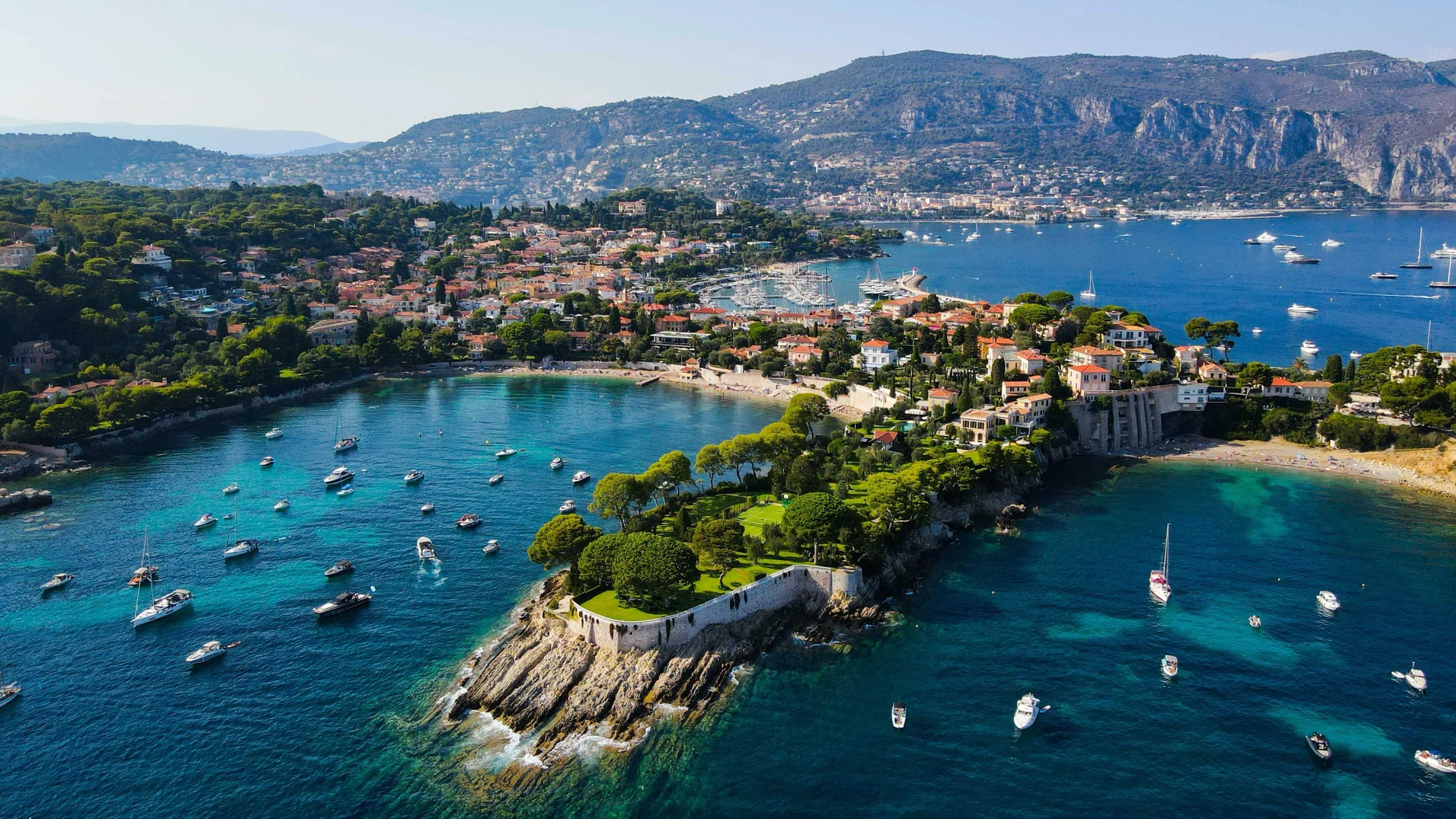
Three kilometres of wooded rock between Nice and Monaco carry a price that few places on earth can match. Saint-Jean-Cap-Ferrat, long known as the Peninsula of Billionaires, holds residential land so scarce that a single waterfront estate can set the market’s reference point for a decade. When one of them sells, the transaction is rarely public and almost never fully explained.
The peninsula has drawn wealth for well over a century. King Leopold II of Belgium bought here in 1904, the writer Somerset Maugham worked from the Villa La Mauresque, and the shipping and railroad fortunes of the Belle Epoque built the great estates that still line the coast. Today the capital is more likely to be American or from the Gulf, yet the constraint that shaped the market then shapes it now. There is only so much genuine waterfront on Cap-Ferrat, and little of it is available in any given season.
Rare waterfront villas on Saint-Jean-Cap-Ferrat now trade at roughly €35,000 to €80,000 per square metre, placing the peninsula among the highest land values anywhere on the Mediterranean.
Cap-Ferrat’s appeal rests on qualities that are difficult to replicate elsewhere on the coast: genuine privacy, gardens matured over a century or more, deep-water frontage, and a fixed ceiling on how much of that frontage can ever exist.
Much of the peninsula sits behind gated domains, where a house can stay unseen from the road for decades. The Villa Ephrussi de Rothschild, now a public museum, gives visitors a sense of the pink-stucco, rose-garden aesthetic that still defines the private estates around it, while revealing nothing of what lies behind the neighbouring walls.
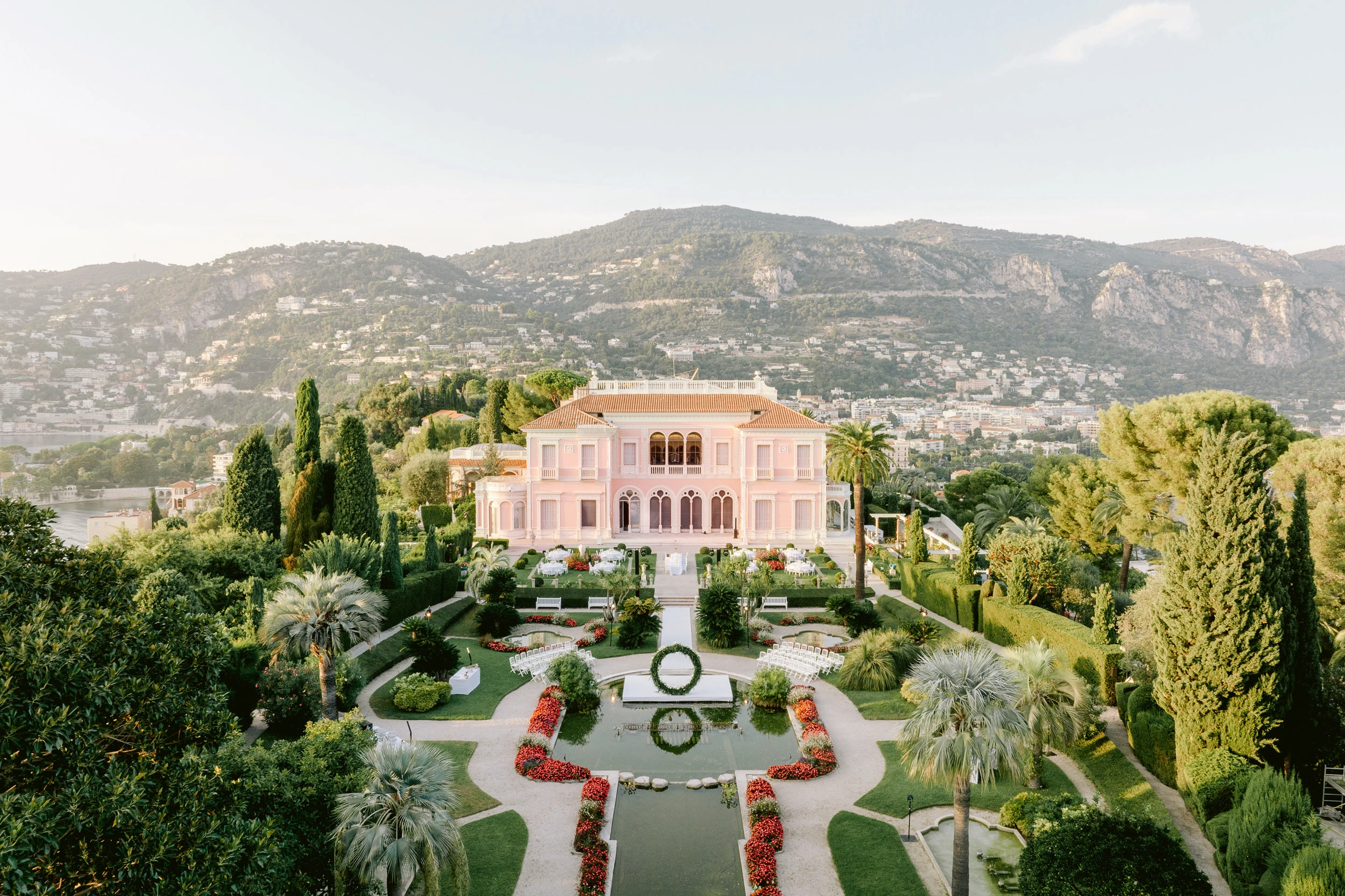
Villa Ephrussi de Rothschild, now a museum, preserves the Belle Epoque garden aesthetic that still shapes the peninsula’s private estates.
The peninsula’s landmark institutions reinforce its standing. At its tip stands the Grand-Hôtel du Cap-Ferrat, opened in 1908 with a rotunda by Gustave Eiffel and run as a Four Seasons since 2015. Seven hectares of gardens, a funicular that drops to a heated seawater pool cut into the rock, and a guest list running from Winston Churchill to Elizabeth Taylor give the cape a permanent luxury anchor of a kind that few residential enclaves can claim on their doorstep.
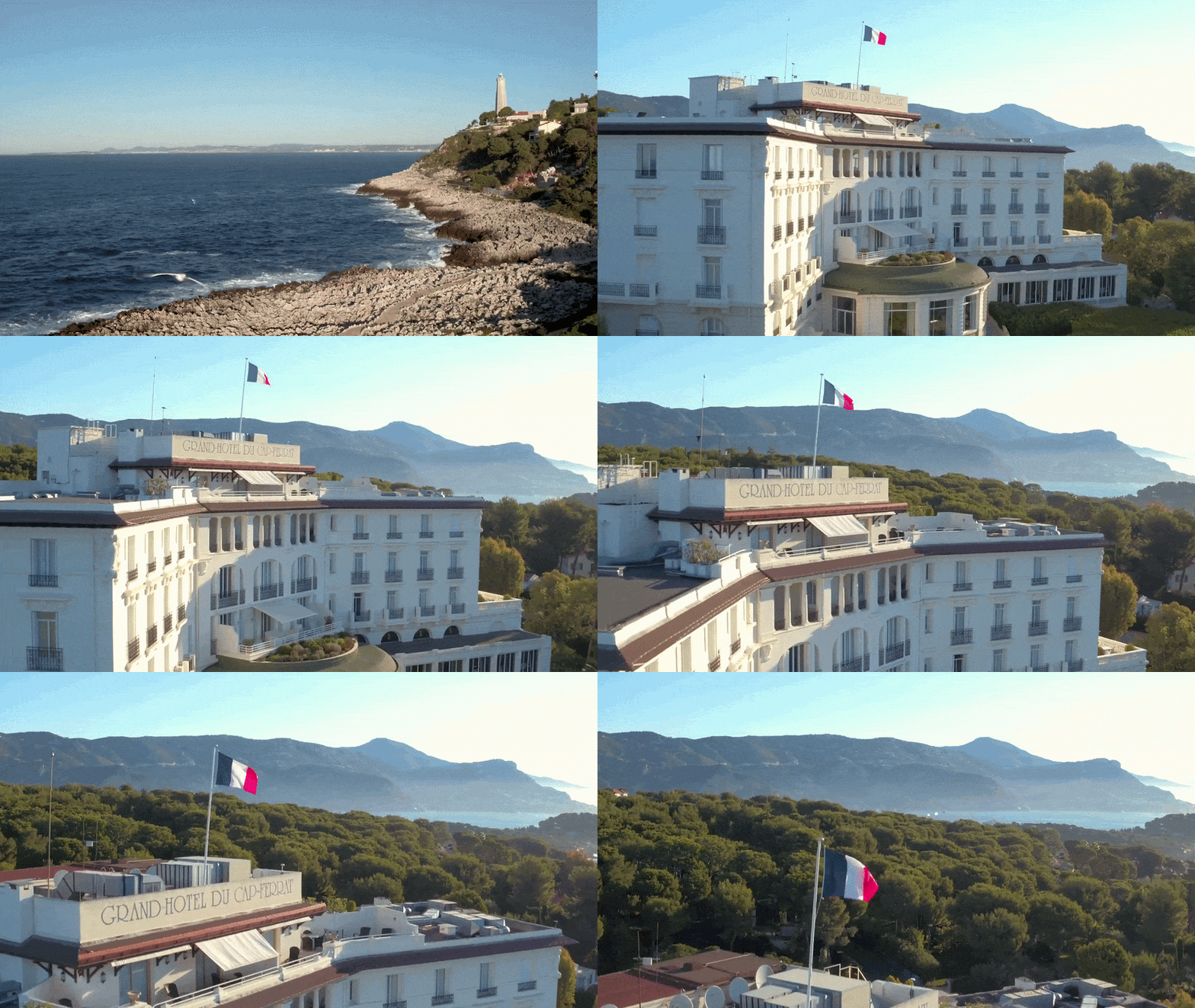
The Grand-Hôtel du Cap-Ferrat, a Four Seasons since 2015, crowns the tip of the peninsula above the sea.
Deep water matters almost as much as land. A private mooring able to take a forty-metre yacht without a tender transfer is rarer than a ten-bedroom house, and it carries a premium of its own, separate from whatever villa happens to sit behind it.
The cape is small, yet its addresses are far from interchangeable. Value on Saint-Jean-Cap-Ferrat is set by three things above all: how close a property sits to the water, which way it faces, and how completely it is screened from view.
The southern tip and the eastern Pointe Saint-Hospice hold the rarest absolute-waterfront estates, among them Villa La Fiorentina. These are the addresses that reach the market perhaps once in a generation. The western flank, facing the Bay of Villefranche, takes the long afternoon and evening light and drops quickly into deep water, which explains the premium on its moorings. The eastern flank looks across to Beaulieu and the sunrise, calmer and more sheltered.
The village and port of Saint-Jean occupy the neck of the peninsula, the one genuinely social quarter, where the harbour, cafes and market sit within walking distance of one another. Above them the land rises through gated domains reached by a handful of private lanes. A buyer who reads these distinctions is already ahead of one who treats the cape as a single market, and understanding them is a large part of what a specialist adds. Families narrowing their search often begin with our overview of life on the French Riviera before focusing on a single point of the coast.
Cap-Ferrat rewards residents with a rhythm that larger resorts cannot offer. A coastal footpath, the sentier du littoral, rings much of the peninsula, tracing the rocks past Pointe Saint-Hospice and its nineteenth-century chapel. Plage de Passable looks west toward Villefranche, Paloma Beach draws the summer crowd on the east, and the Grand-Hôtel’s Club Dauphin holds the most storied swimming pool on the coast.
Connectivity is the hard argument beneath the romance. Nice Cote d’Azur airport, with its dedicated private-aviation terminal, is roughly twenty-five minutes away by car, and Monaco is closer still. A helicopter covers the run between Nice and the Principality in about seven minutes, which places two international hubs, several Michelin kitchens and the Monaco social calendar within easy reach of a house that feels entirely removed from all of it.
Yachting shapes the calendar as much as anything on land. The port of Saint-Jean shelters tenders and mid-sized craft, while the deep water off the cape and the berths of nearby Monaco and Villefranche take larger vessels through the season that runs from the Monaco Grand Prix into late summer. Established international schools around Nice and Monaco complete the case for families who intend to spend real time here rather than a fortnight in August.
Part of what a buyer acquires on Cap-Ferrat is a chapter of design history. The Villa Ephrussi de Rothschild alone holds nine themed gardens, from Florentine to Japanese, laid out around a rose-pink palace that Beatrice de Rothschild filled with eighteenth-century interiors.
The peninsula drew the great garden-makers of the age. Harold Peto shaped the early terraces of La Fiorentina, and Russell Page later redrew its grounds into the form admired today. Their work sits alongside the Belle Epoque habit of importing mature cypress, olive and citrus to conjure a century-old garden in a single season, a practice that still governs how the finest estates are planted and kept.
The cape also holds a striking modern legacy in Villa Santo Sospir, where Jean Cocteau covered the walls with murals from 1950 and gave the house its name as the tattooed villa. For an owner, this heritage carries obligations as much as prestige. It sets a standard of upkeep, and it is one reason renovation here calls for specialists who understand both the horticulture and the architecture of the period.
Prime property on Cap-Ferrat, in Savills’ assessment, runs from €15,000 to €45,000 per square metre, placing it alongside Saint-Tropez at the top of the Cote d’Azur. The rarest waterfront estates sit well above that band. Riviera market reporting heading into 2026 puts genuine waterfront villas between €35,000 and €80,000 per square metre, with the very best addresses commanding upward of €80,000. Those figures have held while more ordinary French stock has drifted lower.
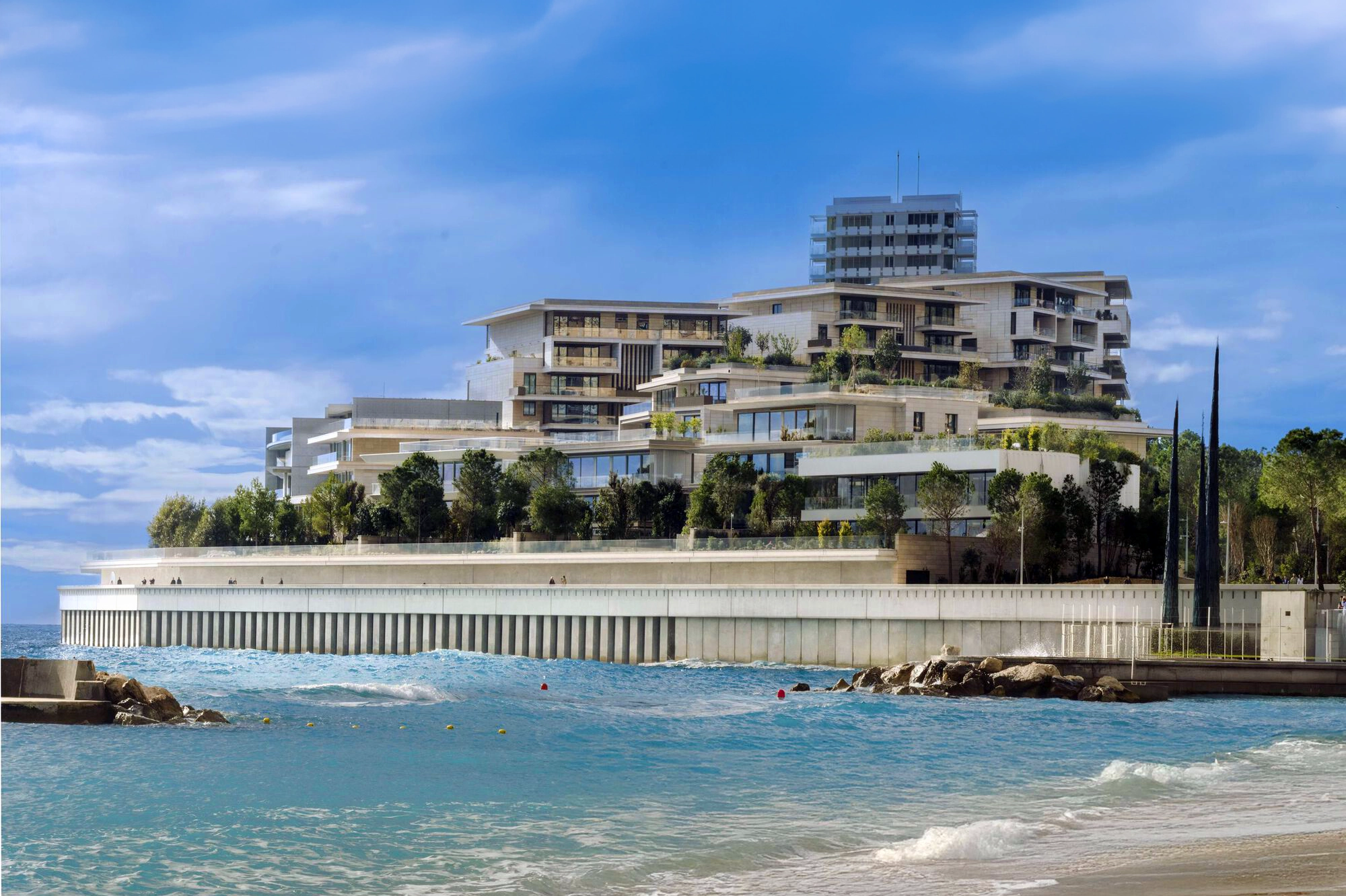
Monaco supplies the obvious comparison, and the numbers reward a careful reading. IMSEE’s Observatoire de l’Immobilier recorded an average transaction price of €57,569 per square metre across the Principality in 2025, a figure that deliberately sets villas and Monaco-Ville aside because too few of them trade to average reliably. Little of that villa stock sits in Monaco-Ville itself, a minor, heritage-driven segment on the Rock; the Principality’s true villa market has shifted to the new Mareterra district, where a handful of private villas have reportedly changed hands above 350 million euros, a figure not yet widely reported but consistent with recent transactions Baldo Realty Group has seen directly. Measured against Monaco’s own villa market, that blended average already sits above the general run of prime pricing on Cap-Ferrat. Only the peninsula’s true waterfront estates reach it, and the very rarest exceed it.
Both markets answer to the same forces. Land is finite and the properties that matter change hands seldom, so the decisive advantage belongs to the buyer whose agent hears about a sale before it reaches the open market. Precision on any single square-metre figure counts for far less than access to the few estates that will actually trade in a given year.
Savills describes the Cote d’Azur’s prime buyer pool as genuinely international. European buyers from the Benelux countries, Scandinavia, Germany and the UK sit alongside a growing weight of American and Middle Eastern capital, and no single nationality dominates the market. Monaco residents are themselves frequent buyers of Riviera second homes, a pattern Baldo Realty Group sees regularly among its own clients.
The present mix is more balanced than it once was. Through the 2000s and into the early 2010s, Russian capital was the defining force on Cap-Ferrat, and buyers from Moscow and beyond drove prices to levels the peninsula had not seen before, taking a string of its landmark estates in the process. That wave receded after 2014 and then fell away sharply after 2022, when European sanctions led French authorities to freeze or confiscate dozens of Russian-owned villas across the Alpes-Maritimes, several of them on Cap-Ferrat itself. The space that capital vacated has been taken up largely by American and Gulf buyers, which is a large part of why the current market reads as genuinely international rather than shaped by any single source.
Recent market commentary treats the ultra-prime segment, broadly anything above €7.5 million, almost as a separate asset class. Roughly half of all luxury transactions in this bracket now complete without a mortgage, a detail that says as much about the buyer profile as any price index. Families weighing Cap-Ferrat against other relocation options, including those tracked in Baldo Realty Group’s comparison of where global wealth is currently moving, tend to cite the same handful of reasons: the airport at Nice a short drive away, Monaco closer still, established international schools, and a degree of privacy the newer wealth centres cannot yet offer.
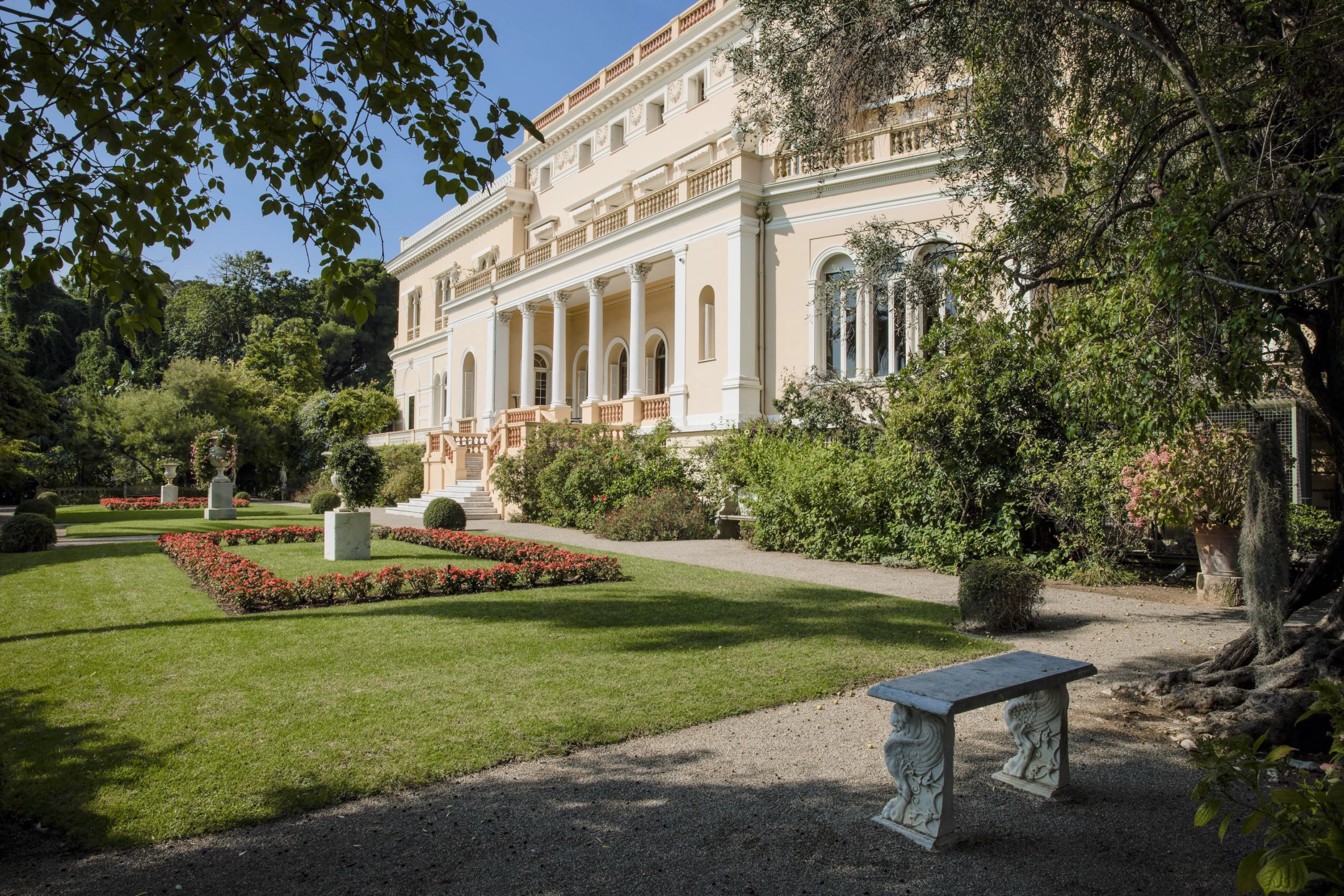
Villa Les Cedres, listed at €350 million and sold in 2019, sits within a fourteen-hectare botanical park.
The peninsula’s most storied address, Villa Les Cedres, shows how seldom these properties trade and how little the public learns once they do. Built in 1830 and much expanded during its years as a private royal residence in the early twentieth century, the eighteen-thousand-square-metre house stands within a fourteen-hectare botanical park holding more than twenty thousand plant species, one of the largest private gardens in the world. Savills listed it at €350 million, at one point the most expensive home for sale anywhere, and it reportedly sold in 2019 for around €200 million after three years on the market. The buyer’s identity surfaced only well after the deal closed.
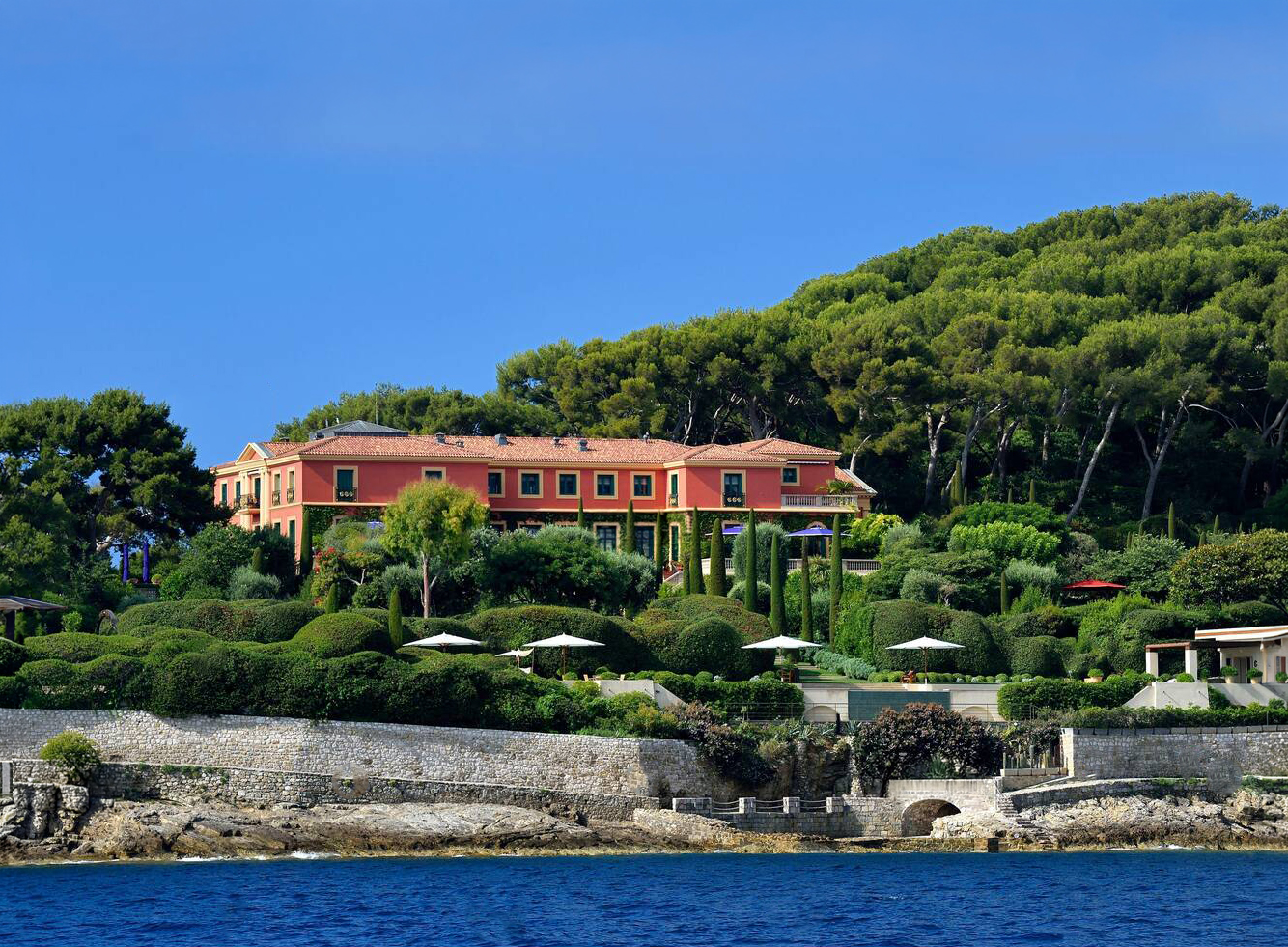
Villa La Fiorentina, rebuilt in the Palladian style with gardens by Russell Page, seen from the water.
A second landmark speaks to the peninsula’s design history as much as its prices. Villa La Fiorentina, built in 1917 at the tip of the Saint-Hospice point, was rebuilt after the war into the Palladian villa that stands today, its grounds laid out by the landscape architect Russell Page. It reached international fame under the American advertising executive Mary Wells Lawrence, who bought it in 1969 and commissioned interiors from Billy Baldwin that decorators still study today. The estate was acquired in the early 2000s by the German pharmaceutical billionaire Curt Engelhorn, reported to have spent as much as €90 million on its restoration. With roughly thirty thousand square metres of grounds and two swimming pools, it remains one of the largest holdings on Cap-Ferrat.
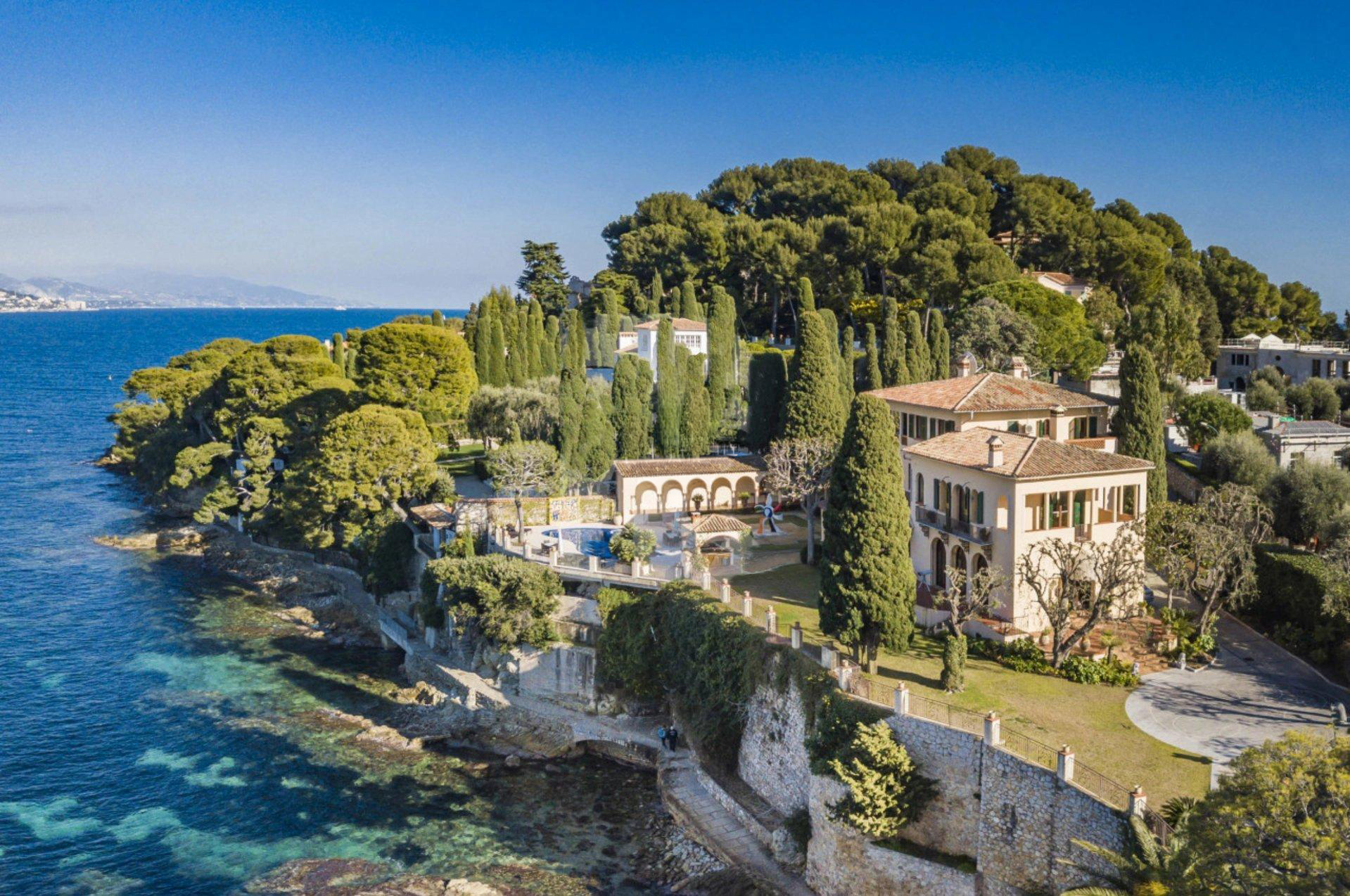
Villa Maryland, sold in 2023 in one of the peninsula’s rare off-market transactions.
A more recent sale shows the same discretion at work. Villa Maryland, an eighteen-bedroom Belle Epoque estate built in 1904 and long owned by Microsoft co-founder Paul Allen, passed in June 2023 to the American hedge fund founder Israel Englander of Millennium Management. Savills brokered the deal; the price never entered public documents, though brokers put it at around €100 million. Both the selling estate and the buyer were American, which reflects how much of the peninsula’s current demand originates in the United States.
The rhythm is consistent. An estate markets for years, the negotiation happens in private, and any confirmation of price arrives long after the deed is signed, if it arrives at all. Baldo Realty Group’s work in Monaco’s trophy asset market carries directly across the border, where the estates worth pursuing seldom surface in a public listing.
The French Riviera now moves at two speeds. Across the broader market, resale values in the Alpes-Maritimes eased through 2024 and 2025, and energy-inefficient stock corrected by several percentage points as buyers gained room to negotiate. The ultra-prime waterfront tier told the opposite story, holding firm and setting fresh records on the best addresses.
Cap-Ferrat sits at the sharp end of that divide. Demand for its rarest homes runs well ahead of supply, and when a true waterfront plot appears it draws international bidding rather than a single negotiation. Because roughly half of luxury purchases here complete without a mortgage, the tier is largely insulated from interest-rate cycles, and global wealth creation and currency movements weigh more heavily than central-bank decisions. American buyers returned in force through 2025 on the back of a strong dollar and took much of the market above fifty million euros, with Gulf and Northern European demand steady behind them. This American and Gulf ascendancy has filled the space left by Russian buyers, for much of the previous two decades the peninsula’s most active force, whose presence fell away under the sanctions imposed from 2022. Our reading of the wider French Riviera investment case sets this resilience in context.
Scarcity is the structural anchor. A protected coastline, strict planning limits and the simple absence of new waterfront mean supply cannot expand to meet demand, much as constrained inventory shapes pricing in neighbouring Monaco. The main source of stock is generational, as estates held for decades change hands when families turn over. The risks are real enough, among them geopolitical shocks, heavier taxation and any sharp fall in global wealth, yet the premium attached to the cape has proved durable across cycles.
A French purchase runs through a notaire, and the acquisition costs differ meaningfully from Monaco’s. On resale property, frais de notaire come to roughly 7 to 8 percent of the price. A 2025 reform allows each French department to add up to half a percentage point to transfer duty, but Alpes-Maritimes, where Cap-Ferrat sits, chose not to apply the increase, so buyers on the peninsula are unaffected for now. New-build property carries a lower rate, typically 2 to 3 percent, plus VAT.
Clients who already own in Monaco and are adding a Riviera property, or approaching France for the first time, generally benefit from a single point of coordination across both jurisdictions. Baldo Realty Group’s guide to the full costs of buying in Monaco sets out the Principality’s own fee structure for direct comparison, and our team can walk a cross-border client through both processes side by side before any offer is made.
Beyond the notaire’s fees, the deeper contrast between France and Monaco is fiscal, and it is where cross-border families spend most of their planning. France levies an annual wealth tax, the impôt sur la fortune immobilière, on net French real estate worth more than 1.3 million euros, at progressive rates from 0.5 to 1.5 percent. It reaches non-residents on their French property whether the asset is held directly or through a company, while Monaco levies no wealth tax at all.
Succession is the second consideration, and the more intricate. French law reserves a fixed share of an estate for the deceased’s children, the réserve héréditaire: half where there is one child, two-thirds for two, three-quarters for three or more, with only the remainder freely disposable. The EU Succession Regulation, known as Brussels IV, lets a foreign national elect the law of their nationality to govern their estate by will. A 2021 amendment to the Civil Code, however, allows protected children to reclaim their reserved share against assets located in France, and the measure remains under review at European level. The interaction is genuinely complex, so a will drafted for a Cap-Ferrat purchase should be reviewed on both sides of the border.
The gap widens further at death. French inheritance tax in the direct line runs on a progressive scale to 45 percent, while Monaco charges nothing between parents and children and taxes only assets situated in the Principality, a distinction we set out in our guide to inheritance and Monaco real estate. Many buyers hold French property through a société civile immobilière, an SCI, which can simplify succession and preserve privacy, though it neither removes the wealth tax nor sidesteps forced heirship. On a later sale, capital gains carry 19 percent tax plus 17.2 percent social charges, reduced by relief that tapers over long ownership, with a surtax on gains above 50,000 euros. For families weighing where to base themselves, our guide to becoming a Monaco resident sets out the alternative. None of this replaces advice from a notaire and a tax counsel engaged before any offer.
Waterfront on Cap-Ferrat comes with a legal subtlety that surprises many first-time French buyers. The shoreline and the seabed form part of the domaine public maritime, the maritime public domain, which belongs to the State and cannot be owned or sold. A private jetty, a mooring or even a sea wall built onto that domain rests on a concession from the State, an autorisation d’occupation temporaire that is time-limited, revocable and personal, and that carries an annual fee. Fixed pontoons are rarely permitted, and even the Grand-Hôtel’s poolside terrace operates under exactly this kind of authorization.
The practical lesson is to read the sea structures on any title as carefully as the house itself. A “private mooring” is almost always a concession rather than owned water, and its term and transferability bear directly on what the property is worth. A buyer should confirm the status of every jetty, platform and retaining wall before committing.
Two further rules shape life at the water’s edge. The 1986 Loi Littoral protects the natural character of the coast and constrains new construction close to the shore. A separate right-of-way, the coastal footpath, burdens waterfront properties with a three-metre public passage along the sea that owners cannot fence off, though its route can be adjusted where it would run close to dwellings walled before 1976. On Cap-Ferrat that path rings much of the peninsula, one more reason the counsel of an agent who knows the coastline earns its place.
Baldo Realty Group maintains relationships across the Cote d’Azur’s off-market network, extending the same discretion that governs our Monaco practice to Cap-Ferrat, Villefranche-sur-Mer and the wider Riviera locations our clients ask about most. For a family already resident in Monaco, or considering it, a Cap-Ferrat property is rarely a separate search. It usually forms part of a wider decision about where to base both a household and the assets that support it.
Renovation is often part of that decision too. Many of the peninsula’s older estates were last modernised decades ago, and Baldo Realty Group’s experience renovating villas across the French Riviera shapes how we advise clients on what a given property will genuinely cost to bring current, before any offer is made.
To discuss access to Cap-Ferrat’s off-market stock, speak with the Baldo Realty Group team directly.
Sources: Savills Spotlight Cote d’Azur; Knight Frank Overseas Property; IMSEE Observatoire de l’Immobilier 2025; Notaires de France; Bloomberg and Robb Report reporting on Villa Maryland; France Tax Law departmental DMTO guidance; Four Seasons and published estate histories for the Grand-Hôtel du Cap-Ferrat and Villa La Fiorentina.