Post 8 min read
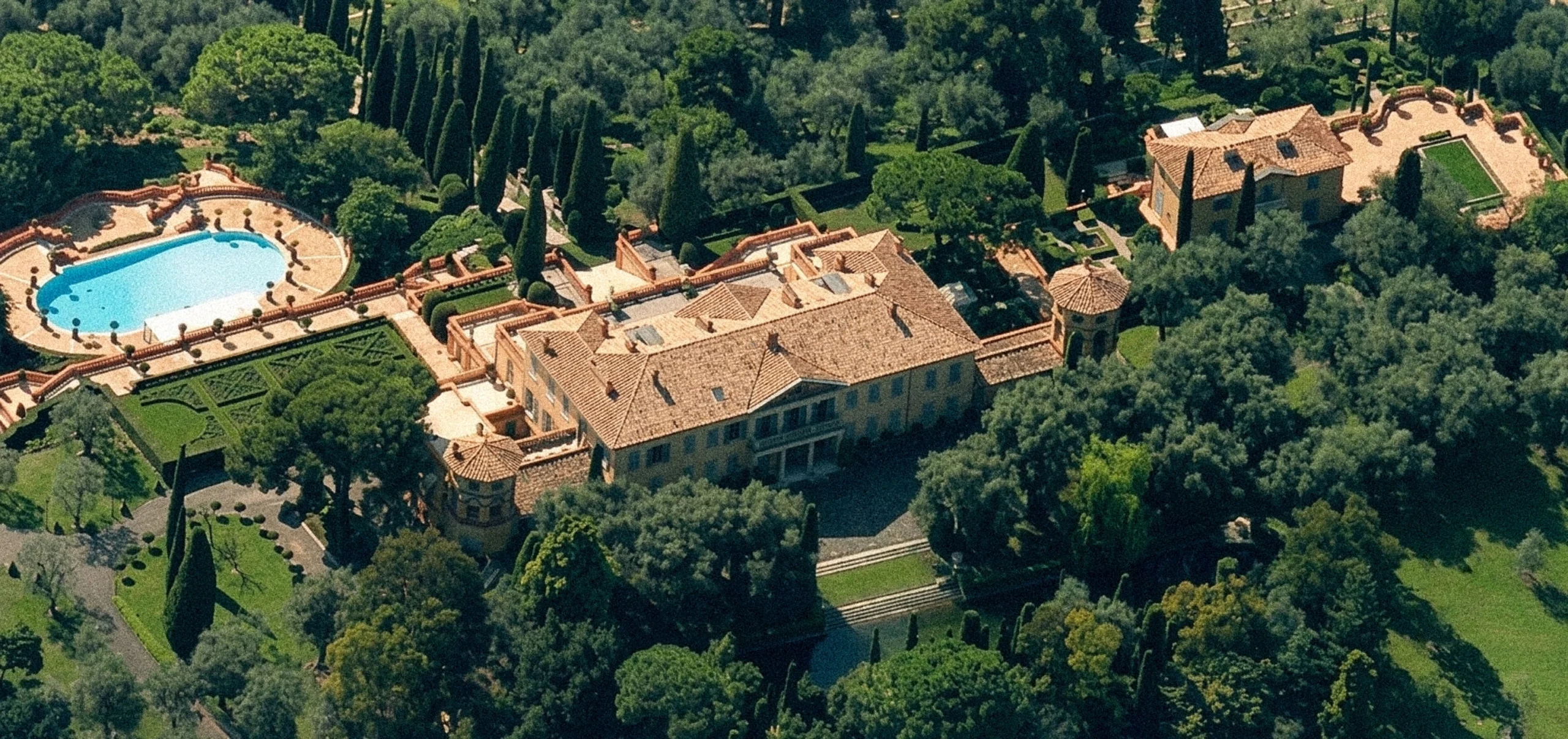
Perched on the Col de Caire, the narrow ridge that separates Nice from Villefranche-sur-Mer, Villa Leopolda occupies one of the most formidable positions on the French Riviera. Its 7.3 hectares of south-facing terraces look directly over the Rade de Villefranche, one of the deepest natural harbours in the western Mediterranean, and across the water to the wooded peninsula of Saint-Jean-Cap-Ferrat. The villa itself, roughly 2,700 square metres with ten principal bedrooms, was designed not as a single commission but as an architectural unification of a dozen existing structures, transformed into a neo-Palladian landmark between 1929 and 1931 by the American architect Ogden Codman Jr.
The estate’s address, 1670 Avenue Léopold II, still carries the name of the man who assembled the original land. More than a century after his death, the property remains one of the most valuable, most contested, and most closely watched residential holdings on the Côte d’Azur. Its ownership history reads less like a chain of title and more like a compressed history of twentieth-century wealth itself.
King Leopold II of Belgium was a persistent buyer on the French Riviera long before the coast became synonymous with global capital. Beginning around 1895, he acquired eighteen separate parcels on the hill above Villefranche, assembling what would eventually total some eighteen hectares. The original architect, Aaron Messiah, was retained to consolidate and modify the structures. Leopold named the property after himself and, in keeping with a private life that generated considerable controversy in Belgium, gifted the estate to his mistress Blanche Zélia Joséphine Delacroix, whom he elevated to the title of Baronne de Vaughan.
Delacroix was twenty-one when Leopold died. She was swiftly expelled from the property by his nephew, King Albert I, who assumed ownership. During the First World War, the villa served as a military hospital, and Aaron Messiah added several small wooden structures in the grounds to serve as dormitories for wounded soldiers. Following the armistice, Albert I divested his Riviera holdings. In 1919, the Comtesse de Beauchamp, born Thérèse Vitali, purchased the estate and commissioned extensive modifications to the gardens and interiors, restoring the olive, lemon and orange groves that had been neglected during wartime.
By the late 1920s, the estate had changed character several times but remained architecturally incoherent. That changed when Ogden Codman Jr., already celebrated for co-authoring The Decoration of Houses with Edith Wharton and for designing interiors at The Breakers for the Vanderbilt family, purchased the dozen or so existing structures on the site.
Codman had relocated permanently from New York to France around 1920, settling at the Château de Grégy near Paris while wintering on the Riviera. Villa Leopolda became his personal magnum opus: a full-scale reimagining of a fragmented property, including two peasant cottages, into a unified neo-Palladian composition. Construction ran from 1929 to 1931. His approach drew heavily on Italian and French precedents from the sixteenth through eighteenth centuries, with proportions and symmetries that reflected his Beaux-Arts training at the Massachusetts Institute of Technology.
Codman’s fastidiousness was legendary. When the Duke and Duchess of Windsor expressed interest in leasing the villa but insisted on alterations, negotiations broke down in a Paris hotel over Codman’s protective clauses. His reported response captures the man in full: he regretted that the House of Codman could not do business with the House of Windsor.
The original architectural drawings, floor plans and stereo glass-plate photographs of the completed villa survive in the collections of Historic New England in Boston. They remain among the most complete records of any private Riviera estate from the interwar period. Financial difficulties, partly driven by his own lavish expenditures on the project, prevented Codman from ever fully occupying the property. He rented it to a succession of wealthy tenants until his death in 1951.
Following Codman’s death, the estate was sold to Canadian financier Izaak Walton Killam, whose wife Dorothy inherited it after his death in 1955. In the late 1950s, she sold Villa Leopolda to Gianni Agnelli, the charismatic president of Fiat, and his wife Marella. The Agnelli name brought a different kind of lustre: postwar industrial glamour, the intersection of automotive empire and Mediterranean leisure. Their renovations, however, erased some of Codman’s original details, most notably the varied-hue scagliola walls in the Italian Salon, which disappeared under layers of white paint.
The Agnellis sold the property back to Dorothy Killam in 1963, and she lived there until her death in 1965. The villa then passed through a quieter period before its next, and most consequential, chapter.
In 1987, Lebanese-born Brazilian banker Edmond Safra and his wife Lily acquired Villa Leopolda. Despite maintaining a penthouse in Monaco, just ten kilometres to the east, the Safras treated the estate as their principal stage for entertaining. They commissioned the acclaimed Italian architect and set designer Renzo Mongiardino for the ground-floor interiors and brought in Mica Ertegün, the Romanian-born designer then at the height of her influence, for the second-floor bedrooms.
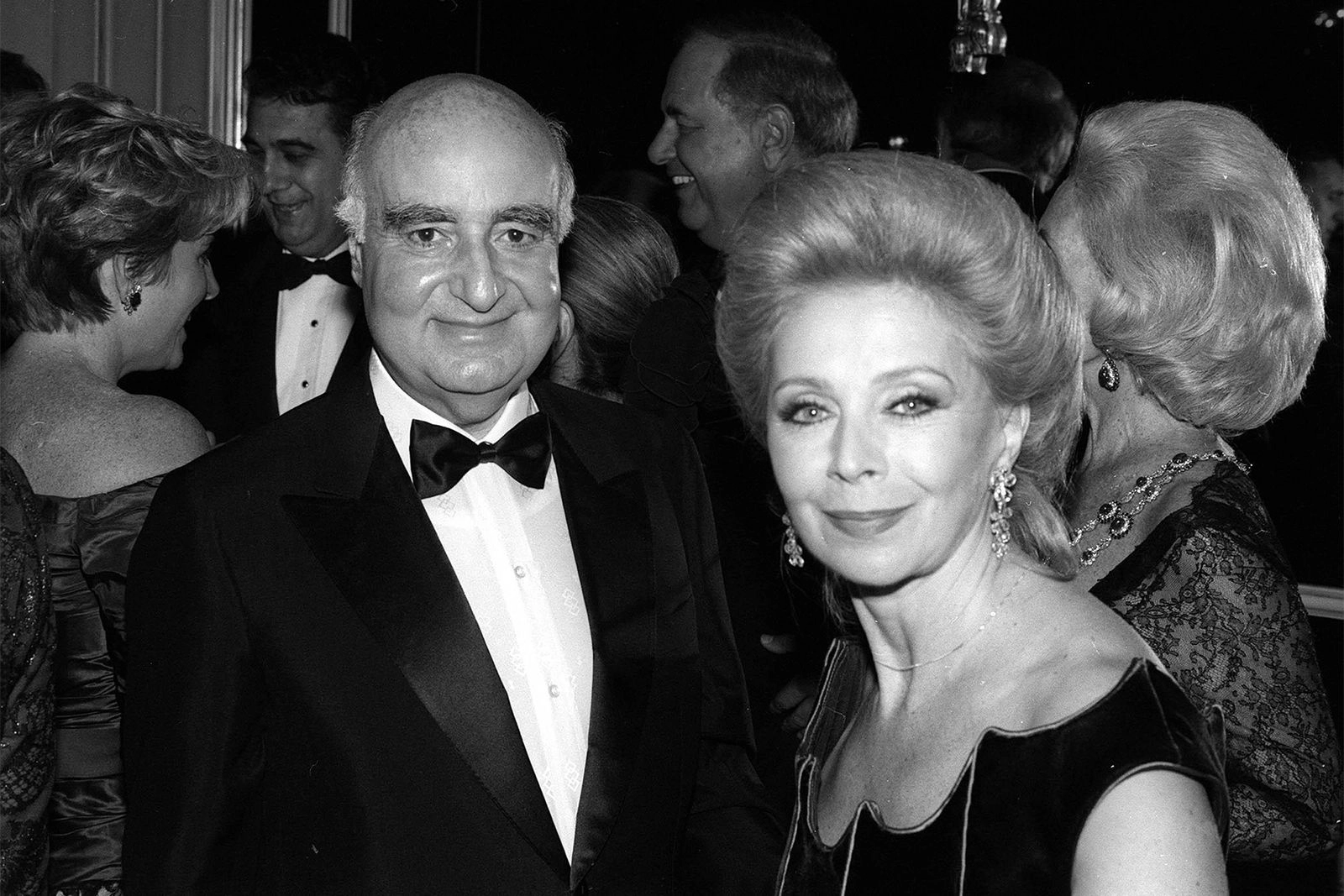
Edmond & Lilly Safra
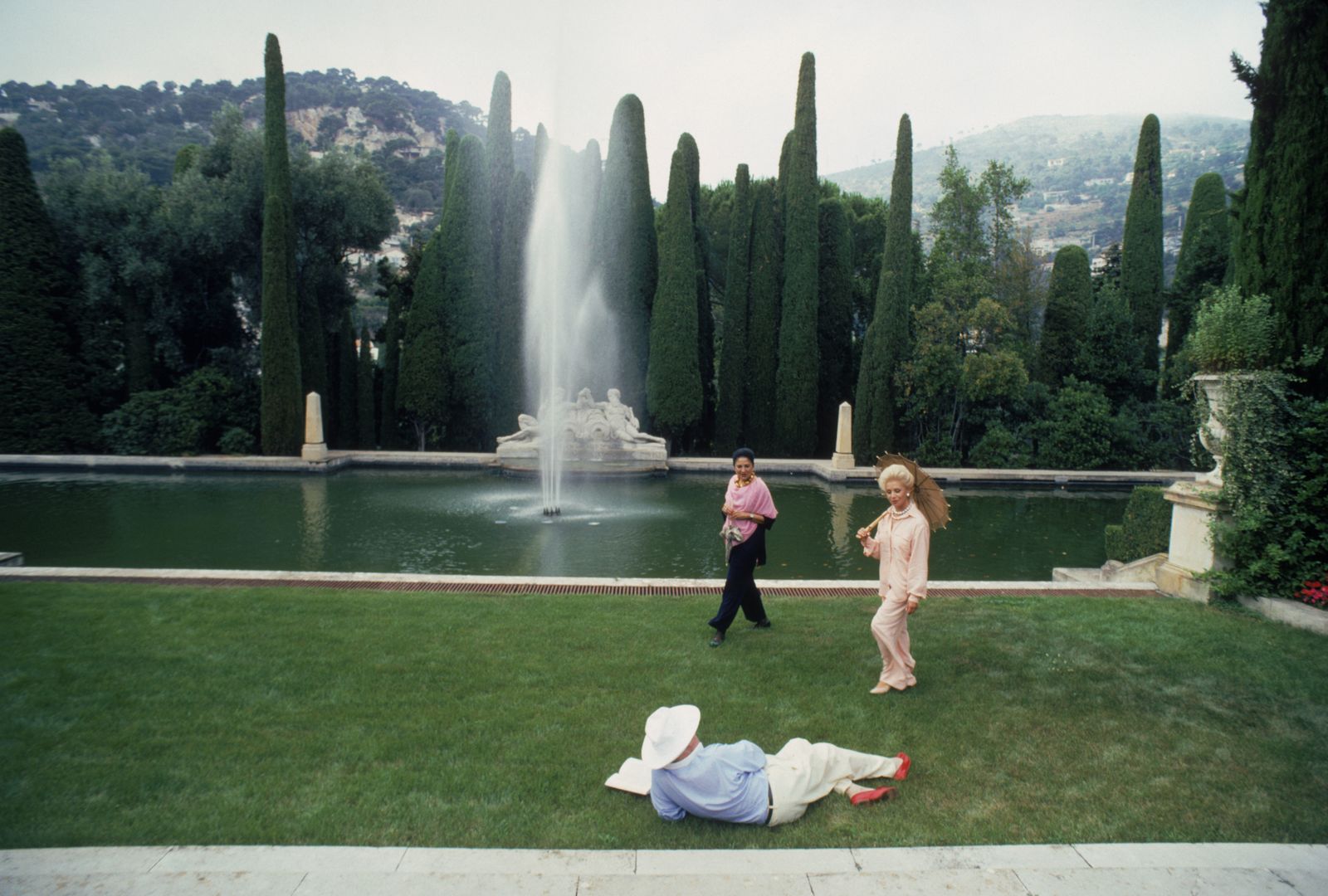
The Safra era at Villa Leopolda became the subject of considerable social mythology. At a party held there in 1988, the guest list was so extensive that it required two separate evenings: one on Saturday, another on Monday. Tulips were flown in from the Netherlands, Roger Vergé orchestrated the food from his celebrated Moulin de Mougins, and Sérgio Mendes arrived from California with his full orchestra. Author John Fairchild, chronicler of international social life, described the occasion in his book Chic Savages as something approaching the outer limit of extravagance.
Edmond Safra died in 1999 in a fire at their Monaco penthouse. Lily Safra inherited the villa and continued to maintain it until her own death in Geneva in July 2022. She had also chaired the Edmond J. Safra Foundation, which directed significant resources toward education, medical research and the arts across more than forty countries.
The most dramatic episode in the estate’s modern history unfolded during the final months of the pre-crisis boom. Russian industrialist Mikhail Prokhorov, operating through the Belgian real estate entrepreneur Ignace Meuwissen, made repeated attempts to acquire Villa Leopolda from Lily Safra. She eventually accepted an offer reported at €370 million, with an additional €19.5 million for the villa’s furnishings. A deposit of €39 million was placed in escrow. Initial press reports in July 2008 incorrectly attributed the purchase to Roman Abramovich.
The transaction never closed. Prokhorov’s holding company, Société Foncière du Trého, failed to sign the final contract by the 15 December 2008 deadline. The global financial crisis had reshaped his position, and he sought to withdraw. What followed was a multi-year legal dispute over the forfeited deposit. A court in Nice ruled against Prokhorov, ordering the release of the deposit to Safra along with €1.5 million in damages. The ruling was upheld on appeal, and the Cour de Cassation rejected a further challenge. Lily Safra subsequently announced she would donate the full €39 million to ten charities across France, Israel, Rwanda, the United Kingdom and the United States.
For the ultra-prime segment of the French Riviera market, the Prokhorov affair became an instructive case study: at the level where estates command nine-figure valuations, the costs of withdrawal can be historic in their own right.
Villa Leopolda entered the cinematic imagination through Michael Powell and Emeric Pressburger’s The Red Shoes (1948), in which the estate served as the villa of the ballet impresario Boris Lermontov. The heroine ascends the villa’s stone steps expecting a dinner invitation and instead receives the starring role in a new ballet. The location was chosen precisely for its theatrical scale: the combination of terraced gardens, formal façades and the deep Mediterranean backdrop made it a natural set piece, grand enough to be believable as the private world of a figure who controlled the ballet stage.
The property is registered in the general inventory of architectural heritage of the Région Provence-Alpes-Côte d’Azur, a designation that reflects both its architectural significance and its place in the cultural record of the coast.
The grounds are, by any measure, an estate within the estate. More than 1,200 trees populate the 7.3-hectare park: olive groves, lemon and orange orchards, cypress alleys and clusters of maritime pine. The planting reflects layers of horticultural ambition stretching back to the Comtesse de Beauchamp’s restoration of the original orchards after the First World War, refined further by each subsequent owner.
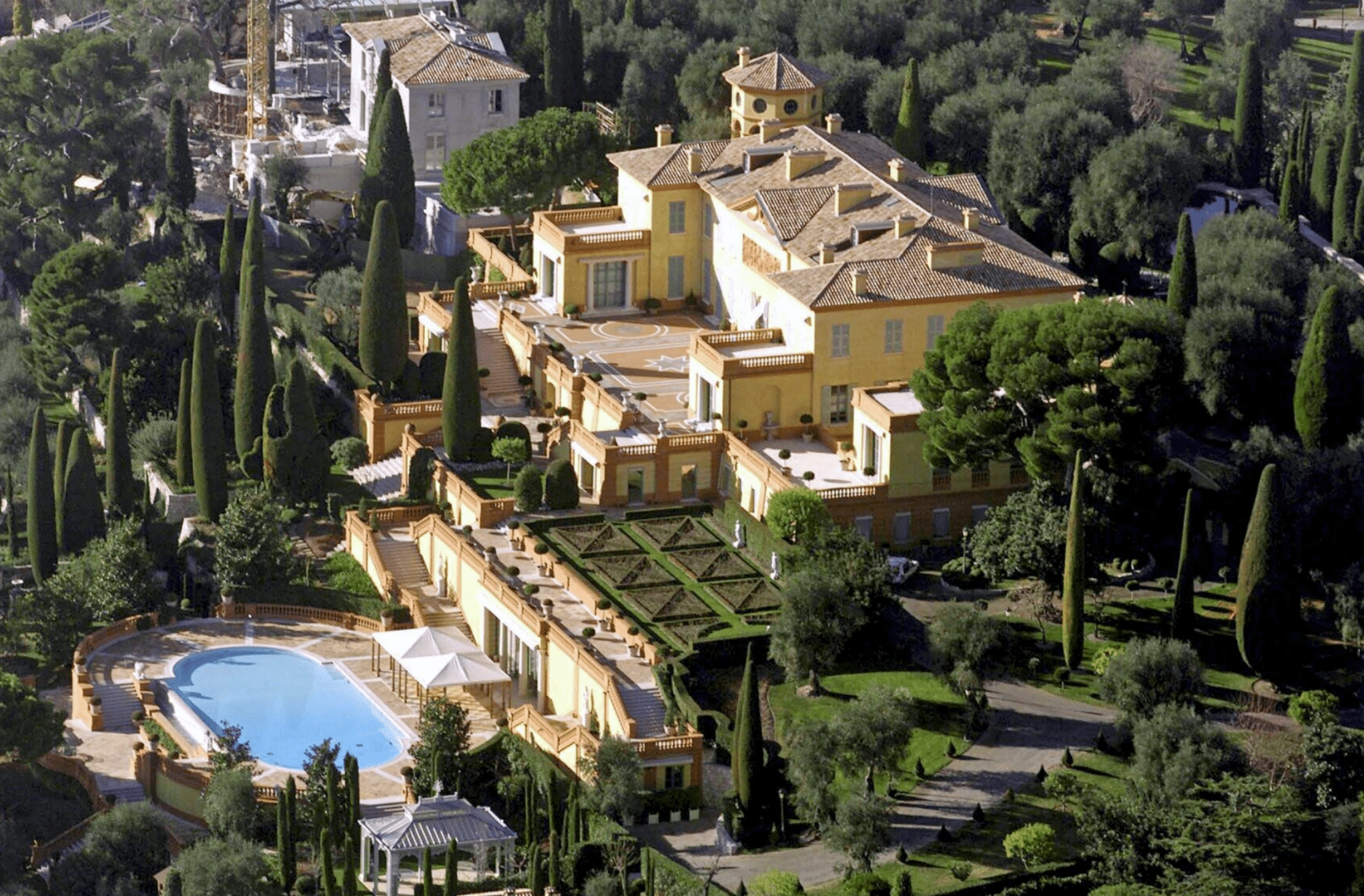
A full-time team of approximately fifty gardeners maintains the property. Estimated annual upkeep costs for the grounds alone are widely cited at around €5 million. For context, that figure exceeds the total value of most residential transactions in the surrounding communes. The scale of maintenance required is one reason properties of this magnitude rarely trade: the running costs alone function as a filter, limiting the pool of plausible owners to a handful of individuals worldwide.
Villefranche-sur-Mer remains one of the least commercially developed stretches of coast between Nice and Monaco. There are no large-scale resort complexes, no casino frontage, no towers. The old town, with its covered Rue Obscure dating to the thirteenth century, sits at water level directly below the Col de Caire, sheltered from the Mistral in a way that gives Villefranche a microclimate measurably warmer than much of the surrounding coast. For buyers considering trophy assets along the Riviera, these characteristics matter: proximity to Monaco and Nice-Côte d’Azur airport, combined with a level of seclusion that the more visible communes cannot offer.
Villa Leopolda sits at the very apex of that hierarchy. It is not merely a large villa on the coast; it is a property whose ownership timeline, architectural pedigree and sheer physical scale place it in a category shared by only a handful of estates globally. Whether its next chapter involves the Safra heirs, a new institutional owner or a foundation remains one of the most closely watched questions in European ultra-prime real estate.
Baldo Realty Group advises on trophy properties across Monaco and the French Riviera. For a confidential conversation about opportunities in Villefranche-sur-Mer, Saint-Jean-Cap-Ferrat or the broader Côte d’Azur, get in touch. You may also explore our wider coverage of the best locations on the French Riviera.
This article is provided for informational purposes only. It does not constitute legal, tax or investment advice. Prospective buyers should consult qualified professionals before making any acquisition decision.
Sources
Villa La Leopolda – Official Estate History
Historic New England – Codman Architectural Archive
ABC News – Prokhorov Loses Deposit (2010)
Forbes – Lily Safra Obituary (2022)
Nice-Matin – Prokhorov condamné à verser 39 millions d’euros à Lily Safra (2012)