Post 11 min read
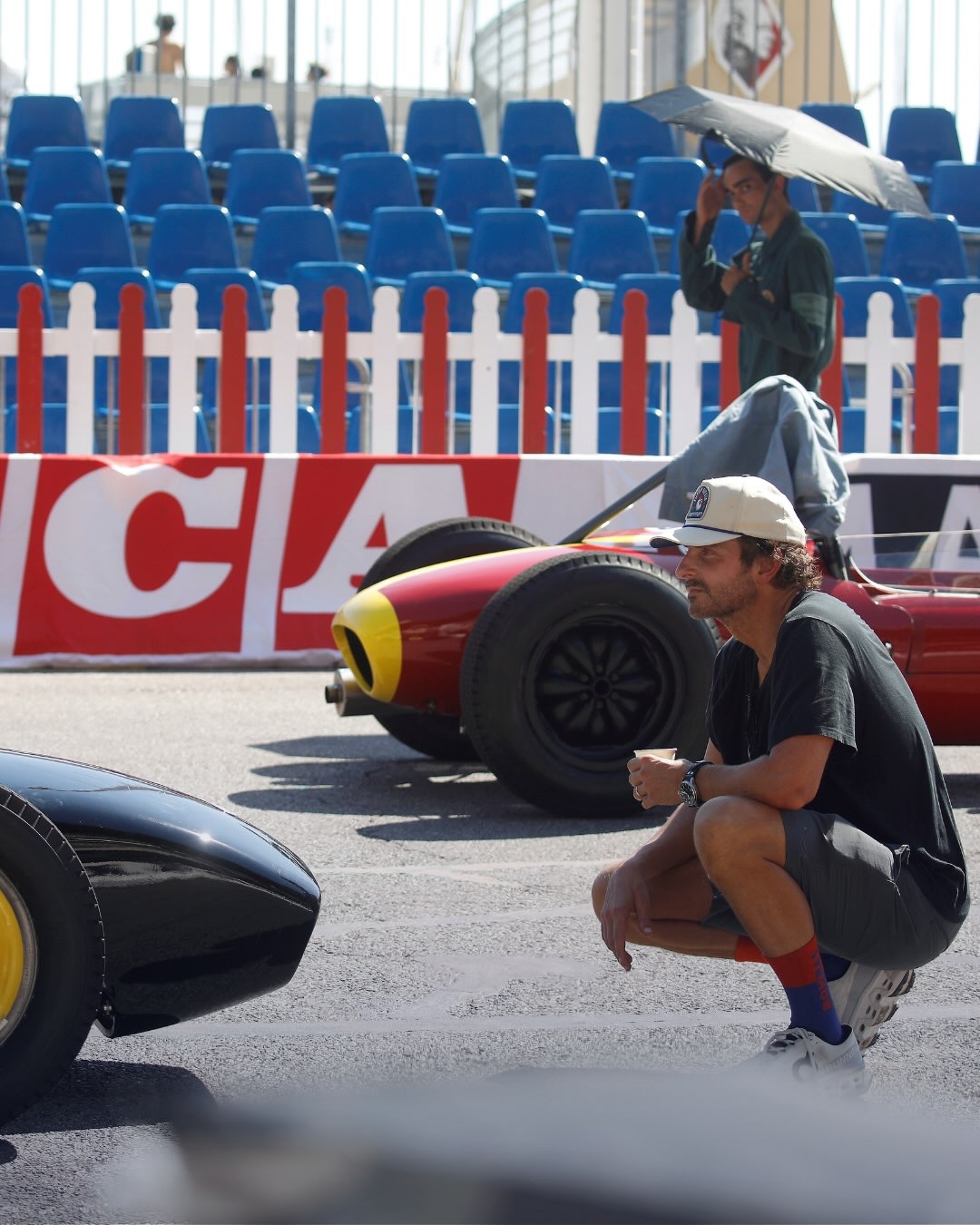
At five o’clock on Monday morning, Quai Albert Ier belonged to Warner Bros. Vintage Cooper and Ferrari bodywork sat under lighting rigs where tenders normally tie up, several hundred extras in early-sixties tailoring waited on their marks, and the most photographed harbour in Europe had been dressed to resemble itself as it looked sixty-four years ago.
The Prince’s Government describes the project only as an important cinematographic production. The industry has been less discreet. The shoot is the Monaco unit of Warner Bros.’ Ocean’s prequel, directed by and starring Bradley Cooper opposite Margot Robbie, produced through Robbie’s LuckyChap banner and operating under the provisional title Sandcastles. It runs from Sunday 23 August to Friday 28 August, and over five mornings it closes, in sequence, very nearly every street that matters to the Monaco property market.
The premise is an origin story. Before Danny Ocean, the character George Clooney played across Steven Soderbergh’s trilogy, ever set foot in a Las Vegas count room, two people taught him the trade: his parents. Robbie outlined the idea publicly earlier this year, describing a couple in their prime executing an elaborate theft. Cooper joined in March after the departure of Lee Isaac Chung, wrote the screenplay himself and stepped in front of the camera as well. It is his fourth feature as a director, following A Star Is Born, Maestro and Is This Thing On?.
Scenes from the production at Port Hercule. View the reel on Instagram
Wagner Moura, Monica Barbaro and Josh Gad are among the ensemble, with further names reported as the production moved through Paris and onto the coast. Casting calls sought hundreds of period extras across Monaco and Nice: croupiers, sommeliers, concierges, mechanics, the human furniture of a Grand Prix weekend in an age before corporate hospitality. The finished film remains officially untitled and is scheduled for release on 25 June 2027.
What separates this from the long list of productions that have borrowed the Principality as scenery is that Monaco is not the wallpaper. It is the scene of the crime. The story is built around the place, which means the sets, the costume design and the location work all serve one purpose: reconstructing a specific Monaco that no longer physically exists.
The 1962 Monaco Grand Prix was run on 3 June over 100 laps and 314.5 kilometres. Jim Clark took his first World Championship pole for Lotus and retired at half distance. Graham Hill led until the closing stages, when his BRM’s engine gave out, handing Bruce McLaren his first Monaco victory in a Cooper-Climax T60, with Ferrari’s Phil Hill second and Lorenzo Bandini third. It was a race decided by attrition on a circuit that ran through the same streets now blocked off by production trucks.
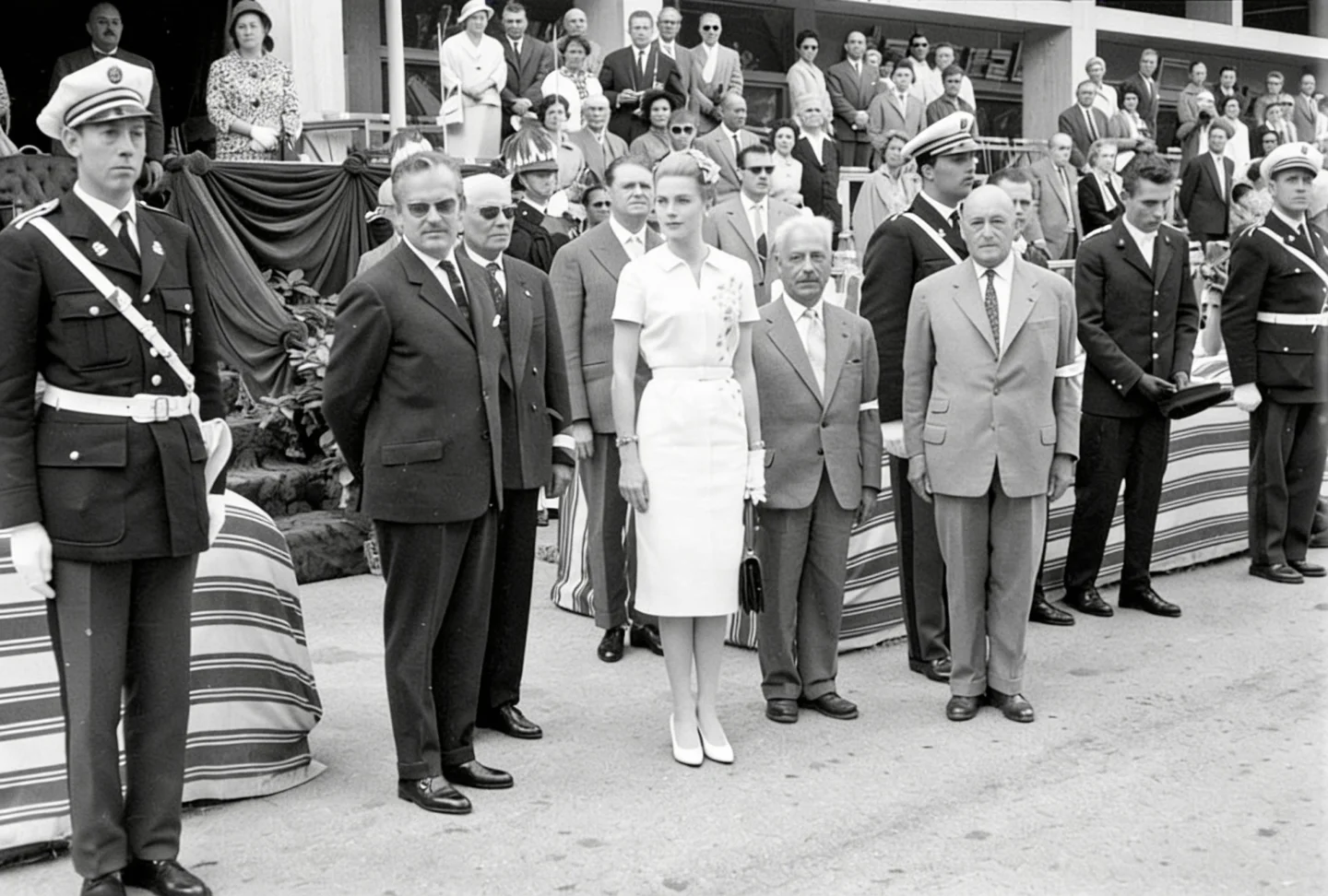
Prince Rainier III and Princess Grace at the Monaco Grand Prix in the early 1960s.
The year matters for reasons well beyond the racing. This was Monaco under Rainier III and Grace, at the moment the Principality was assembling the international identity it has traded on ever since. It was also, crucially, a smaller country. Fontvieille had not been reclaimed from the sea. Larvotto’s beach was still being engineered. The towers that define the Monte-Carlo skyline were mostly drawings. Recreating 1962 means erasing, frame by frame, roughly a fifth of the land the Principality now stands on, and almost all of its vertical density. The set dressing is, in effect, a portrait of Monaco before the modern property market was built.
Nothing is filmed in the Principality without a signature. Every shoot requires authorisation from the Government Communication Department on Quai Albert Ier, whether it is a fashion still or a Warner Bros. unit, and the file must be lodged at least fifteen days before the first day of photography. Applications run through an online service or a paper form, and an incomplete file is simply not processed within the deadline.
Fiction productions carry an additional obligation that catches most foreign crews out. A complete version of the script, in French, has to reach the Communication Department a full month before filming begins, and any change to it triggers a fresh application. Extended occupation of streets or public spaces can attract an occupancy fee for use of the State’s public domain. Temporary radio networks for HF cameras and satellite uplinks need separate clearance from the Digital Platforms and Resources Department, and drone work requires the operating company to be registered with the Civil Aviation Authority.
Then comes the part with no real equivalent elsewhere. Place du Casino, the Casino gardens, One Monte-Carlo, the Hôtel de Paris, the Hermitage, the Café de Paris, Monte-Carlo Beach and the Sporting are not municipal assets. They belong to Monte-Carlo Société des Bains de Mer, and filming on them is a commercial negotiation conducted directly with the company. A production that wants Thursday’s Place du Casino sequence needs the Government for the road and SBM for the square. Read closely, the permit chain is a map of who owns the Carré d’Or.
The volume is higher than most people assume. The Communication Department has said it examines more than a thousand filming requests a year and refuses under one percent, usually because the notice period was too short rather than for anything to do with content. Once the paperwork clears, coordination on the ground passes to the Department of the Interior, working alongside the Public Security Department and the roads service. The timetable published for this week is what that process produces.
The Prince’s Government published the full traffic plan on 22 August. Pedestrian access to Quai Albert Ier is suspended from midday on Sunday 23 August until 23:59 on Friday 28 August. All road closures listed below apply between 5am and 10am and do not, in principle, affect residents, subject to the interruptions strictly necessary for filming. The Government has stated explicitly that these arrangements may change according to the requirements of the shoot.
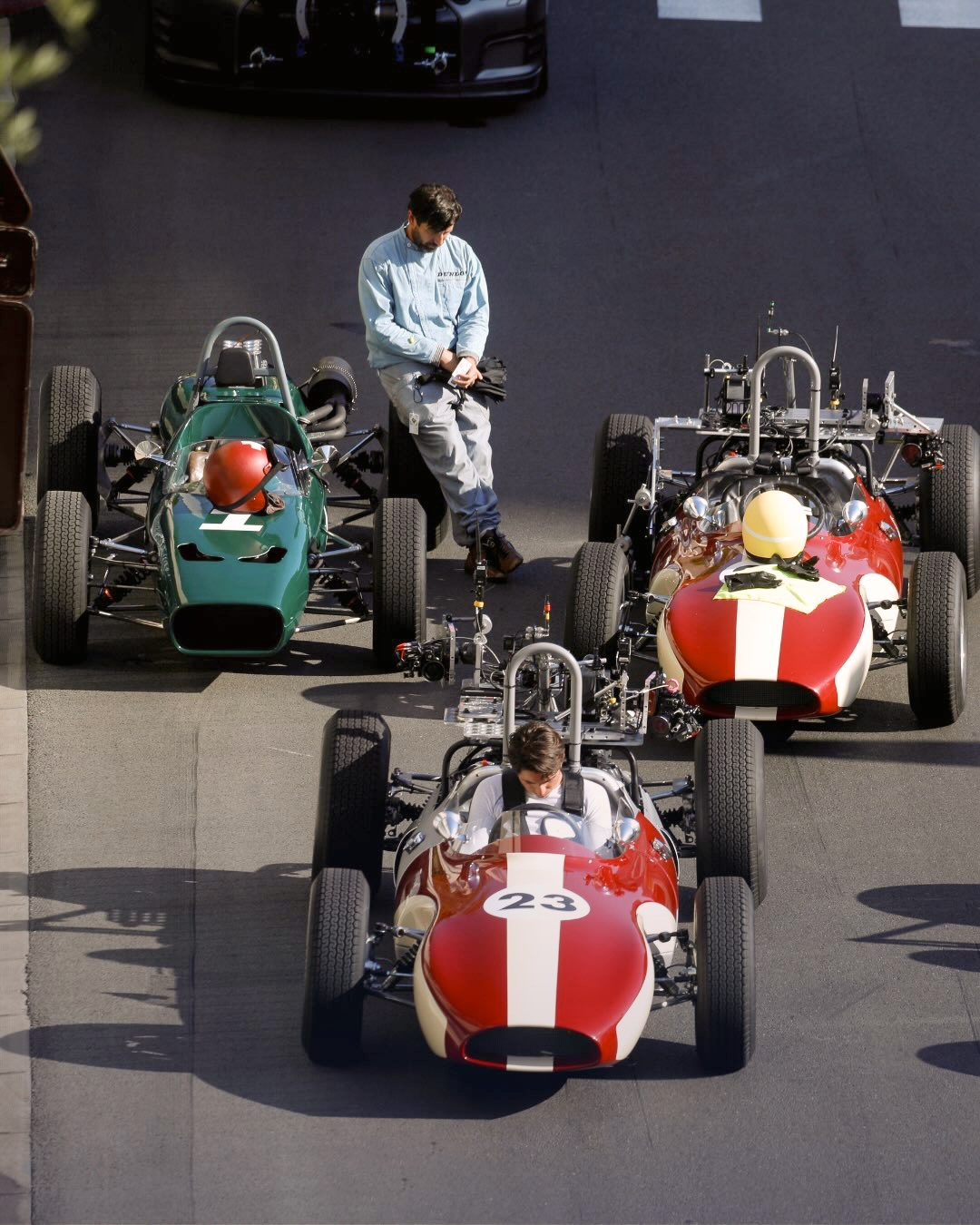
Period racing cars positioned on the Monaco street circuit for the production.
Vehicles leaving Quai Antoine Ier are directed towards the Rocher-Noghès tunnel, and those arriving from Boulevard Louis II towards Route de la Piscine. The one-way system on Rue Suffren Reymond is reversed, and Rue Louis Notari operates two-way between Rue Suffren Reymond and Rue Princesse Antoinette.
Traffic at the Portier roundabout runs in reverse on Friday, from Rue du Portier towards Avenue Princesse Grace.
Parking bans generally begin at 3am on each filming morning and lift at 11am, moving with the production from Quai des Etats-Unis and Boulevard Louis II on Monday to the Carré d’Or and Larvotto axis later in the week. Two restrictions run longer: the bay opposite 4 bis Quai Antoine Ier is closed from Sunday midday until Friday night, as is Avenue des Citronniers from Wednesday at 3am.
Public transport is materially affected. Numerous stops on CAM lines 1, 2, 3 and 5 are not served from the start of service until 10am. Lines 6 and X3 do not run at all before 10am. Line X2 terminates at Monte-Carlo and skips Portier. Lines 4 and X1 are unaffected. On the interurban network, ZOU! lines 600 and 80 bypass several Monaco stops, with replacements at Pont Sainte-Devote, Crémaillère, Honoré II, Office de Tourisme and Place des Moulins. Services departing from and terminating in Monaco leave from the Saint-Roman MC stop.
Practical note for residents and owners
Residents retain access, but journeys may be halted while cameras roll, and the published plan is explicitly provisional. Anyone expecting deliveries, contractors, removals or property viewings between 5am and 10am this week should assume delay rather than plan around the timetable. Quai Albert Ier is closed to pedestrians throughout.
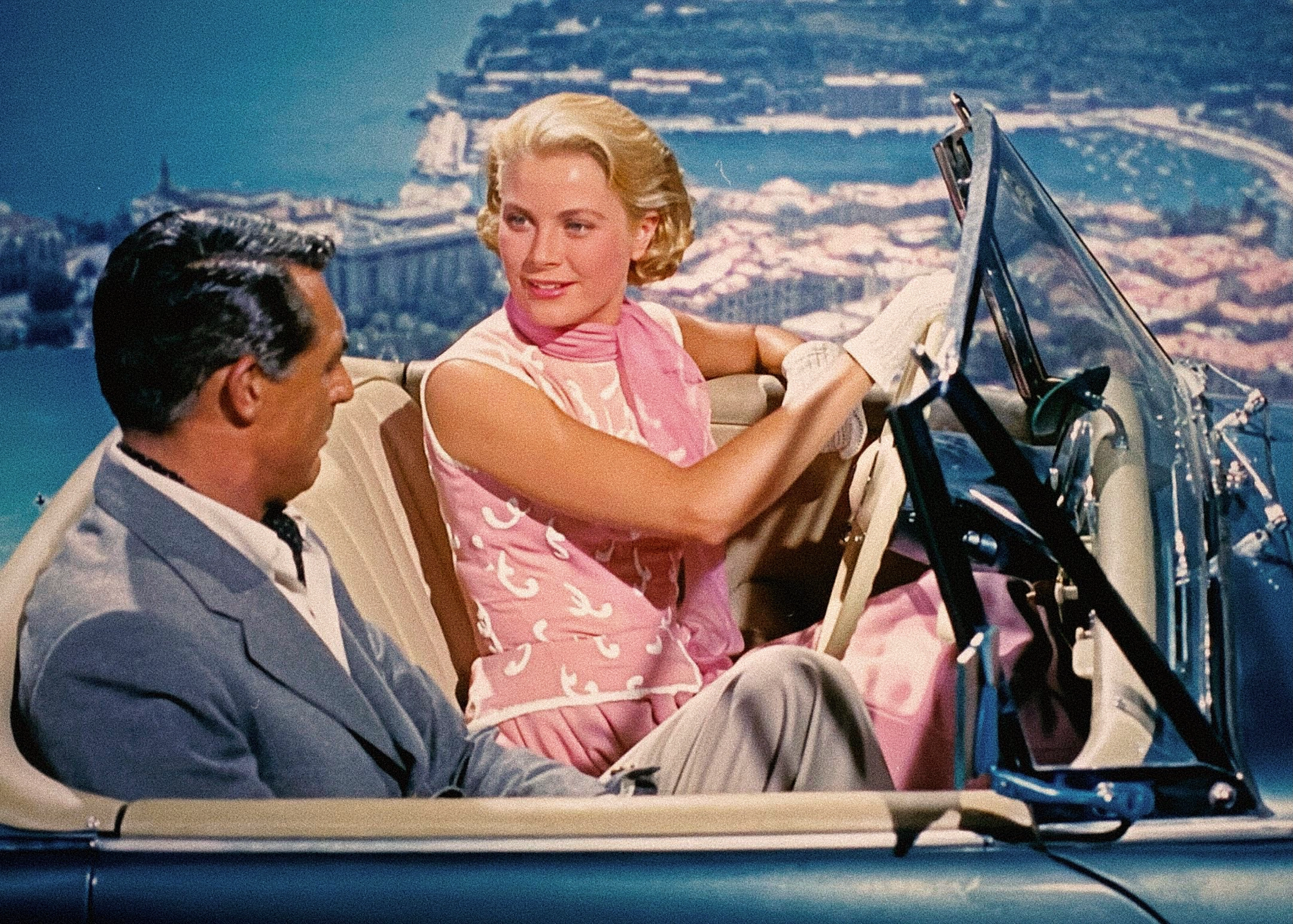
Grace Kelly and Cary Grant in Alfred Hitchcock’s To Catch a Thief, released in 1955.
For most audiences the Principality’s relationship with cinema begins with Hitchcock. To Catch a Thief placed Cary Grant and Grace Kelly on the corniches above Monaco in 1955, and the following year Kelly married Rainier III. No location scout has ever arranged better continuity between a film and a country.
The circuit did much of the rest. John Frankenheimer’s Grand Prix won three Academy Awards in 1966 and put the period’s real drivers on screen alongside the actors. Disney ran Herbie Goes to Monte Carlo through the same corners in 1977. James Bond arrived twice, in Never Say Never Again in 1983 and GoldenEye in 1995, the latter around a baccarat table at the Casino de Monte-Carlo. Iron Man 2 staged a crash on the track in 2010, and Monte Carlo borrowed the name outright in 2011.
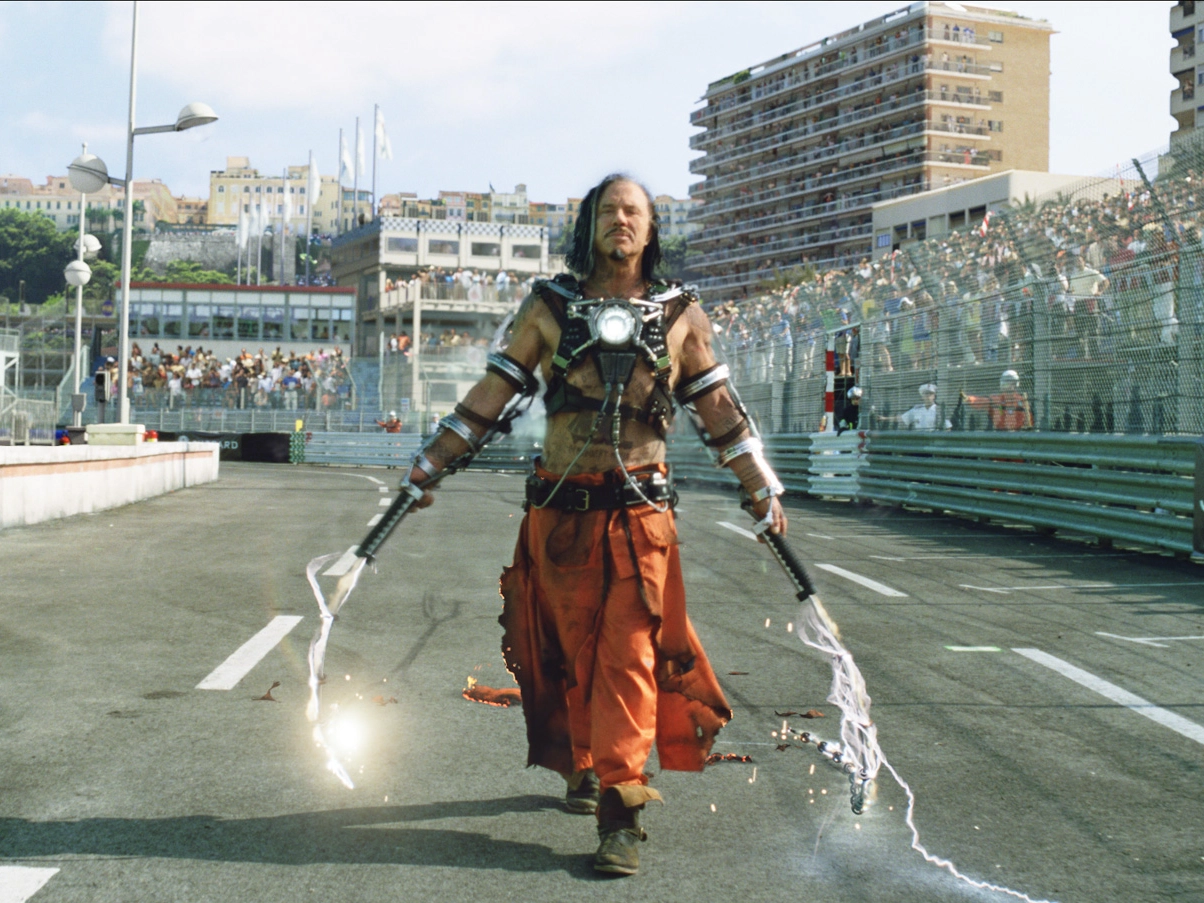
Mickey Rourke as Ivan Vanko in Iron Man 2, staged on the Monaco circuit in 2010.
The franchise itself has been here before, when Ocean’s Twelve passed through in 2004. The wider coast has absorbed decades of the same attention, which is part of why the Riviera’s most desirable addresses are recognised long before anyone visits them. In all of those films, though, Monaco is somewhere the characters travel to. This time it is where the story starts, a materially different proposition for a country whose principal export has always been its own image.
Read the closure list as a property map rather than a traffic notice and something becomes obvious. Place du Casino, Avenue de Monte-Carlo, Avenue des Spélugues, Avenue de la Costa and Avenue des Citronniers form the spine of the Carré d’Or. Avenue Princesse Grace runs the length of Larvotto. The Portier roundabout sits at the threshold of the Anse du Portier extension. The production is not filming near Monaco’s prime residential stock. It is filming on it.
The numbers behind those addresses are unusually stark. According to IMSEE, resale activity in Monte-Carlo reached 1.13 billion euros in 2025, passing the billion mark for the first time and rising 41.5% year on year across 164 transactions. Larvotto, with only 13 recorded resales, produced 851.9 million euros, close to five times its 2024 figure. Across the Principality, the average resale price climbed 26.8% to 7.6 million euros, and 22 resales exceeded 20 million euros, a record for the series.
Per square metre, the same hierarchy holds. For units built in the current decade, IMSEE’s 2025 estimates place Larvotto at 71,241 euros and Monte-Carlo at 60,526 euros, against 47,800 euros in the Jardin Exotique. The Principality-wide figure of 57,569 euros eased 1.4% from the 2024 peak, but the districts on this week’s call sheet both moved higher. Our reading of the 2025 market data sets out how that concentration developed.
Monaco has been on screen since Hitchcock sent Cary Grant along the Moyenne Corniche in 1955, and the Principality’s cinematic reputation has proved a durable, unpaid marketing asset. What is different this time is scale and intent. A studio has committed a tentpole production to a story in which Monaco is the subject, not the setting, and has spent a week rebuilding a version of it that predates the market as we know it.
The commercial effect of that will be slow and hard to isolate. Screen exposure does not move square metre prices in any measurable quarter. What it does, reliably, is renew the association between an address and a certain idea of European glamour, and that association is precisely what buyers are underwriting when they pay 71,241 euros a square metre for a Larvotto apartment. In a country of 38,367 residents where the constraint is land rather than demand, the intangible half of the asset is not a rounding error. It is a substantial part of what is being bought. The same logic governs how trophy assets change hands here, usually well away from public view.
For five mornings, the country’s most valuable streets have been rented to a film crew and returned by mid-morning. It is a reminder of how much of Monaco’s value rests on being looked at, and of how little of it is visible from the road.
Speak to Baldo Realty Group
Whether you are acquiring in the Carré d’Or, on the Larvotto seafront or in a building yet to be released, our team advises on the Principality’s prime and off-market residential stock from our offices in the heart of Monte-Carlo.
Sources
Gouvernement Princier de Monaco, traffic, parking and public transport arrangements for the film production. Compagnie des Autobus de Monaco, service adjustments. IMSEE, Observatoire de l’Immobilier 2025. Formula 1, 1962 Monaco Grand Prix race result. MonEntreprise, how to apply for authorisation to shoot in Monaco. IMSEE, 2023 population census.