Post 9 min read
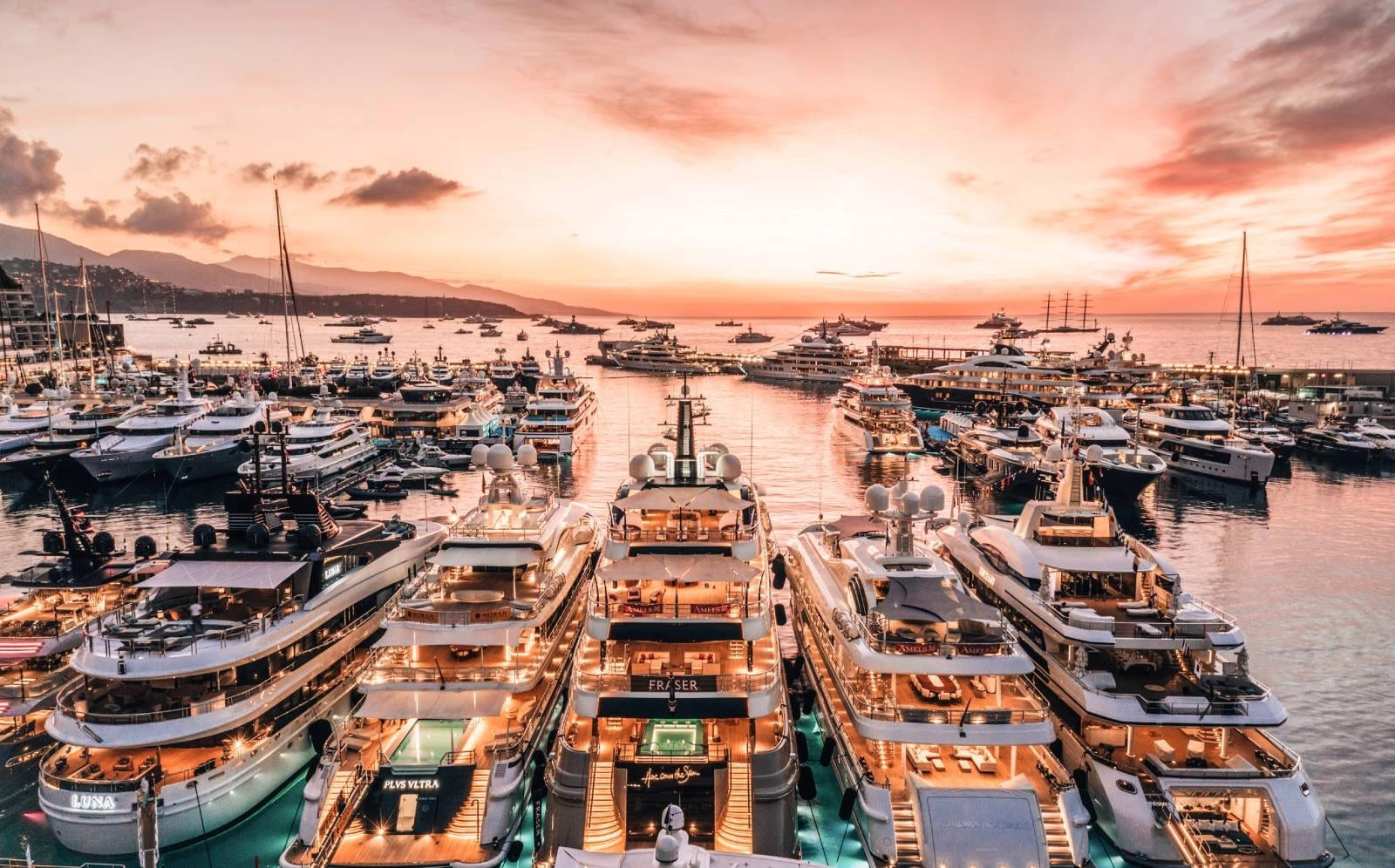
Port Hercule holds around 700 berths. Monaco counted 38,857 residents at its last census, and the number of owners who would like a permanent place on that water has never been published, which tells you most of what you need to know.
A mooring in the harbour comes with a waiting list, an allocation policy and a set of conventions familiar to anyone who has tried to buy an apartment on Avenue Princesse Grace. The difference is that the apartment can be bought.
Berths in Monaco are state property. When the principality built and extended its harbours it financed the work itself, so it never needed to sell moorings to raise capital, which is how a good many marinas along the French coast were funded. The seabed, the water and the places above them belong to the state.
What the Société d’Exploitation des Ports de Monaco grants instead is a right of use. SEPM has held the technical and commercial management of the harbours since 2002 and began operating them in January 2006, wholly owned by the state throughout. A holder acquires permission to keep a named vessel in a named place for a defined term, under conditions the company sets, enforces and can withdraw. What changes hands is a place de port, never the water beneath it.
Allocation follows nationality before anything else. The 2025 census counted 9,333 Monégasques, just under a quarter of a resident population of 38,857. Monégasque applicants are considered first and residents second. An application from someone in neither category will generally not be considered at all. SEPM also applies a one-yacht-per-household rule, which quietly removes a good deal of demand that would otherwise sit in the queue twice.
Its position on resale is blunt. A holder who advertises a berth or offers it on risks having the allocation re-examined and cancelled, with the application fee retained.
Figures circulate regardless. Brokers speak of sums in the millions for a place long enough to take a fifty-metre yacht, and of per-metre rates that would put a modest mooring on a par with an apartment. None of it can be checked against a published source, and established berth brokerages state plainly that Monaco moorings are never offered for sale. What is documented is the annual cost, and it is modest by the standards of anything else in the principality. SEPM has confirmed that an eleven-metre boat at Port Hercule runs a Monégasque owner roughly 1,350 euros a year against 5,376 euros for a foreign owner, a gap produced by national discounts of 75 percent on vessels under sixteen metres and 50 percent above that length. The scarcity in Monaco sits in the allocation, not in the tariff. That is precisely what makes the allocation so hard to obtain.
SEPM describes its portfolio as roughly 1,050 berths, of which 600 sit on annual contracts held by vessels under sixteen metres. That is a deliberate policy to keep ordinary Monégasque boats on the water rather than surrender the whole basin to superyachts, and it is one of the more revealing statistics the port company publishes.
The harbour-level figures are tighter. Port Hercule accounts for around 700 places, of which roughly 110 take yachts over 24 metres and about 30 rotate for visitors depending on the season. It is the only genuinely deep-water harbour on this stretch of coast, with water depths reaching 40 metres at the outer basin and running between 5 and 30 metres along the quays, and the largest berth in the port can accept a vessel of 130 metres. Port de Fontvieille, on the western flank of the Rock, adds 275 places with 16 kept for short stays, though a maximum draught of three metres rules out anything substantial. The published counts do not reconcile neatly, which is itself characteristic of a market where very little is published at all.
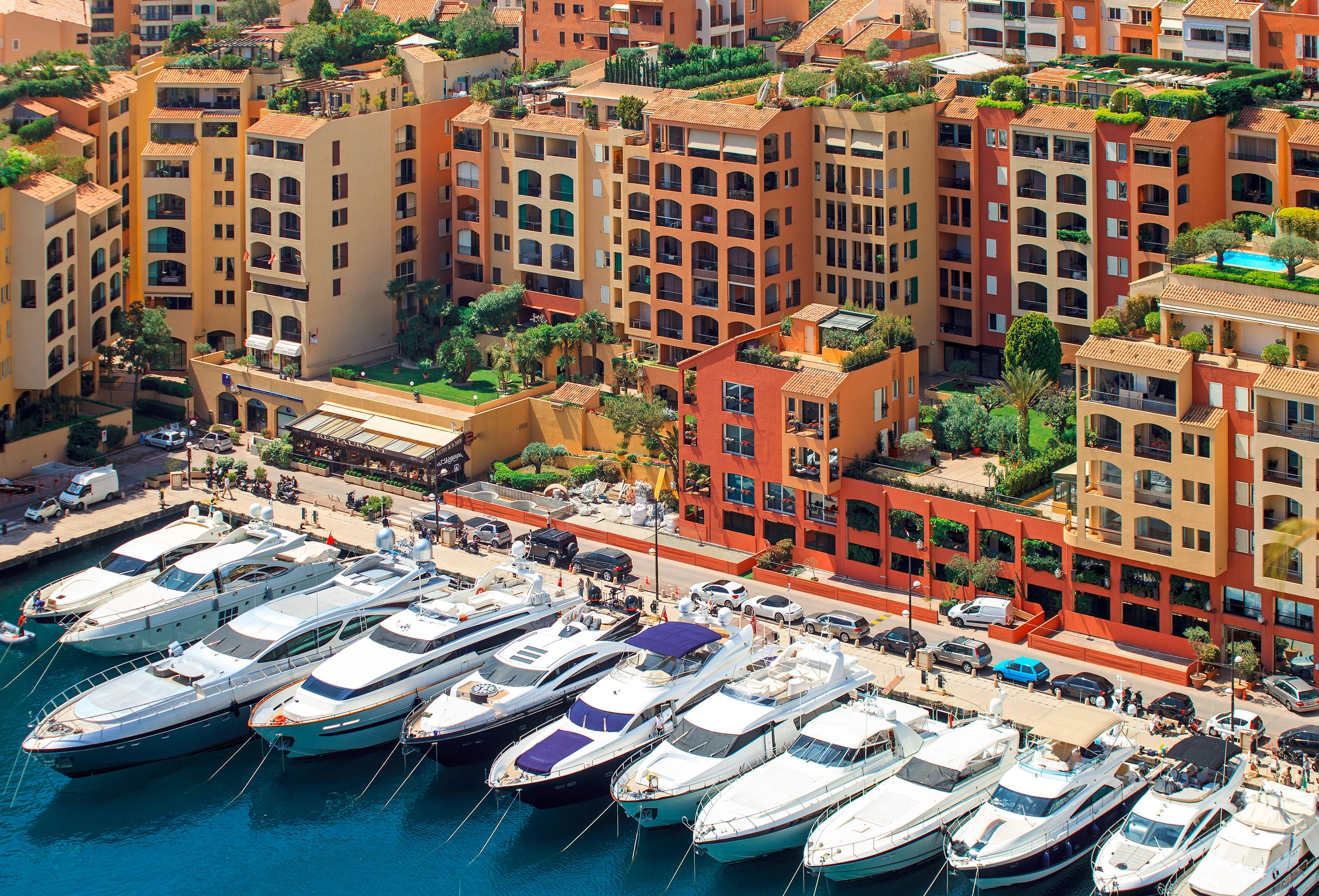
PORT DE FONTVIEILLE
At the top of the market the numbers collapse altogether. SEPM’s own management has put the number of places able to take a vessel over 35 metres at around forty, all of them in Port Hercule, and has described juggling those forty places across some 160 resident-owned boats in a single year. For units of that size the company offers no annual contracts. Anyone picturing a permanent home for a large yacht inside the principality is competing for something that barely exists in double figures.
Four routes exist, and none of them is quick.
The first is an application to SEPM, which handles allocation for both Monegasque harbours from a single office. This is the orthodox path and the slowest, measured in years for most applicants rather than months. For the largest vessels it is also the least conclusive, since what emerges at the end is rarely a standing annual contract and more often a series of negotiated seasonal arrangements.
The second runs through the Yacht Club de Monaco, which operates its own marina on Quai Louis II, in front of the Norman Foster clubhouse and held separately from the SEPM pool. It offers 26 berths for yachts between 28 and 60 metres, reserved for members and visiting owners, and functions as a port of call and an over-wintering facility rather than a route to permanent tenure. The club counts more than 2,500 members across some 80 nationalities. That arithmetic requires no commentary.
The third is to accept a smaller boat. Contracts for vessels under sixteen metres move faster than anything at the top of the market, they carry the deepest national discounts, and a tender or day boat kept in Monaco is a far more attainable proposition than a place for a hundred-metre vessel.
The fourth is to look beyond the principality, which is increasingly where Monaco itself has been looking.
SEPM established an international arm in 2016, the Société Monégasque Internationale Portuaire, mandated to take positions in ports near Monaco and further afield. The reasoning was straightforward. The home harbours were full.
The result sits in Ventimiglia, twenty minutes up the coast on the Italian side of the border. Cala del Forte was acquired in 2016 as a derelict half-built concession, completed by Monaco’s own port authority and inaugurated by Prince Albert II in July 2021. It offers 178 berths for vessels from 6.5 to over 70 metres under a concession running to 2094, the longest held by any marina in the Mediterranean. A high-speed shuttle, Monaco One, covers the 7.9 nautical miles to Port Hercule in around fifteen minutes.
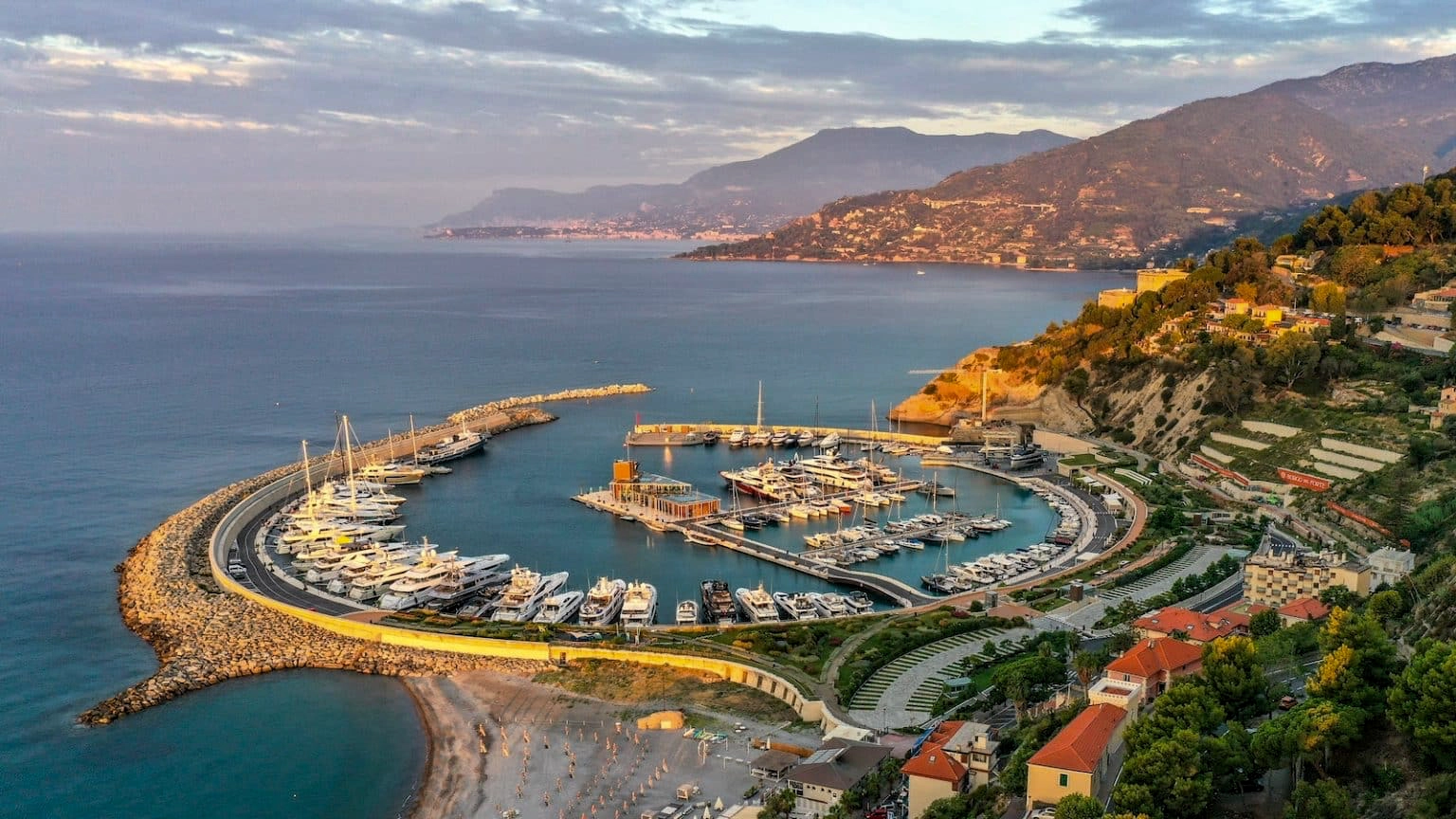
CALA DEL FORTE
Cala del Forte also does something Port Hercule does not. A limited number of its berths have been marketed on forty-year usage rights, which places contracts currently in circulation in the late 2050s. For an owner who wants a berth as an asset rather than a permission, this is the closest thing to ownership available anywhere in Monaco’s orbit.
The principality’s presence in the other direction is smaller than is often assumed. In 2020 SMIP acquired a minority stake of 20 percent in the company operating Port de Cap d’Ail, the French marina immediately west of the Rock, which holds around 265 berths with 15 sized for yachts over 25 metres. The stake secures Monaco a long-term voice in how the port is run. It stops well short of making Cap d’Ail Monegasque, and the marina’s own concession with the French state expires at the end of 2027, a date that will shape whatever follows.
Cala del Forte’s concession with the Italian state runs until 2094, the longest granted to any marina on the Mediterranean, and the clearest measure of how far Monaco has been willing to look beyond its own shoreline for capacity.
Mareterra, the six-hectare district reclaimed from the sea off Larvotto and opened in December 2024, arrived with a marina already in the drawings. The Port du Petit Portier holds sixteen berths for vessels up to sixteen metres, sized for tenders, day boats and smaller pleasure craft rather than anything that would trouble the Quai des États-Unis. SEPM manages it on the same optimisation model it applies at Port Hercule, and residents of the district hold priority access.
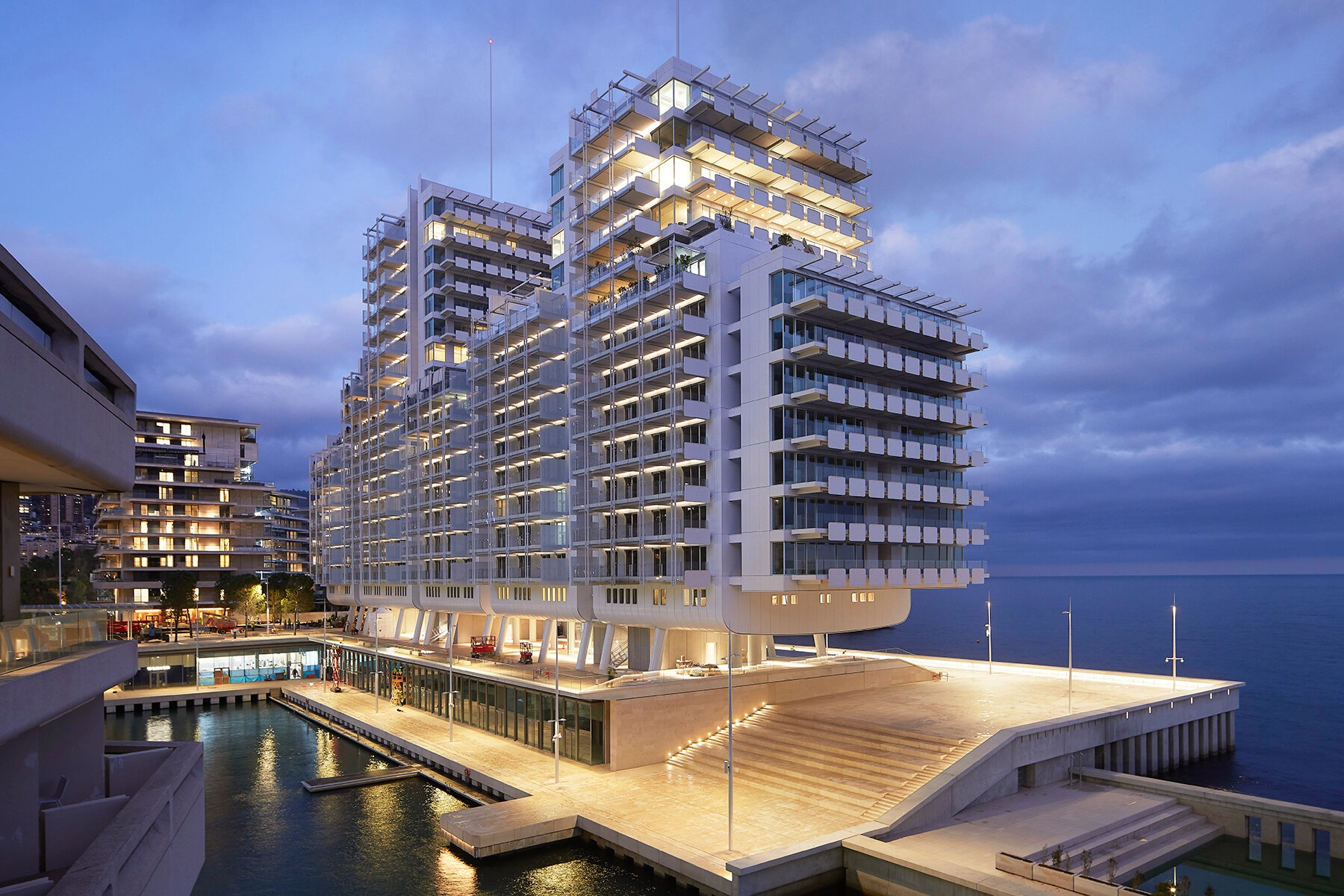
Sixteen places against Port Hercule’s seven hundred adds little to Monaco’s capacity. The significance is architectural, and commercial. Renzo Piano and Valode & Pistre drew the water into the district from the outset, in the way an earlier generation of developers would have drawn in a lobby or a residents’ garden, and buyers understood the marina as part of what they were acquiring. It is the only place in the principality where a berth comes attached, however loosely, to an address.
The relationship between mooring access and property prices is well established in Monaco, if rarely documented. Buyers who want proximity to Port Hercule or Fontvieille pay for it, and agents handling the principality’s most sought-after residences will confirm that a private mooring, a reserved place, or a standing arrangement with a neighbouring hotel can be the detail that settles a negotiation. The same logic explains why trophy villas and penthouses trade off market here as a matter of course.
The relationship runs less reliably in reverse. Owning property in Monaco confers no right to a berth, since SEPM allocates on nationality and residency rather than title. What property confers, by way of residency, is standing in the queue. In a market this constrained that standing is worth a great deal, and it guarantees nothing.
Twice a year the harbour changes character completely.
Each May, grandstands rise along the quays and Port Hercule becomes part of the Grand Prix circuit. Yachts along the Quai Antoine Ier sit metres from the track, and the places facing the swimming pool complex rank among the most contested viewing positions in motorsport. Access during the race weekend is separately regulated, with SEPM applying its own conditions to vessels in the port for the event.
Each September brings the Monaco Yacht Show, which fills the basin with around 120 superyachts and some 60 tenders, draws close to 30,000 visitors and lines the quays with roughly 560 exhibiting companies. Many of the same owners and brokers will have passed through the annual yachting festival in Cannes a fortnight earlier. Holders who let their berths across these two events can recover a meaningful share of the year’s costs within a matter of days.
The remaining months run calmer and cheaper. SEPM splits the year between a high season from May to October and a low season covering the rest, adjusting tariffs accordingly. Owners who use their yacht only in summer will generally leave the berth empty through winter rather than release it, since giving one up, even temporarily, means starting again.
Begin with the timeline. A permanent berth at Port Hercule or Fontvieille is a multi-year proposition for most applicants, and residency will advance an application further than any sum of money.
Then match the route to the use. Someone who wants a Monaco address for the vessel and is prepared to wait should apply to SEPM and treat everything else as an interim arrangement. Someone who wants a berth that can be transferred later will find the documented usage terms at Cala del Forte closer to what they have in mind. For an owner who simply wants the boat within reach through the season, Cap d’Ail solves the problem at a fraction of the difficulty. For anything over 35 metres, plan around the forty places that exist rather than the seven hundred in the headline.
Improvisation is what this market punishes. Berths in Monaco move on introduction and standing rather than listings, and the owners who get through the process quickly tend to be the ones who understood the structure before they began.
Considering a property with genuine access to Monaco’s harbours, or want a candid read on where a berth fits into your plans? Contact Baldo Realty Group for a private conversation.
Sources
Société d’Exploitation des Ports de Monaco, ports-monaco.com
Gouvernement Princier de Monaco, Ports of Monaco, monservicepublic.gouv.mc
IMSEE, Population Census 2025, imsee.mc
L’Observateur de Monaco, interview with SEPM management, lobservateurdemonaco.com
Monaco Hebdo, port tariffs, monaco-hebdo.com
Yacht Club de Monaco, yacht-club-monaco.mc
Cala del Forte Ventimiglia, caladelforte-ventimiglia.it