Post 10 min read
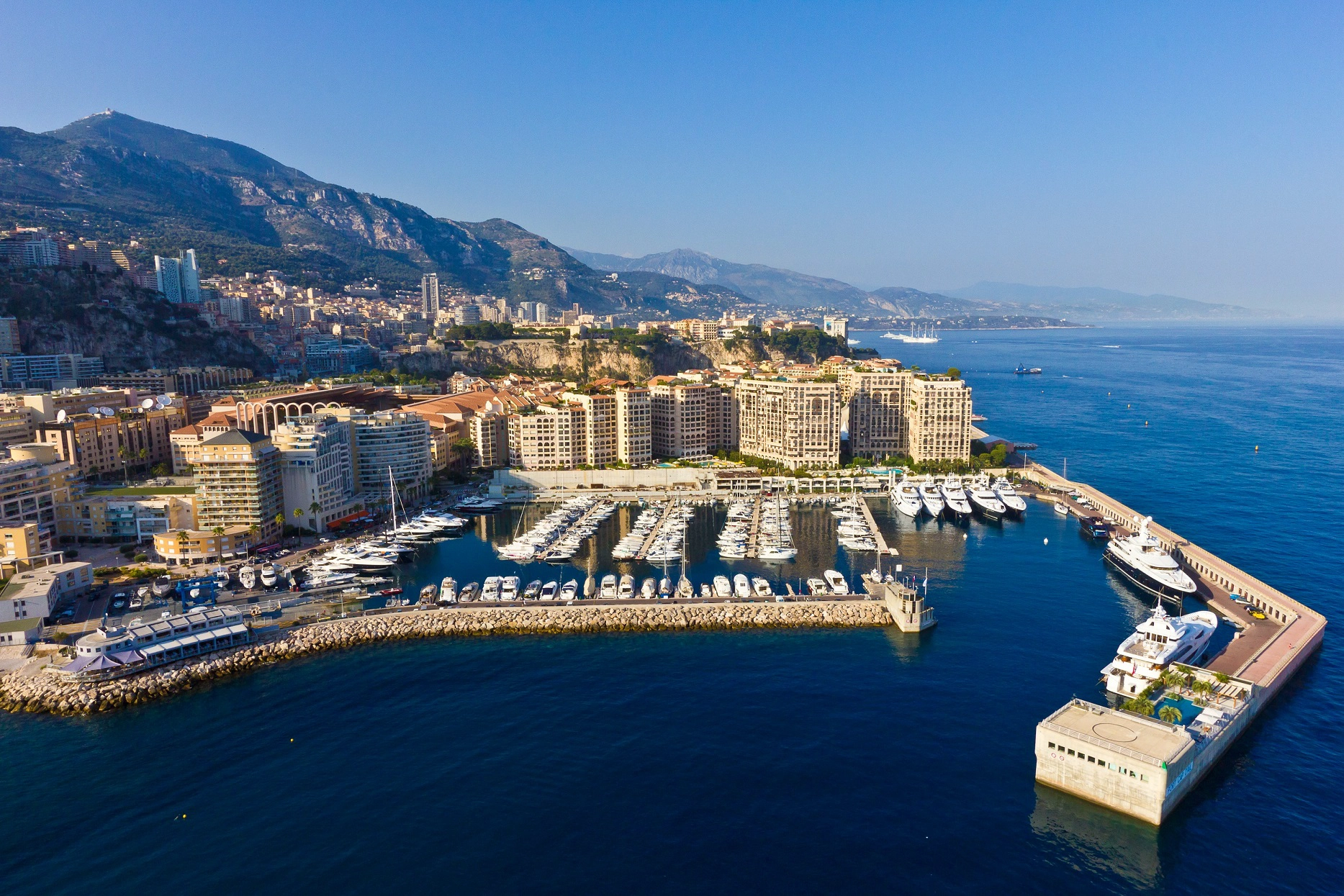
On 13 July 2026, the Métropole Nice Côte d’Azur published a concession notice that received almost no attention outside procurement circles and a handful of Riviera newsrooms. It concerns a basin of roughly 260 berths tucked under the cliffs at Cap d’Ail, immediately west of the Monegasque border, sharing a breakwater with Fontvieille. The notice sets a deadline of noon on 28 October 2026 and a contract term of 360 months. Behind those administrative details sits the most consequential piece of waterfront to change hands anywhere near the Principality in a generation.
The word “sale” has already begun circulating. It is the wrong word, and the difference matters to anyone thinking seriously about the opportunity.
The port of Cap d’Ail sits on the domaine public maritime, the French maritime public domain. Land in that category is inalienable and cannot be sold, mortgaged or acquired by prescription. No freehold title is available, and none is being offered.
What the Métropole has tendered is a concession de service public, a public service concession awarded as a délégation de service public under Directive 2014/23/EU. The winning bidder takes on the operation and management of the port at its own risk and expense, and simultaneously assumes responsibility for designing, executing and financing a programme of rehabilitation works set out in the tender documentation. At the end of the term, the installations revert. The Métropole remains the owner throughout.
This is not a distinction of interest only to lawyers. It determines what a bidder is buying, how the asset is financed, how it is valued, and what happens in year thirty. It also determines what the eventual operator can and cannot do with the surrounding land, which is a separate question governed by Cap d’Ail’s own planning framework rather than by the concession contract.
Two figures appear in the notice, and they are routinely conflated.
The first is the estimated value of the contract: 170,000,000 euros excluding VAT. This is not a price, a premium, or a valuation of the port. Under Articles R.3121-1 and following of the French public procurement code, it represents the projected total operating revenue the concessionaire is expected to generate across the full contract term, expressed in constant euros. Spread across thirty years, it implies average gross annual turnover in the region of 5.7 million euros.
The second is the investment: approximately 35 million euros in constant euros, the estimated global cost of delivering the rehabilitation programme. That capital comes entirely from the concessionaire. The notice is explicit that the Métropole will pay no balancing subsidy, neither for investment nor for operations, and that no indemnity will be paid to unsuccessful bidders.
Read together, the two numbers describe a self-financing infrastructure play with a thirty-year amortisation window, not a trophy purchase. Bidders must front a substantial construction programme against a revenue stream that begins with the existing berth population and improves only as the works land. Anyone approaching this as a real estate acquisition will misprice it.
The concession at a glance
Contracting authority: Métropole Nice Côte d’Azur, acting as owner of the port.
Term: 360 months, or thirty years, following expiry of the current concession on 31 December 2027.
Estimated contract value: 170 million euros excluding VAT, representing projected operating revenue over the term.
Rehabilitation investment: approximately 35 million euros, financed by the concessionaire.
Public subsidy: none, for either capital expenditure or operating losses.
Deadline for offers: 28 October 2026 at 12:00, submitted electronically, in French.
The port’s history explains a great deal about its position today. Its outer protection was constructed in the early 1970s in the same campaign that produced the Fontvieille breakwater, and the marina opened to traffic in 1982. The two basins are, in engineering terms, siblings. They are separated by a national border and a few hundred metres of water.
The basin holds in the order of 260 berths, split between publicly allocated places and private-title moorings, with a small number of larger positions capable of taking yachts above 25 metres and a handful of honour berths sized for vessels in the 40 to 65 metre range. Depths in the outer basin are generous by Riviera standards. The port has held Ports Propres environmental certification since December 2015 and forms part of the Ports d’Azur network operated across the Métropole.
None of that makes it a rival to Port Hercule. It makes it something more useful: the closest deep-water capacity to Monaco that is not inside Monaco, on a coastline where berth supply has been effectively fixed for four decades while demand has not.
In January 2020, SMIP, a subsidiary of the Société d’Exploitation des Ports de Monaco, acquired a 20 percent stake in SPCA, the company holding the Cap d’Ail concession. Daniel Realini, then closely involved on the Monegasque side, described the logic candidly in an interview at the time: the objective was not control but presence, a seat at the board table and the beginnings of an inter-port dialogue with a neighbour that had historically operated at arm’s length. He noted then what the July notice has now confirmed, that the concession runs to 31 December 2027 and that the Métropole would put it to open international tender.
SEPM has since made its intentions steadily more explicit. Its delegated president, Aleco Keusseoglou, has said publicly that the company intends to file a dossier. At a Monaco business forum in early 2026, SEPM set the Cap d’Ail question alongside its existing portfolio and, in more recent public comment, described a candidacy built around restructuring the port’s installations together with the development of a hotel and property component on the adjoining estate.
That last element deserves care. A hotel and residential programme is an ambition articulated by a prospective bidder, not a feature of the tender. The concession notice covers port operation and port infrastructure works. Any building programme on the surrounding land would sit outside the concession contract and would require the ordinary French planning consents, with all the timelines and third-party challenge rights that implies. The distinction between what has been tendered and what a bidder hopes to build alongside it is precisely where over-optimistic coverage tends to fail.
SEPM’s track record does, however, give the ambition weight. The company secured the Cala del Forte concession at Ventimiglia in 2016 on an eighty-year basis, delivered it through the pandemic and subsequent supply disruption, and used it specifically to add capacity for yachts above 35 metres. It has pursued the redevelopment of Civitavecchia near Rome on a similar model. A Monegasque bid at Cap d’Ail would be the continuation of a fifteen-year pattern rather than a departure from it.
Understanding why a 260-berth basin attracts this level of institutional attention requires understanding how berths in Monaco actually work. They are not a market in the ordinary sense. Positions in Port Hercule are allocated by the state rather than traded between private parties, and the transferable long-term usage rights that do circulate in the region belong to a different asset entirely. We have set out the mechanics of that scarcity in detail in our examination of Monaco’s berth market, and it is the single best context for reading the Cap d’Ail file.
In a market where the supply of moorings adjacent to the Principality has not materially expanded since Fontvieille, a thirty-year operating right over the nearest alternative basin is a strategically distinct proposition from a marina concession anywhere else on the Côte d’Azur. That is the reason a rehabilitation programme of 35 million euros commands the attention it does.
One recurring subplot has attached itself to Cap d’Ail for six years. The proposed maritime shuttle between Nice and Cap d’Ail, first announced in 2020, was designed to relieve the corniche roads used daily by the tens of thousands of employees who commute into Monaco. Cap d’Ail was chosen over a Monegasque terminus specifically to keep the service entirely within France and avoid the legal complexity of cross-border public transport.
It has not happened. Two successive tenders were declared unsuccessful for want of a solution that was simultaneously decarbonised, fast and capable of handling open-sea conditions. The economics have been questioned publicly by SEPM’s own leadership, who have argued that no purely private operator could make the route viable without substantial subsidy from both sides of the border. The project has been revived rhetorically more than once, most recently in early 2026.
Its relevance here is structural rather than speculative. SEPM’s director general has confirmed that a shuttle berth is among the elements being considered in the context of the Cap d’Ail tender. Whether or not the service ever runs, a concessionaire holding a thirty-year mandate is the only party positioned to build the infrastructure it would need. For residents of Cap d’Ail and for anyone weighing the commute equation between Nice and the Principality, the concession is the mechanism through which that question will eventually be answered.
For owners in Cap d’Ail, the honest position is that the concession changes the medium-term amenity picture and changes nothing about title. Buildings around the basin are held in ordinary French freehold or co-ownership and are unaffected by the tender. What shifts is the quality of the anchor asset at the bottom of the hill.
Cap d’Ail has been trading in a narrow band. Aggregator estimates for apartment values in the commune diverge considerably depending on methodology, spanning roughly 8,000 to 12,000 euros per square metre through 2025 and into 2026, with prime seafront positions well above that range and inland stock materially below it. The commune’s own recent trajectory has been flat to slightly negative while the wider Alpes-Maritimes market advanced, which tells you the location has not been pricing in future infrastructure.
Two separate developments now sit against that backdrop, and they are worth keeping apart. On the Avenue Marquet side of the commune, on former railway land with no connection to the port, a Kempinski-managed hotel was announced with an original target opening of 2025 that has since slipped, as large Riviera hospitality developments often do. On the harbour side, a recapitalised marina with a thirty-year operator and a defined works programme is now in tender. Different landowners, different legal regimes, no dependency between the two. Neither guarantees price movement on its own. Together, and independently of each other, they shift the argument for the commune from a proximity discount toward an infrastructure case.
For Monaco owners, particularly in Fontvieille, the calculation runs the other way. A modernised basin across the border adds nearby capacity without adding Monegasque supply. The Principality’s residential market has continued to set records at the top end, as the most recent resale data confirms, and it has done so precisely because supply constraints are structural. Nothing in the Cap d’Ail tender loosens them. It does, however, improve the practical logistics of owning a large vessel while living in the Principality, which for a specific and well-capitalised category of buyer is not a minor consideration.
Owners of the seafront and harbour-facing stock that trades on scarcity rather than square metres should read the file with particular attention. Those assets, discussed in our analysis of how trophy property changes hands in Monaco, are valued substantially on outlook and access. Both are in play here.
Offers close on 28 October 2026. The procedure is open, meaning candidature and offer are submitted together, and bids must be in French and filed electronically through the Métropole’s procurement platform. Award criteria are set out in the consultation rules rather than in the published notice. The incumbent arrangement runs to 31 December 2027, so there is a full year between the likely award and the handover, during which challenges before the Administrative Court of Nice remain possible under the standard French remedies.
The debate is not purely technical. The June 2026 council session that approved the principle of the concession drew opposition on the grounds that a thirty-year term concentrates control of a strategic public asset for a very long time. That argument will not disappear, and it forms part of the political environment any winning bidder inherits.
For readers with capital in the region, the practical point is this. A thirty-year operating right over the closest deep-water basin to Monaco is being competed for once, in public, on a fixed timetable, and the outcome will shape the western approach to the Principality until the late 2050s. It is worth understanding properly, whether or not you intend to bid.
Positioning ahead of the Cap d’Ail decision
Infrastructure of this scale reprices the coastline around it slowly and unevenly. Baldo Realty Group advises owners and buyers across Monaco and the adjoining French communes, with particular depth in off-market transactions where timing and information matter most.
Speak with our team about how the concession may affect your position.
Sources
Concession notice 26-69951, Bulletin officiel des annonces des marchés publics, published 13 July 2026.
Tender documentation, Métropole Nice Côte d’Azur procurement portal.
Daniel Realini on the SMIP stake in SPCA, Monaco Hebdo.
SEPM on Cala del Forte and the Cap d’Ail concession, Les Petites Affiches.
Maritime shuttle tenders and viability, L’Observateur de Monaco.