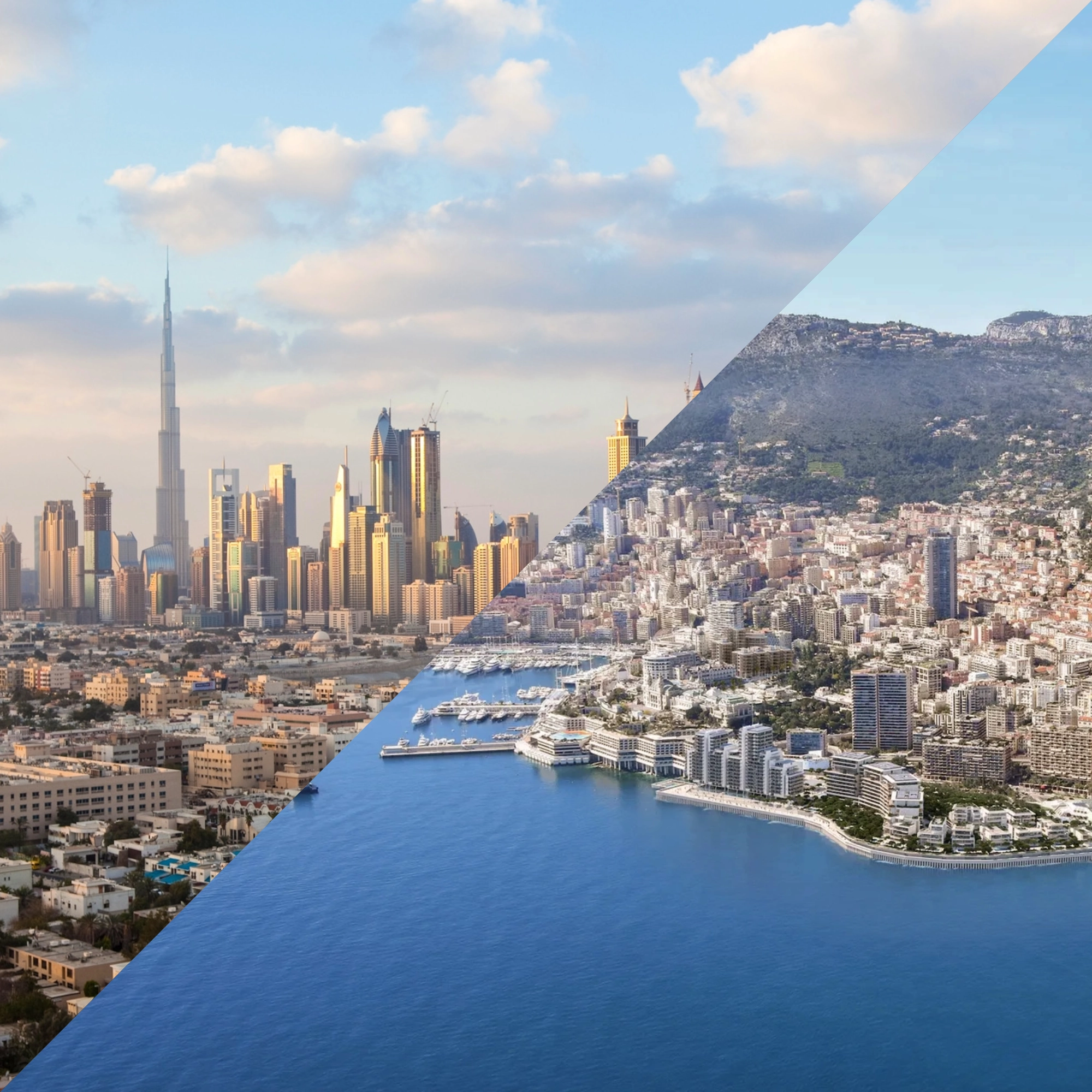
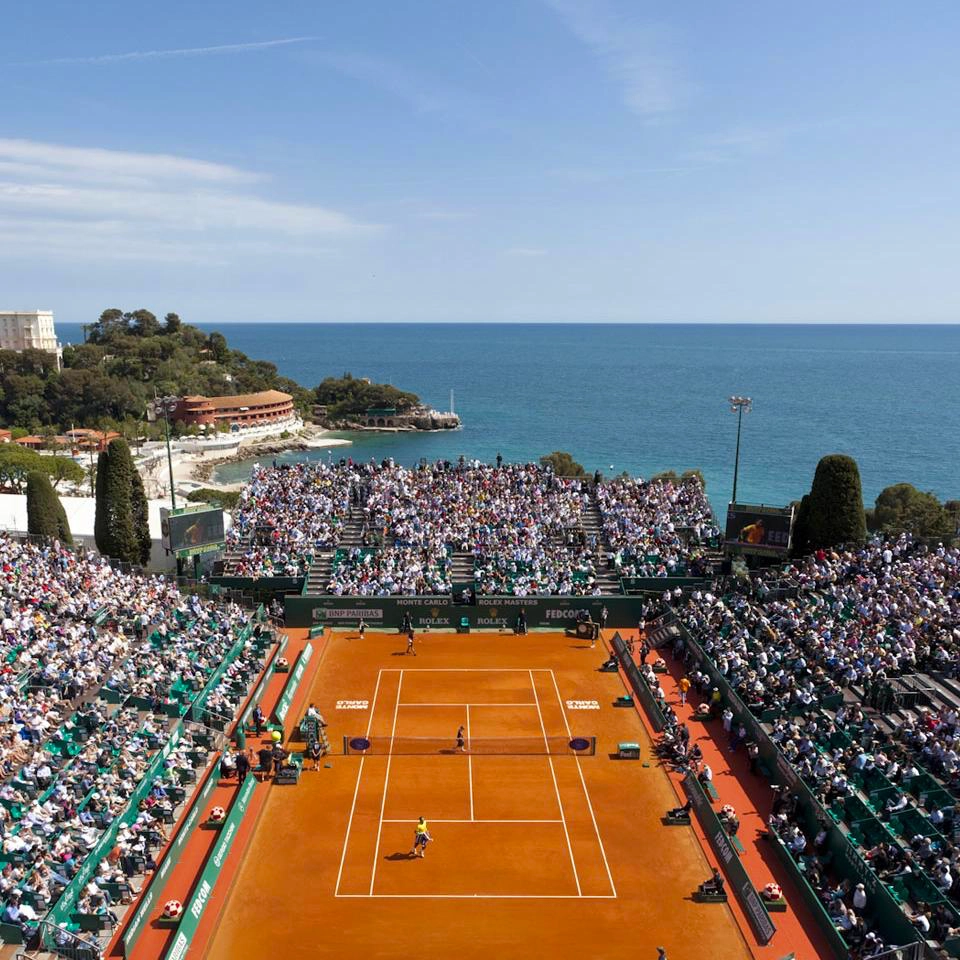
On 4 December 2024, Prince Albert II cut the ribbon on the most ambitious real estate undertaking Monaco has seen in decades. Mareterra, a name fusing the Latin for sea and land, added six hectares to the Principality’s coastline, expanding its territory by a documented 3%. For a micro-state of just 2.02 km², that figure is not a footnote. It is a structural shift.
The development, formally known as L’Anse du Portier and privately funded at a cost of approximately €2 billion, occupies the stretch of reclaimed seafloor between the Grimaldi Forum and the Formula 1 Grand Prix tunnel. What was open Mediterranean in 2016 is now a functioning pedestrian district: marina, park, promenade, retail, and 124 residential units across four distinct typologies.
Buyers evaluating Mareterra are not simply choosing an address. They are taking a position on whether a brand-new Monaco neighbourhood, the Principality’s first eco-district, will earn the same permanence as Fontvieille, the last significant land reclamation project, completed in the 1980s.
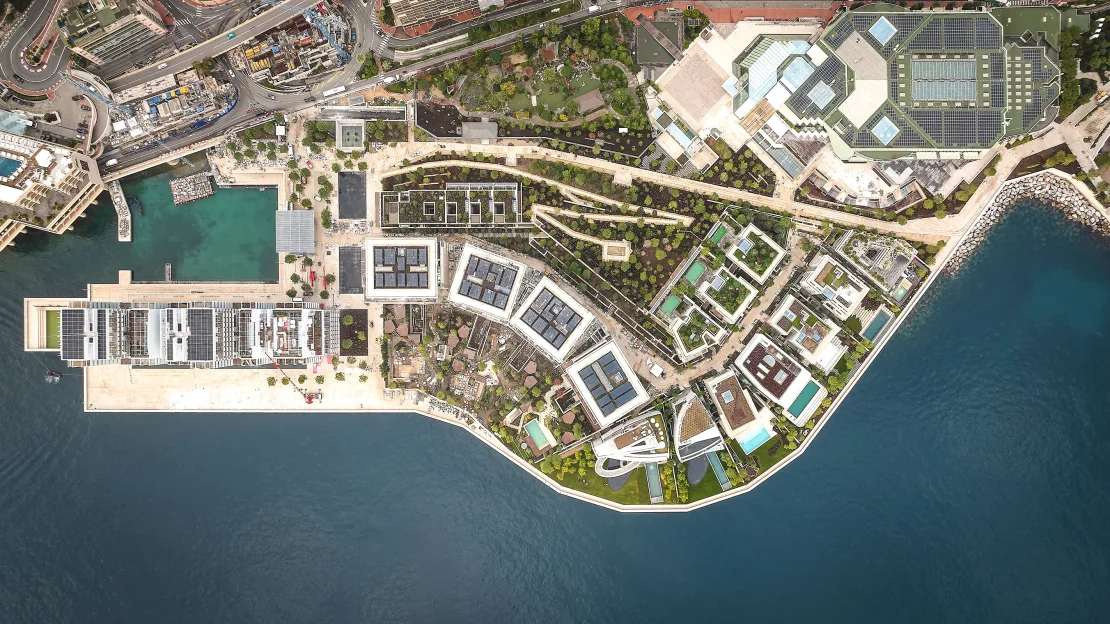
The project was announced in 2013 at the instigation of Prince Albert II, and earthworks began in 2017. Over 15,000 concrete caissons were lowered to the seabed to form the land base, each designed to double as a marine habitat. Anti-turbidity screens protected adjacent waters during construction. Corals and marine species were relocated before works commenced, overseen by the environmental consultancy Andromède Océanologie.
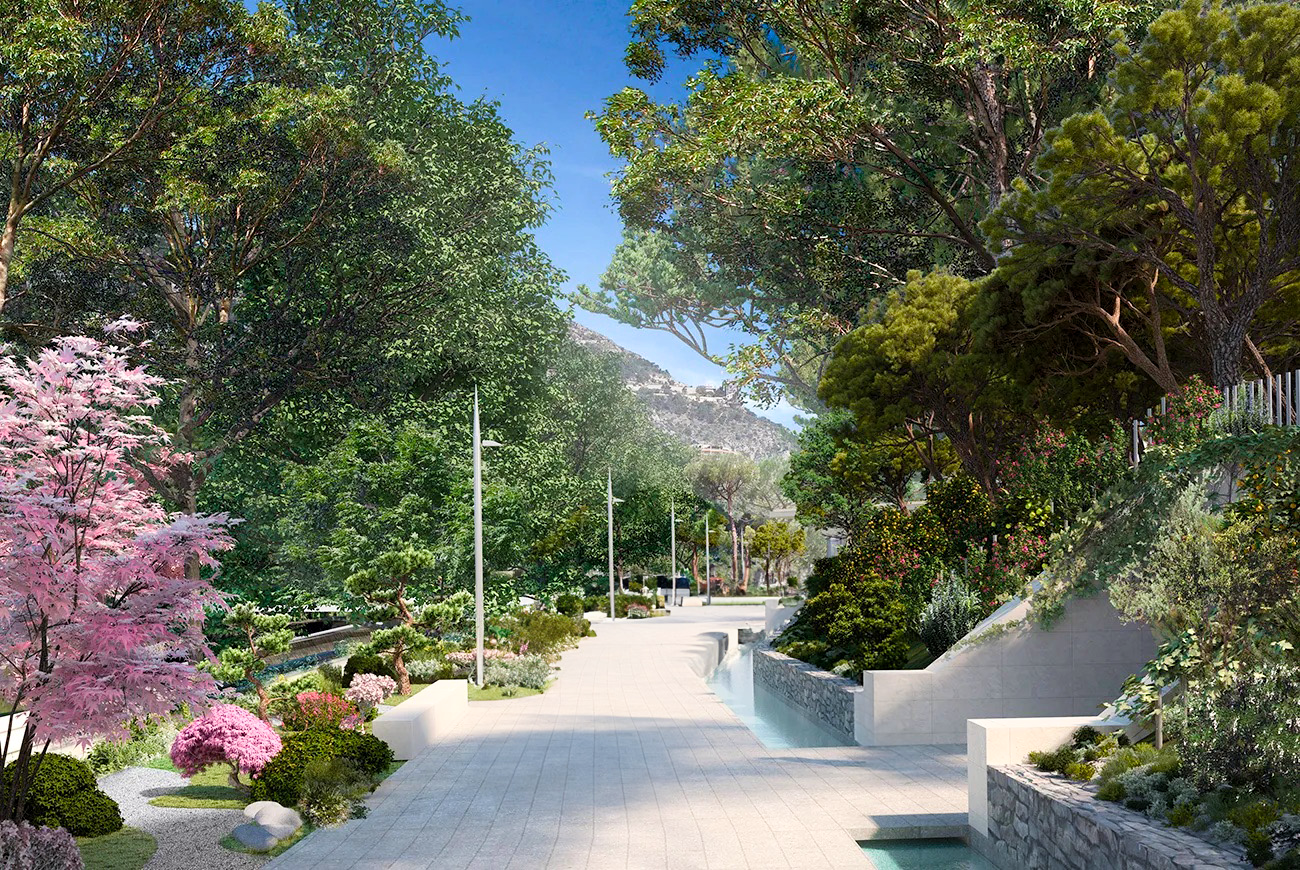
The finished district covers approximately 50% of its surface in green and pedestrianised space: 9,400 m² of landscaped park, 800 trees (including mature specimens imported from Tuscany), and over 35,000 Mediterranean plants selected by landscape architect Michel Desvigne. The engineering brief also included a seawater thalasso-thermal loop supplying sustainable heating and cooling, 4,500 m² of solar panels providing roughly 40% of the district’s energy, and 200 electric vehicle charging stations.
The 750-metre seafront promenade, Promenade Prince Jacques, links the Grimaldi Forum to the Japanese Garden and onward to Larvotto beach, restoring a pedestrian coastal connection that had been interrupted for decades.
Mareterra is not a single building. It is a graduated ensemble of four residential offers, each conceived by a different architectural team and targeting a different buyer profile. Scale rises from east to west: the villas and townhouses nestle low in the landscaping at the eastern end, while Le Renzo anchors the western waterfront above the marina.
All Mareterra residences share a common delivery schedule and developer relationship through SAM L’Anse du Portier, the special-purpose vehicle established for the project. The master plan was produced by Valode & Pistre Architectes, with Denis Valode leading the urban design and overall coherence of the district.
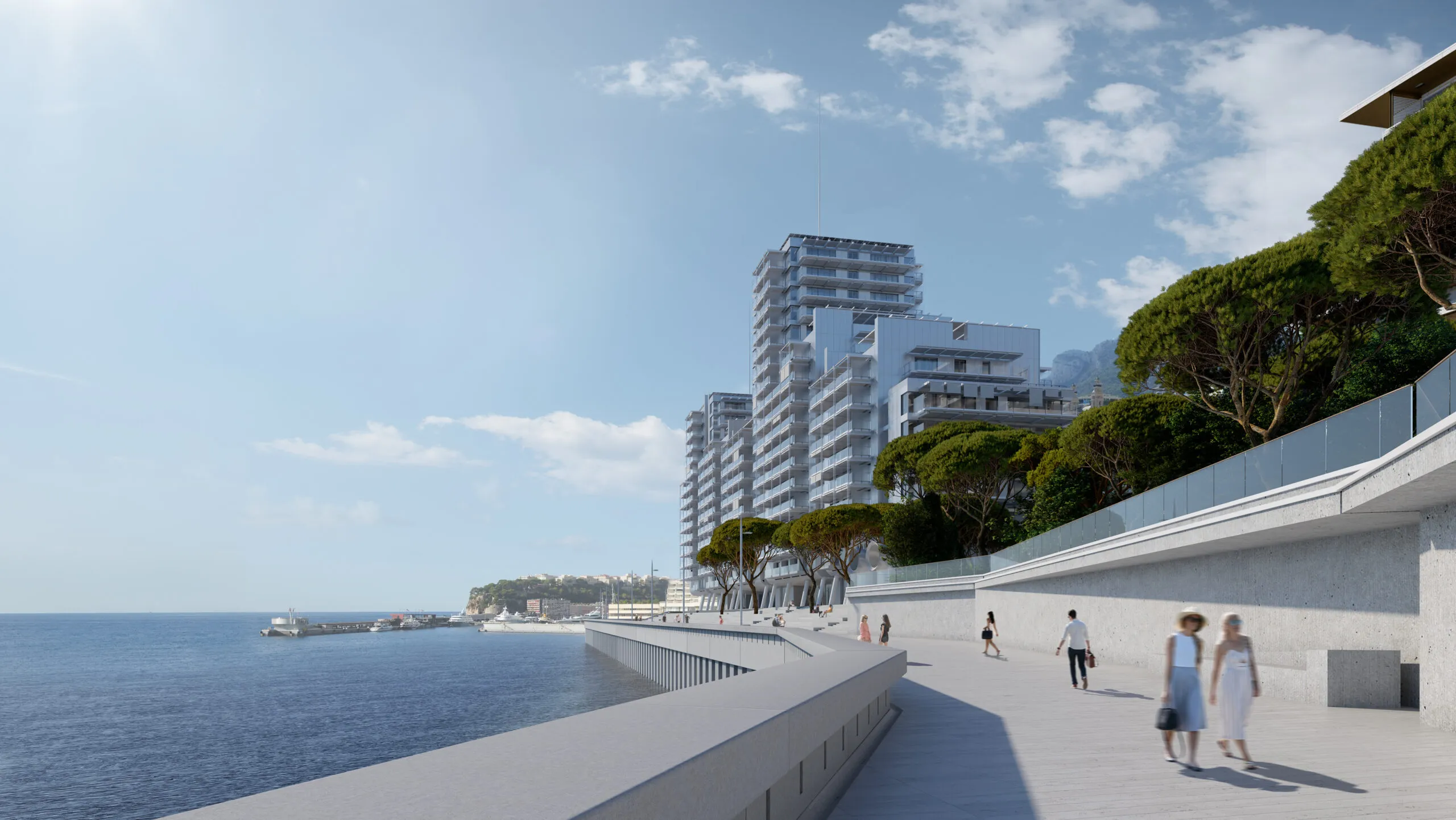
Designed by the Renzo Piano Building Workshop, Le Renzo occupies the westernmost position in the district, rising above the 15-berth marina and a ground-floor retail and restaurant plaza. Piano’s concept references the form of a fragmented vessel: the building’s profile is deliberately irregular, playing with light, air, and the reflections of the sea below.
Every apartment in Le Renzo spans the full width of the building, delivering dual-aspect views over Monaco on one side and the Mediterranean on the other. Deep full-length balconies run the entire frontage. Corner units benefit from triple exposure. The typology range extends from lateral apartments through duplexes and triplexes to a unique quadruplex of approximately 1,800 m² occupying the uppermost four floors, a format that has no direct precedent in Monaco’s existing stock.
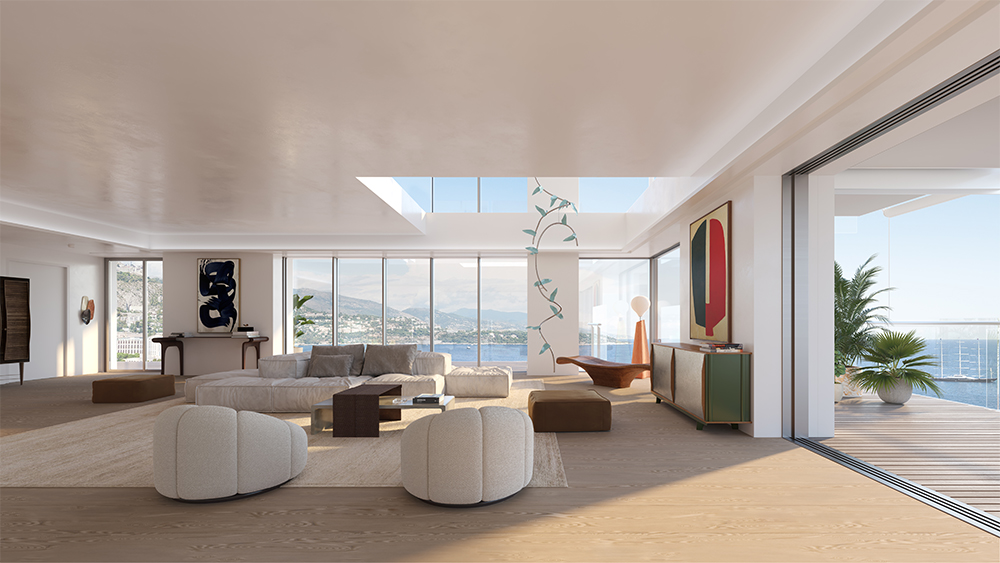
Pricing at Le Renzo is consistently reported above €120,000 per m², with the most exceptional units (penthouses, the quadruplex, top-floor duplexes with unobstructed sea views) pushing materially higher. At that level, a 400 m² apartment represents a minimum commitment of around €48 million.
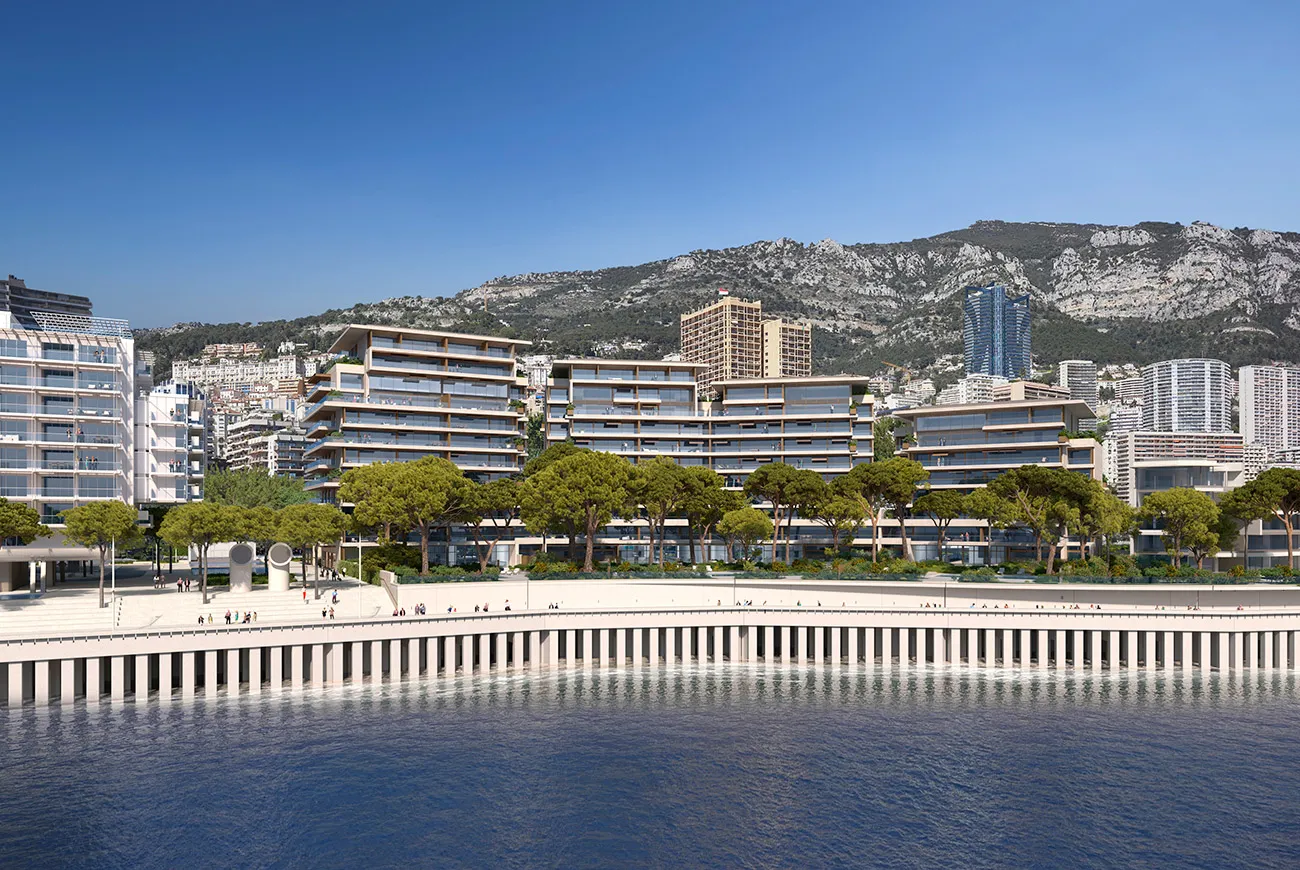
Les Jardins d’Eau comprises four distinct buildings, Blocks A, B, C and D, designed by Denis Valode of Valode & Pistre, ranging from seven to eleven storeys. The buildings sit within the landscaped central zone of the district, surrounded by the mature tree planting and water features that give the complex its name.
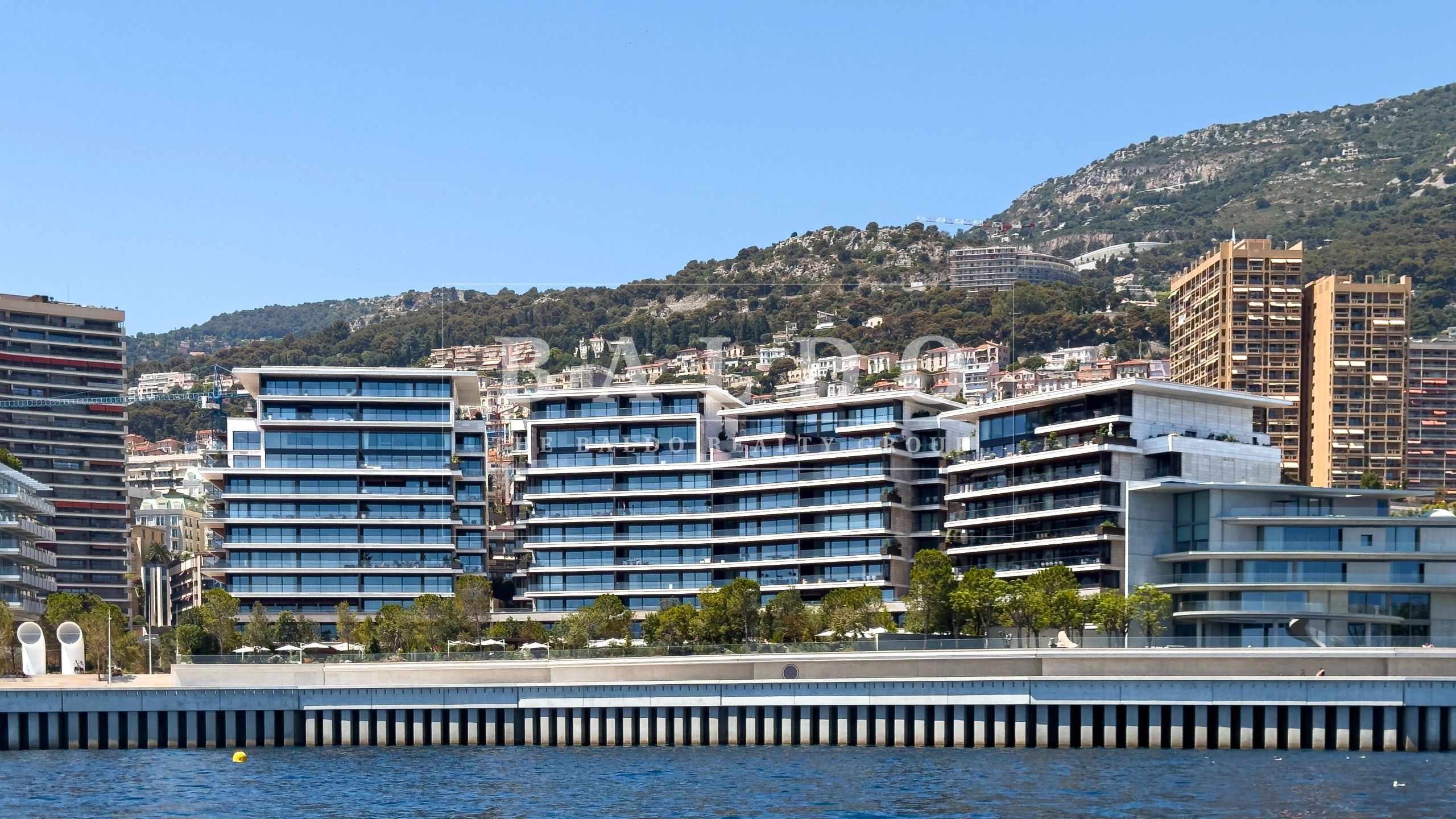
Apartments here run from approximately 350 to 680 m², with extensive balconies and a deliberately understated contemporary design that prioritises the setting over architectural spectacle. The residential amenities package is among the most complete in Monaco: spas, swimming pools, a fitness centre, wine rooms, hair salons, and massage rooms are all available within the complex. Les Jardins d’Eau was the last of the Mareterra buildings to complete delivery, with final handovers reported in 2025.
Pricing at Les Jardins d’Eau sits in the €100,000 per m² range, placing it at the top end of Monaco’s market but marginally below Le Renzo’s waterfront premium. For buyers who prioritise generous floor plans, garden access, and service amenities over a direct marina address, Les Jardins d’Eau represents the most family-oriented residential proposition in the district.
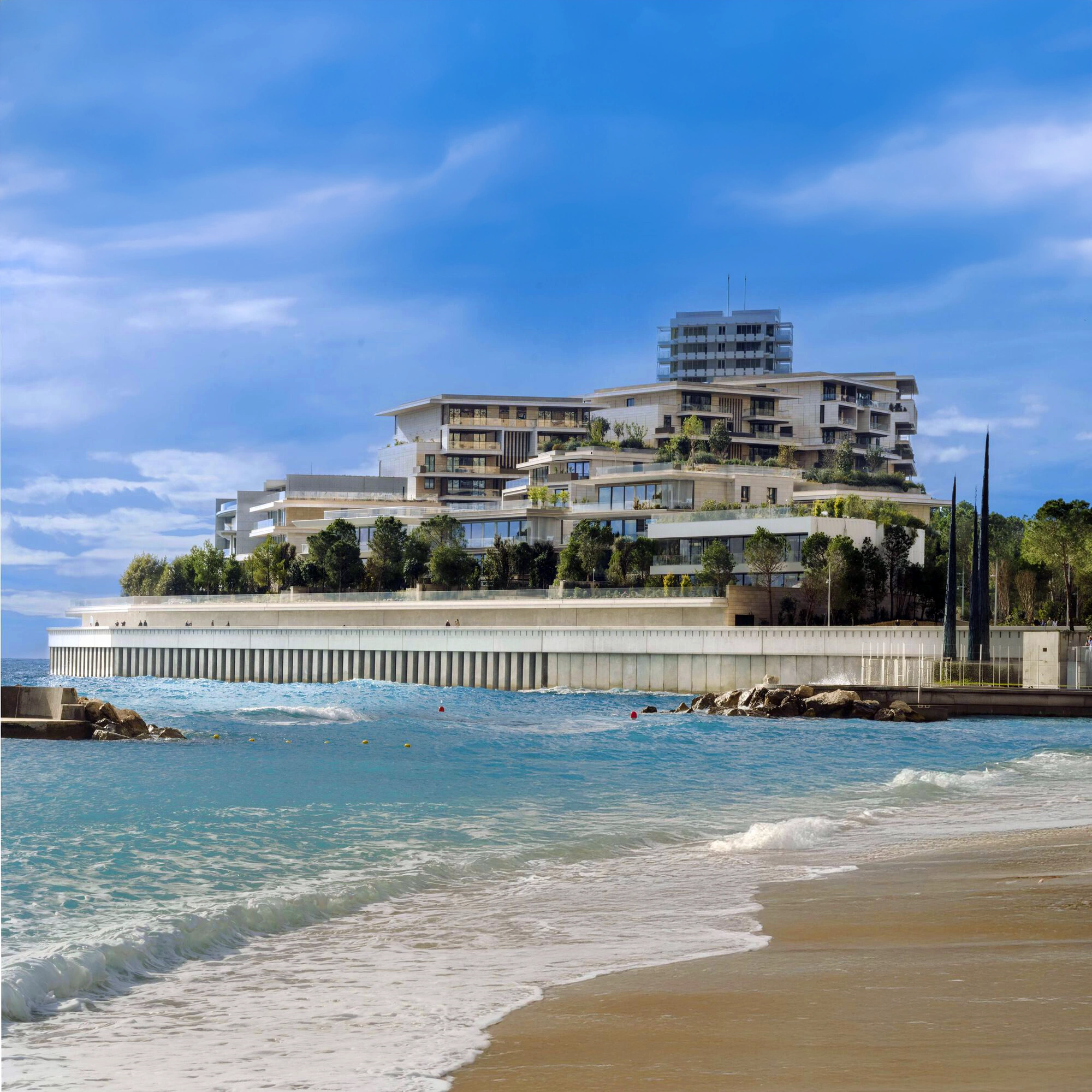
Ten villas, each unique in design and programme, occupy the eastern portion of the district. Six of them, the Villas de la Mer, sit directly on the waterfront. The remaining four, the Villas de la Colline, are set on the elevated hillside within the one-hectare La Pinède pine forest.
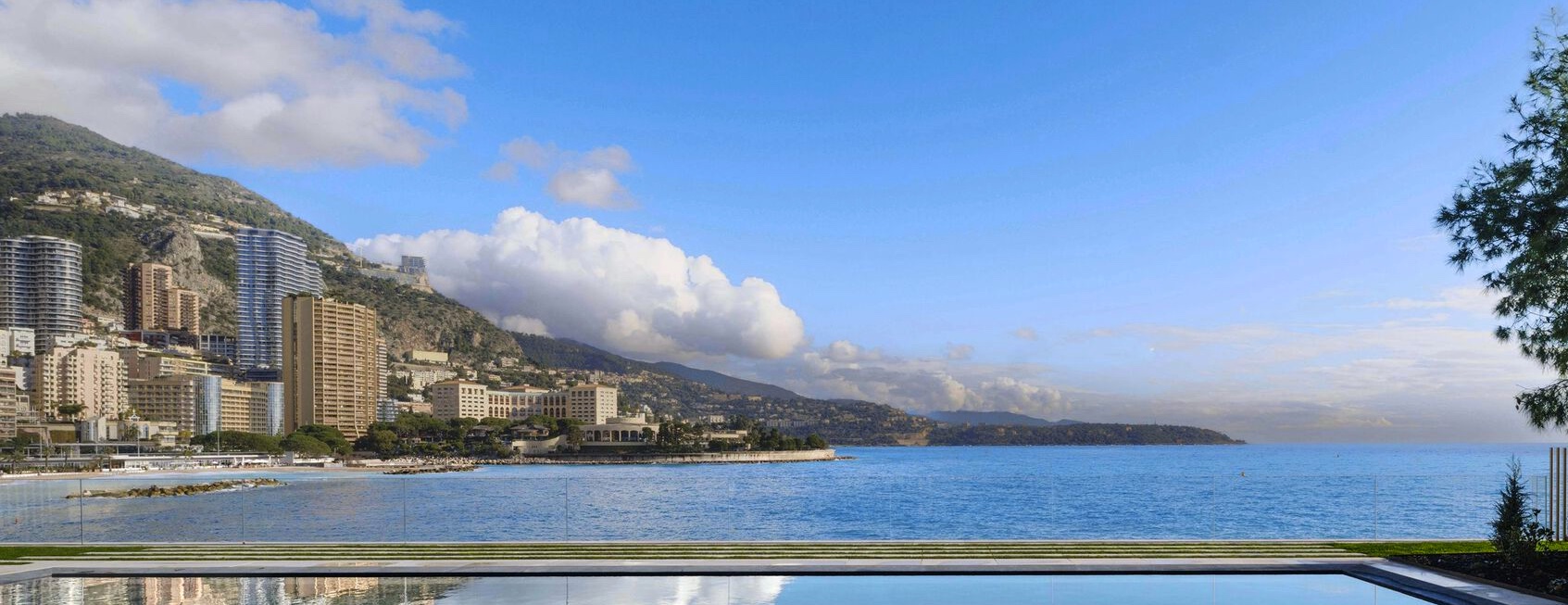
The villa architects read as a roll call of global starchitecture: Foster + Partners, Tadao Ando, and Stefano Boeri each contributed designs. Every villa is delivered with a private garden, private pool, and a layout that draws on Monaco’s Belle Époque villa tradition while meeting current sustainability standards.
These are the most private properties Monaco has produced. Pricing is opaque by design: transactions are conducted off-market and no comprehensive list has been published. Figures consistently cited in the press and by agents exceed €120,000 per m² and, for the prime waterfront positions, substantially more. The Knight Frank 2025 Wealth Report noted that one million euros buys approximately 21 m² in Monaco; at villa pricing levels, that figure is lower still.
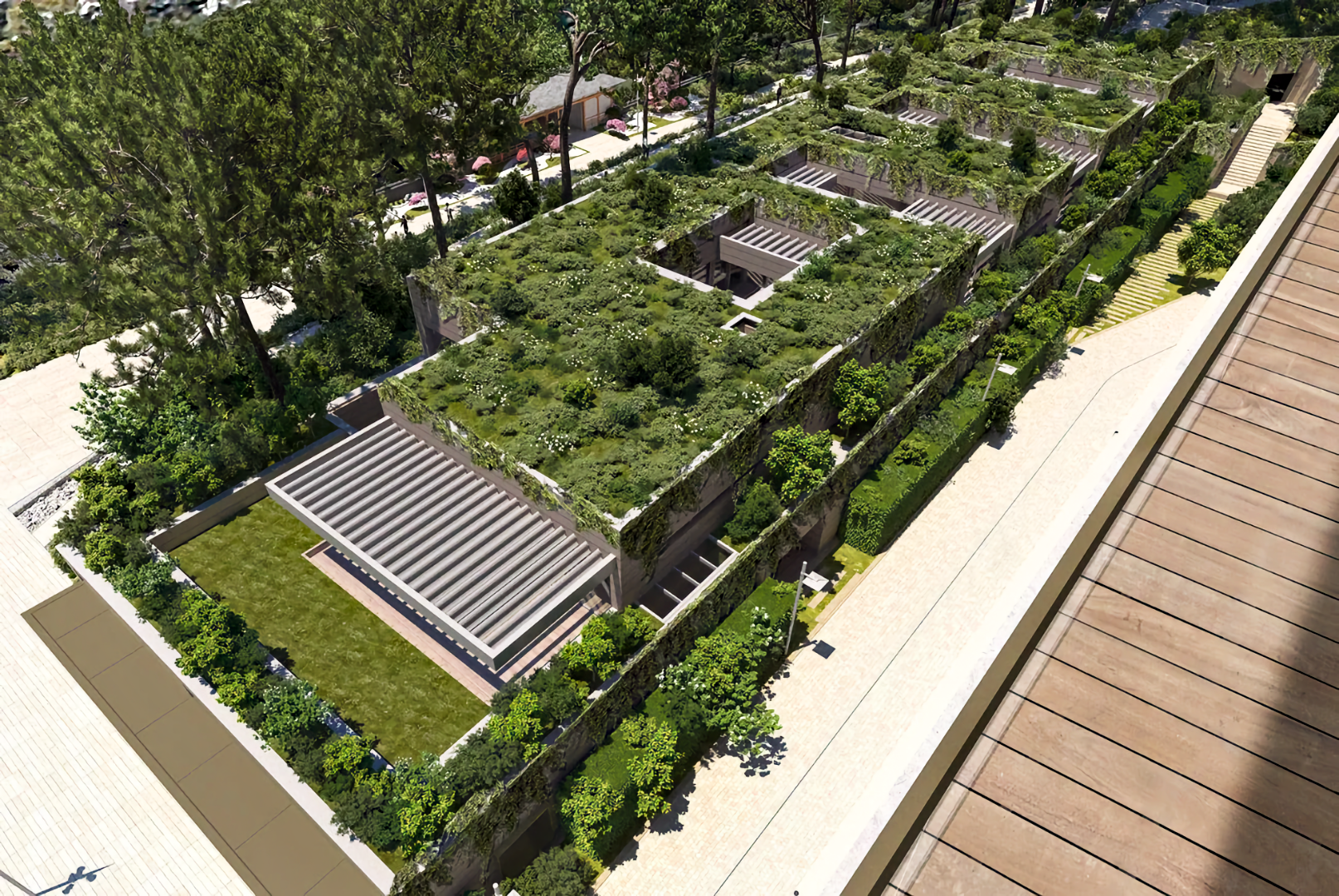
Four townhouses complete the residential offer. Deliberately low-profile, they are concealed within the same dense Mediterranean planting that covers the district’s hillside, their rooflines nearly disappearing into the landscape. Each townhouse features an interior patio, a private open-air courtyard at the heart of the residence, that provides the contemplative, garden-centred living that Monaco’s high-rise apartment stock does not permit.
Floor areas run between 600 and 1,350 m², with select units incorporating private pools. The triplex configuration of seven to ten bedrooms across 1,530 to 1,560 m² positions the townhouses as a genuine alternative to villa ownership for buyers who want substantial private space without the maintenance obligations of a fully detached property. With only four units in total, they are the rarest typology in Mareterra and rarely come to market.
Mareterra established a new price tier in Monaco at launch. The Larvotto district, which now includes the development, recorded an average price of approximately €97,600 per m² in 2024, a 48% year-on-year increase driven almost entirely by Mareterra transactions, according to IMSEE data. The broader Monaco average for resales reached €51,967 per m² that year.
In 2024, 101 new-build sales were recorded across the Principality, the highest figure since records began in 2006. Mareterra accounted for the overwhelming majority of that volume. Of those 101 units, 57 transacted above €20 million and seven crossed the €100 million threshold, per Knight Frank’s analysis of IMSEE data. The average price of a new-build sale that year reached €36.4 million, six times the average resale price of €6 million.
These figures reflect two realities. First, Mareterra sells assets of a scale and specification that have no precedent in Monaco’s secondary market. A 600 m² apartment in Les Jardins d’Eau is not comparable to a 200 m² apartment in Monte-Carlo; they are different products. Second, the first resales from Mareterra are already materialising. In 2025, the Larvotto district’s 13 resales generated a combined €851.9 million, the direct result of Mareterra units entering the secondary market, according to IMSEE’s Real Estate Observatory 2025, published in February 2026.
For buyers considering a secondary purchase, pricing per m² in Mareterra on resale is expected to remain elevated relative to the rest of the Larvotto stock, given the newness of the product, its architect provenance, and the structural scarcity of comparable units.
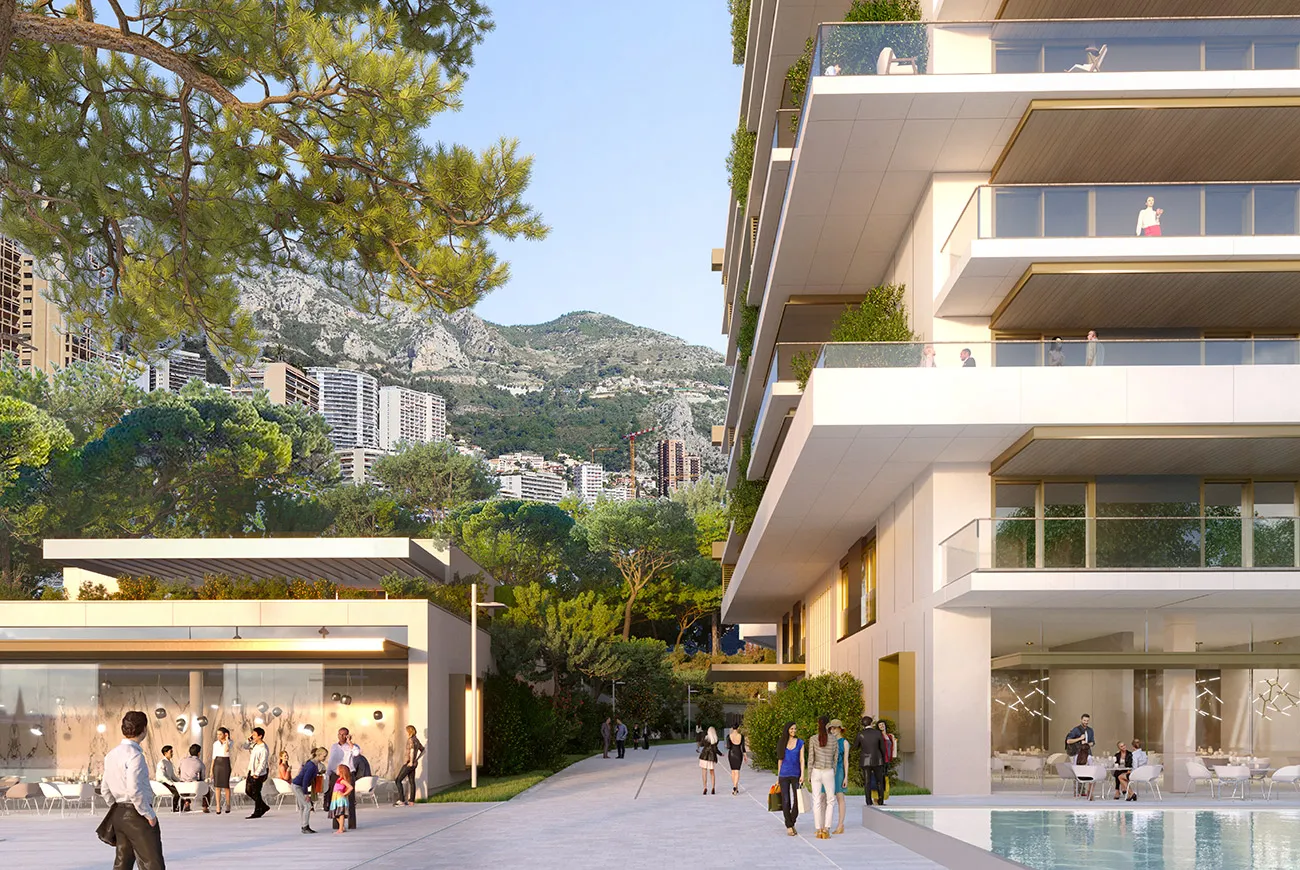
The district’s public infrastructure is part of what justifies the pricing. The 15-berth marina, Le Petit Portier, sits at the base of Le Renzo, surrounded by a plaza of boutiques and restaurants. The one-hectare La Pinède park, Princess Gabriella Square, and the Blue Grotto marine observation platform are all publicly accessible. A 600-metre cycle path circuits the district. Parking is underground and entirely concealed; surface traffic is virtually absent.
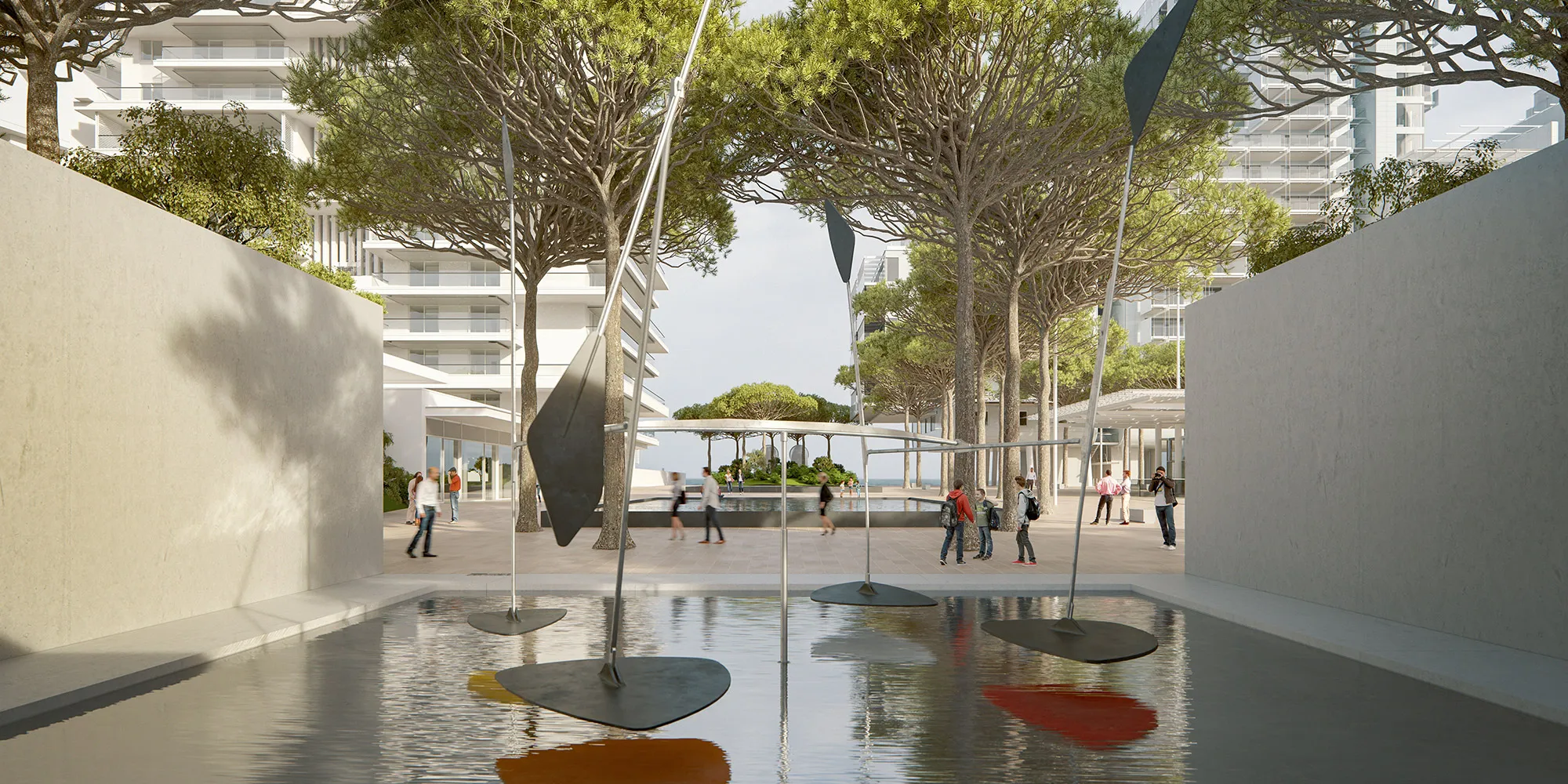
The Mediterranean Space cultural facility, incorporated into the district’s plan, adds an institutional dimension that distinguishes Mareterra from purely residential developments. The expansion of the Grimaldi Forum, positioned at the district’s western boundary, reinforces the cultural offer further.
For residents, the practical effect is a district that feels quieter and more spacious than its density would suggest. Mareterra’s pedestrian-first design is structurally different from the rest of Monaco, and that difference commands a premium that is not simply about newness.
The project was inaugurated formally on 4 December 2024 in the presence of the Princely family. Le Renzo and the villas and townhouses were ready for occupation by inauguration. Les Jardins d’Eau, which comprises four separate residential blocks, completed delivery in 2025, making the entire residential programme now handed over.
For buyers approaching the development on a resale basis, this means the product risk of a new-build transaction (delays, specification changes, unfinished common areas) no longer applies. What buyers are evaluating is a completed neighbourhood, not a promise.
Build quality has been assessed by multiple architectural observers as among the highest in Monaco’s recent history. The developer, SAM L’Anse du Portier, engaged contractors with demonstrable track records in complex marine construction and high-specification residential finishes. Prince Albert II himself cited the “particularly demanding” environmental specifications at the inauguration.
The most useful historical comparison for Mareterra buyers is Fontvieille, Monaco’s previous land reclamation project. Developed through the 1980s on 35 hectares of filled land at the Principality’s western edge, Fontvieille was initially viewed with scepticism: a new quarter on the far side of the Rock, without the established social infrastructure of Monte-Carlo or the beach access of Larvotto.
Fontvieille is now a mature, fully integrated part of Monaco, with residential values in line with the broader market and a stable population of residents and businesses. The neighbourhood adoption curve took roughly a decade. Mareterra, by contrast, benefits from a more central location, a stronger architectural profile, and a sustainability credential that resonates with the current generation of UHNWI buyers in a way that Fontvieille’s industrial heritage does not.
The trajectory argument for Mareterra resale values rests on two structural factors. First, there is no comparable supply pipeline. Monaco’s land constraints mean that no development of similar scale is planned or feasible in the near term. When Mareterra units sell, there is nothing to replace them at equivalent specification. Second, Monaco’s overall market fundamentals remain robust: IMSEE’s 2025 report confirmed average resale prices at €57,500 per m², a decade-long gain of 78%, and a secondary market volume of €3.2 billion, an all-time record.
Knight Frank’s 2025 forecast projects approximately 4% price growth across Monaco, with Larvotto and Mareterra expected to outperform on the basis of product scarcity.
The buyer profile at Mareterra is notably diverse in nationality but consistent in wealth tier. European buyers (principally French, Italian, British, and German) have accounted for a significant share. The changes to the UK’s non-domicile tax regime and Italy’s doubling of its flat-tax threshold have both been cited by agents as active drivers of Monaco enquiry in 2024 and 2025.
Primary residence buyers dominate at the villa and townhouse level. Apartment buyers at Le Renzo and Les Jardins d’Eau show a higher proportion of pied-à-terre and part-time residence acquisitions, though Monaco’s residency rules, which require buyers to secure accommodation proportionate to their declared household size, have channelled demand toward the larger, multi-bedroom configurations that Mareterra specialises in.
Investment-led buyers are present, but Mareterra is not a yield play in the conventional sense. Rental income at this level is real: prime Monaco rental rates reached €114.50 per m² per month in 2024, per Savills World Cities data. The primary investment thesis, however, is capital preservation and appreciation in a zero-income-tax, zero-capital-gains-tax environment with structurally constrained supply.
Mareterra units were brought to market primarily through an invitation-only reservation process managed by SAM L’Anse du Portier, with selected agencies acting as exclusive intermediaries. Most original sales were structured as VEFA contracts (Vente en l’État Futur d’Achèvement), Monaco’s off-plan purchase framework, with phased payment schedules tied to construction milestones.
Villa buyers had the opportunity to work with their assigned architect on the customisation of finishes, landscaping, and pool design at the reservation stage. For apartment and townhouse buyers, units were delivered as-built with no customisation available during the purchase process. Any changes to the interior of an apartment or townhouse, whether acquired directly from the developer or on the secondary market, require a full renovation after handover. Mareterra’s delivery specifications are uniformly high, and many buyers have chosen to occupy their units without immediate works.
Monaco’s property purchase process imposes no stamp duty for buyers and no capital gains tax for sellers, a structural advantage that reduces friction in the resale market. Notarial fees and acquisition costs for the buyer are typically around 6% of the purchase price, a figure that should be factored into total acquisition budgets at these price levels. Ongoing ownership involves residence association fees aligned with the shared infrastructure and service levels of the district.
For an introduction to available units and current market positioning across Monaco’s new developments, including any units currently accessible at Mareterra, the Baldo team is available to advise without obligation.
Buyers benchmarking Mareterra against comparable international markets will find limited analogues at the same price level. London’s super-prime market averages approximately £20,000 to £25,000 per m² for a new-build in the best addresses; Geneva peaks around CHF 50,000 to 60,000; Paris’s 8th arrondissement reaches €30,000 to 40,000. Mareterra’s €100,000 to €120,000+ per m² sits in a category defined largely by Monaco itself and by ultra-prime penthouse transactions in a handful of other global cities.
The distinguishing factor is not just the price point but the tax environment. A buyer paying €50 million for a Mareterra villa retains any future appreciation entirely: there is no capital gains exposure under Monegasque law. That calculus meaningfully changes the expected return on a purchase that would otherwise appear expensive on a pure price-per-m² basis.
The information in this article is provided for general reference purposes. It does not constitute legal, tax, or investment advice. Prospective buyers should seek independent professional guidance before entering into any transaction.
To explore available Mareterra residences or discuss the current market in confidence, contact Baldo Realty Group directly. Our team works with discretion across the full range of Mareterra typologies, including units not publicly listed.