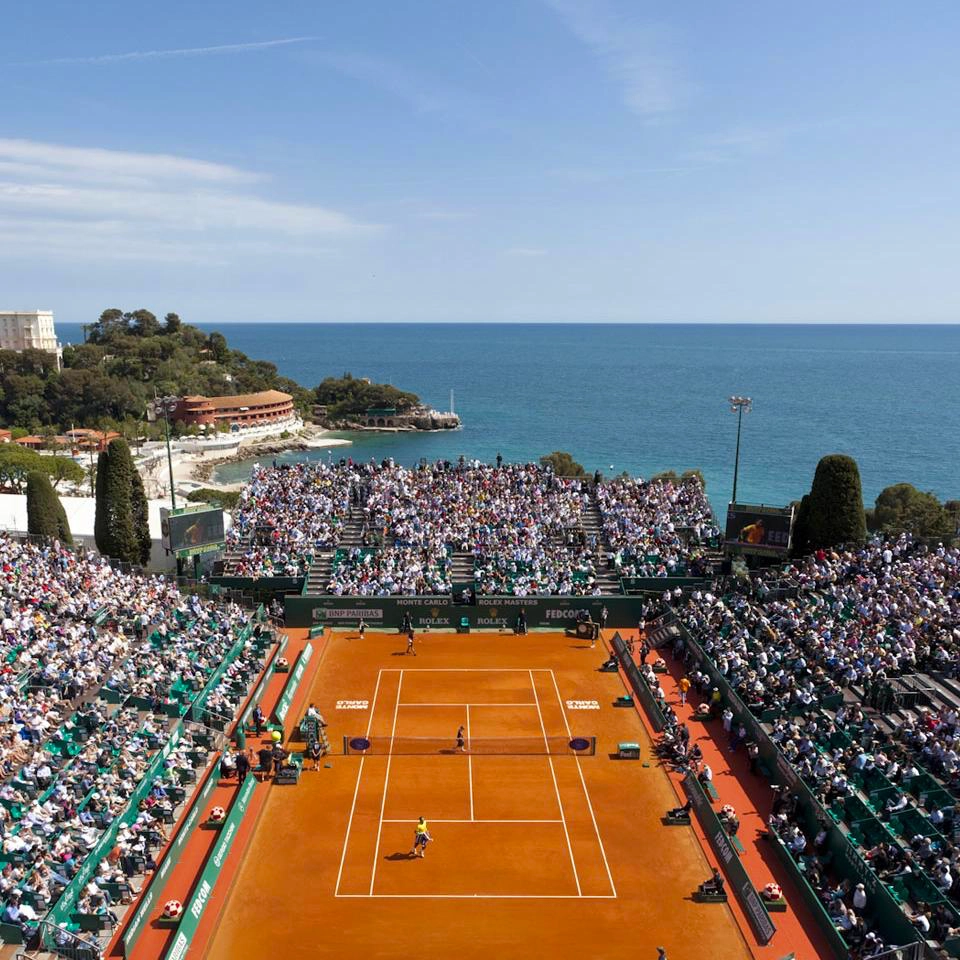
Monaco operates as one of the most concentrated luxury property markets on earth. With a total land area of roughly 2.08 square kilometres and a housing stock constrained by geography and planning policy, supply does not flex. Demand, by contrast, is international, wealthy, and in many cases urgent. That combination creates a liquidity dynamic unlike any comparable market in Europe, and understanding it is essential before deciding when, how, and at what price to transact.
Properties currently available in Monaco reflect what is, by any global standard, an extraordinarily thin inventory. In 2025, IMSEE recorded 493 total residential transactions, a 5.8% increase over the prior year, with the total value of the market holding steady at €5.9 billion. The secondary market alone recorded 429 resales, up 17.5% year-on-year and surpassing €3.2 billion in aggregate value for the first time in history. These are not the numbers of a dormant market. But volume and velocity are different questions, and in Monaco they are shaped by forces that rarely apply elsewhere.
Unlike major markets in the United States or the United Kingdom, Monaco does not publish a standardised average-days-on-market figure through its official statistics body. IMSEE’s annual Real Estate Observatory tracks transaction volumes, price per square metre, and segment breakdowns by district and bedroom count, but it does not compile a formal time-on-market metric for the resale pool. Local agencies track their own figures internally, and those numbers are proprietary.
What the data does illuminate is transaction velocity by segment. The notarial process in Monaco, once a preliminary contract (the compromis de vente) is signed and a 10% deposit placed in escrow, typically runs two to three months to completion. Critically, Monaco does not operate a statutory cooling-off period for buyers, unlike the ten-day délai de rétractation available to buyers in France. A signed offer in Monaco is a serious commitment from both sides, which tends to focus attention and accelerate execution once terms are agreed.
What agents consistently observe is that well-priced properties in the Carré d’Or, Monte Carlo, and Larvotto attract qualified interest quickly, often within weeks of being formally listed. Monte Carlo alone accounted for roughly a third of all resales recorded in 2024, making it the most liquid district in the Principality by transaction density.
Three-bedroom and four-bedroom turnkey apartments in prestige buildings move fastest, and the underlying data supports this clearly. In 2024, properties with three or more bedrooms accounted for over 70% of new-build transactions and a rising share of resales, according to IMSEE. The residency regulations introduced in 2020, which require applicants to occupy properties proportionate to household size, have structurally tilted demand toward larger family units. A three-bedroom apartment with sea views, freshly renovated, in a building with concierge and parking will attract competing interest.
Specific attributes that consistently compress selling time include:
The ultra-prime segment, defined here as properties above €10 million, shows its own form of velocity. IMSEE recorded a 10.6% increase in resales exceeding €10 million in 2024, and 19 resales surpassed €20 million, twice the number seen a decade prior. These transactions do not happen overnight, but they happen with a frequency that would be impossible in markets of comparable price points.
The inverse profile is equally instructive. Properties that linger on the open market in Monaco typically share one or more characteristics: overpricing relative to recent floor-level comparables, deferred maintenance or dated interiors, awkward floor plans with poor natural light, or locations in districts that see lower transaction density, such as Jardin Exotique or La Condamine’s less prominent pockets. Size can also work against a seller: studio and one-bedroom apartments saw their share of the market fall from 58% of transactions in 2020 to 49% in 2024, as demand rotated decisively toward larger units.
Properties listed at aspirational prices without anchoring to notarial comparables tend to accumulate time on market. Because Monaco’s buyer pool is professional and well-advised, the gap between an ambitious ask and a defensible valuation is usually identified immediately. The result is that overpriced listings do not generate offers; they generate silence, and silence in this market can last months.
In a market where the average resale value reached €7.6 million in 2025, up from €6.0 million the prior year per IMSEE, there is a natural temptation for sellers to extend their price ambitions. The data from the decade supports optimism: values have risen approximately 78% over the past ten years, and Knight Frank has forecast roughly 4% annual price growth across the Principality. Sébastien Le Graverend of Balkin Estates has noted that the market has averaged approximately 5% annual growth over 30 years, a figure without close parallel in Europe.
But appreciation over time does not translate automatically into liquidity at any given moment. Sellers who price aggressively relative to achievable comparables sacrifice time, and time in Monaco carries a real opportunity cost. A property listed for six months above its clearing price will typically require a reduction to its natural market level anyway, having absorbed months of carrying cost and missed buyer windows in the process. Pricing within a defensible range from the outset consistently produces faster outcomes and, often, stronger net proceeds.
Monaco’s transaction calendar follows observable seasonal rhythms, though less pronounced than in markets more reliant on domestic buyers with school-year constraints. The summer months of July and August are the Principality’s quietest period for deal execution. Many buyers, sellers, and legal professionals are travelling, and the concentration of Monaco’s population in seasonal residencies means active deal-making slows considerably. Properties that enter the market during this window often experience delayed interest until September.
The autumn window, roughly September through November, is broadly considered the most active period for initiating and completing serious transactions. The Monaco Yacht Show, held each year in late September at Port Hercule, brings several thousand ultra-high-net-worth visitors to the Principality. Real estate agencies confirm heightened enquiry volumes during and immediately following the show period. The convergence of international buyers, the Principality’s most temperate weather, and the post-summer return of professional advisors creates conditions where motivated parties can move quickly.
The spring window, particularly April through early June, also sees elevated activity, though the Formula 1 Grand Prix in May compresses available slots for property visits and creates logistical friction at peak week. Deals that are agreed in principle before the Grand Prix frequently complete in the weeks that follow.
A significant proportion of Monaco’s most liquid transactions never appear on public listing platforms. In a market where discretion is a baseline expectation and where the buyer pool is finite and known to specialist agencies, off-market transactions offer structural advantages on both sides. Sellers avoid public price discovery and the reputational dynamics of a listed property that fails to transact. Buyers gain access to inventory that never competes for their attention against the broader market.
The mechanism is direct: an agency with an active buyer mandate contacts a property owner it believes may be open to a transaction, often before the owner has formally decided to sell. The buyer has already been pre-qualified, their financing or liquidity confirmed, and their residency intent established. When counterparties are aligned and documentation is clean, this process can move from initial contact to signed compromis in a matter of weeks rather than months. At the very top of the market, this is not the exception; it is the primary mode of transaction.
Sellers evaluating Monaco liquidity often focus on market conditions, but buyer readiness is the more decisive variable in completion speed. A buyer without pre-arranged financing, an unresolved family decision-making process, or an unclear residency plan introduces friction that can extend a transaction by months or cause it to collapse entirely. Unlike in markets where mortgage finance is standard and processes are templated, Monaco transactions frequently involve private banking structures, trust arrangements, or corporate ownership vehicles that require additional legal preparation. Buyers who arrive with documentation in order close materially faster.
The intent to establish Monegasque residency is also a practical accelerant. A buyer committed to the residency process, who has begun the administrative steps with the Direction de l’Habitat and the Sûreté Publique, is a more committed counterparty than one exploring the market speculatively. Sellers can sense this distinction, and agents representing serious buyers make a point of communicating it early in negotiation.
Comparing Monaco’s liquidity to other prime European markets requires accepting that the comparison is structurally imperfect. Monaco is not a city-within-a-country; it is an entire jurisdiction, with one set of laws, no income tax, and a buyer pool self-selected for very specific characteristics. That said, certain contrasts are instructive.
Prime Central London has experienced a sustained period of constrained liquidity. According to Savills research, approximately 41% of prime properties sold in a recent period had undergone at least one price reduction, and the average discount to initial asking price was around 8%. Properties listed for six to twelve months in Prime Central London are now commonly making double-digit percentage reductions to achieve a sale. PCL prices remain roughly 20.7% below their 2014 peak in nominal terms. Stamp duty exposure for a foreign buyer on a £5 million London property can reach 17% in total costs, a direct drag on transactional appetite.
Geneva’s luxury segment is highly liquid at the ultra-prime level, but subject to cantonal acquisition restrictions for non-residents that do not apply in Monaco. Paris’s prime arrondissements are constrained by ownership concentration and lower transaction velocity than Monaco’s resale rate on a per-unit basis. Monaco’s resale market in 2025, at 429 transactions across a total housing stock of limited scale, represents a turnover rate that most comparable markets do not approach.
Sellers with a specific exit timeline should begin preparation at least three to six months before a target listing date. This means commissioning a thorough valuation against recent notarial comparables, addressing any deferred maintenance that would reduce achievable price or add negotiation leverage for buyers, and ensuring ownership documentation, building charges, and co-ownership records are current and accessible. Buyers’ lawyers will scrutinise these documents at the compromis stage; gaps discovered late can delay or derail completions.
The most effective exit positioning combines realistic pricing, a clean property, and access to both the on-market and off-market buyer pool. In practical terms, this means engaging an agency with a documented network of active, pre-qualified buyers rather than one relying solely on portal listings. The ability to present a property to ten verified buyers privately, before it appears publicly, is a meaningful liquidity advantage in a market where the entire universe of potential buyers is relatively small.
Timing within the calendar year matters, though it should not override fundamental positioning. A well-priced, well-presented property in Monaco will find a buyer in almost any month. A mispriced or poorly prepared property will not find one regardless of season.
This article addresses market dynamics and transactional patterns as reported by official and published sources. It does not constitute legal, tax, or investment advice. Specific guidance on ownership structures, residency procedures, or tax treatment should be sought from qualified professionals in the relevant jurisdiction.
If you are evaluating a purchase or sale in Monaco and want to understand how current inventory and buyer demand align with your objectives, the team at Baldo Realty Group is available for a discreet, no-obligation conversation. Reach out here to discuss your position. For an overview of what is currently on the market, the full property search reflects available inventory across districts and price points.