Post 5 min read
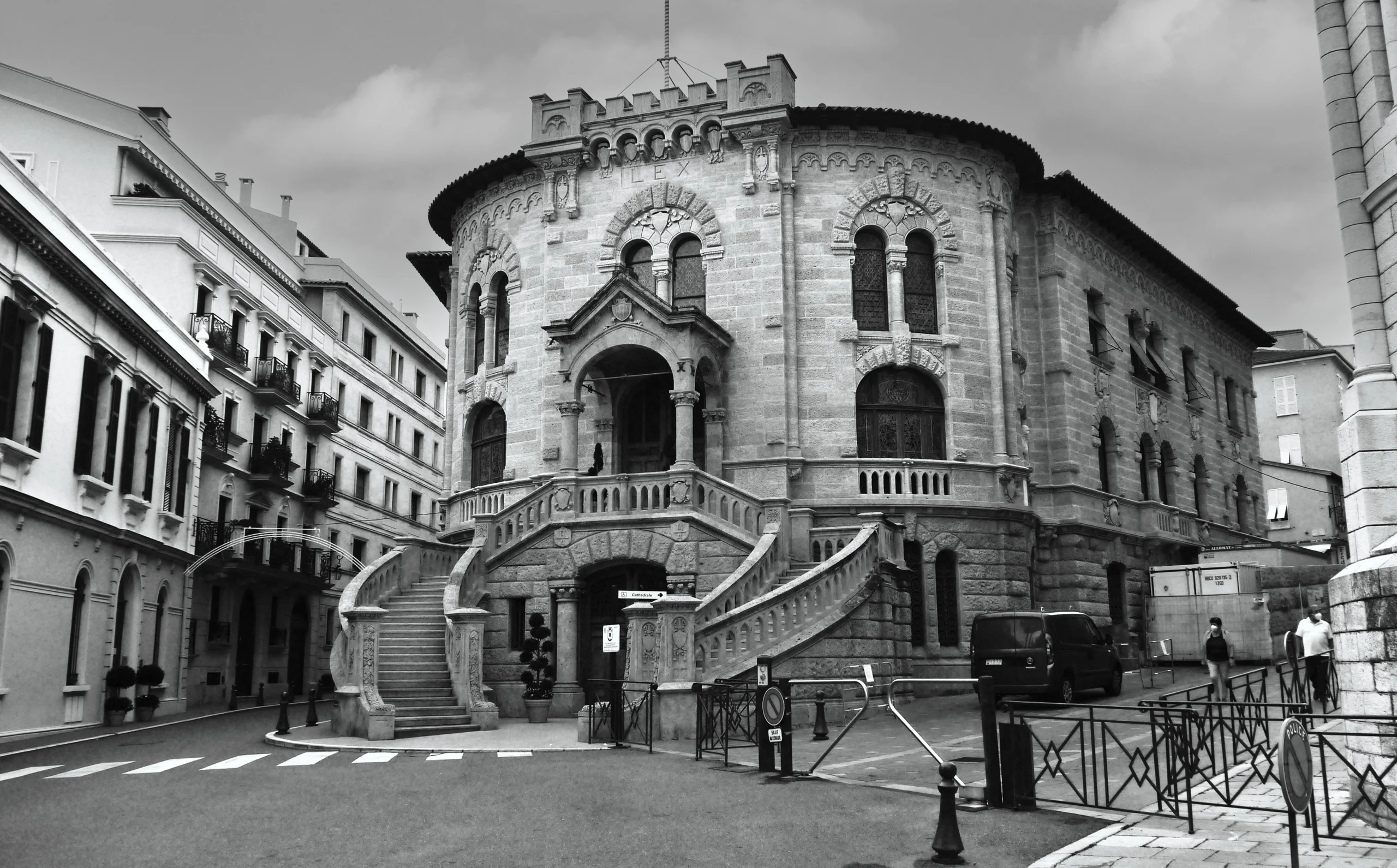
Monaco has sold Picassos, Patek Philippes and royal jewels under the hammer for decades. Never before has it auctioned the outcome of its own court rulings. That changes at the Palais de Justice in Monaco-Ville, where the Principality holds its first public auction of assets confiscated through judicial proceedings: 71 lots of art and decorative objects, led by a bronze elephant from one of the most sought-after animal sculptors of the early twentieth century.
The sale is organised by the Service de gestion des avoirs saisis ou confisqués (SGA), the State body that holds and manages property seized in criminal cases. Maître Grimaud-Palmero, the judicial officer whose office conducts the auction, takes the rostrum. Morgan Blaise, a specialist in furniture, works of art and tapestries, acts as expert.
Bidders can attend in person or follow the sale live on Drouot, where the full catalogue is online. For the justice system of a city-state better known for discretion, it is an unusually public gesture.
Lot 54 is the one collectors are watching. Éléphant d’Asie en marche, a bronze by Rembrandt Bugatti after a model from 1909 to 1910, carries an estimate of €30,000 to €50,000.
Born in Milan in 1884 and dead in Paris by 1916, Bugatti came from a remarkable family. His father Carlo designed furniture that now sits in museum collections. His brother Ettore founded the carmaker whose name still means speed. Rembrandt worked from life, spending whole days at the Jardin des Plantes in Paris and the Antwerp Zoo, and his animals have a nervous, breathing energy few animaliers ever matched. A rearing elephant after his work would later crown the radiator of the Bugatti Royale, one of the rarest automobiles ever built.
An estimate only opens the conversation. The final price will turn on the cast, the foundry and the condition of the piece, all details a serious bidder should confirm with the expert before the sale.
The rest of the catalogue leans toward the animal kingdom and distant cultures. Two bronzes by Roger Godchaux, a lioness and a panther, sit alongside a tiger’s head painted by Paul Jouve and a sculpture by Anna Quinquaud. There are Old Master and Orientalist works on canvas and paper, Tibetan and Chinese bronzes, a Khmer sandstone bust and a substantial group of African, Oceanic and Asian tribal art.
The Godchaux panther is estimated at €8,000 to €12,000 and the Jouve tiger at €5,000 to €8,000. Several lots open in the low thousands, which makes this one of the more accessible sales Monaco will see this season.
The auction is the visible end of a long legislative process. Law No. 1.535 of 9 December 2022 on the seizure and confiscation of the instruments and proceeds of crime created the SGA and gave Monaco a dedicated structure for managing what its courts take away. According to the Chambers practice guide on Monaco, the law transposes parts of EU Directive 2014/42/EU and the FATF Recommendations into Monegasque law.
The SGA reports to the Secretary of State for Justice. Its brief is to keep seized property, preserve and where possible increase its value, and then dispose of it. Proceeds can go first to victims who hold a court award and have not yet been compensated in full. A public auction is the most transparent way to do that, and the most efficient. A bronze sitting in a judicial store helps no one.
The timing also fits a wider story. Monaco has substantially rebuilt its anti-money-laundering framework in recent years under close international scrutiny, and an effective confiscation regime is one of the things evaluators examine.
The Schedule
Wednesday 25 November
Public viewing from 10 am to 12 pm and 2 pm to 5 pm, in the courtroom of the Supreme Courts (salle d’audience des Juridictions Suprêmes)
Thursday 26 November, morning
Final viewing from 10 am to 12 pm
Thursday 26 November, 2:30 pm
Official presentation by the Secretary of State for Justice and the Director of the SGA
Thursday 26 November, 3 pm
The sale begins
Address
Palais de Justice, 5 rue Colonel Bellando de Castro, Monaco-Ville
There are three ways to bid.
A judicial sale is still an auction, and the usual discipline applies.
For buyers who judge a jurisdiction by how it treats property, this is a small but telling signal. Monaco’s courts seize what they must, its administration keeps careful records, and the outcome is settled in public with a catalogue anyone can read. The same instinct for documented ownership runs through the property market, where every acquisition passes through a notary and a rigorous due diligence process.
Judicial property auctions do take place in Monaco, though rarely, and bidders are usually well advised to work through an avocat-défenseur, as CMS explains.
Collectors who come for the elephant may leave with a broader question about where art lives in Monaco. Our guide to collecting art on the Monaco Riviera picks up that thread.
A Residence Worthy of the Collection
Baldo Realty Group advises collectors, family offices and private buyers on Monaco’s ultra-prime residences, many of which never reach the open market.
Sources
Thank you.
Matteo Baldo or a member of the team will reply within one business day.

Matteo Baldo Founder & Principal
English · Français · Italiano · +377 93 25 80 43
A reply within one business day.