As geopolitical risk in the Middle East enters a structurally new phase, a quiet but significant recalibration is taking place among ultra-high-net-worth families based in Dubai. Monaco, long regarded as the world’s most exclusive sovereign enclave, is receiving fresh attention as a European anchor point that complements, and in some cases replaces, a primary Gulf residence.
The Gulf Decade: What Dubai Built
For the better part of two decades, Dubai was an almost perfect proposition for the global wealthy. Zero income tax, a commanding geographical position between Europe, Asia and Africa, first-world infrastructure, and a rule-of-law environment that was stable enough for family offices and bold enough for entrepreneurs. The emirate’s millionaire population has doubled over the past decade, reaching approximately 81,200 resident millionaires, according to data compiled by Agreus Group. Middle Eastern family offices alone are expected to manage assets exceeding $500 billion by 2025.
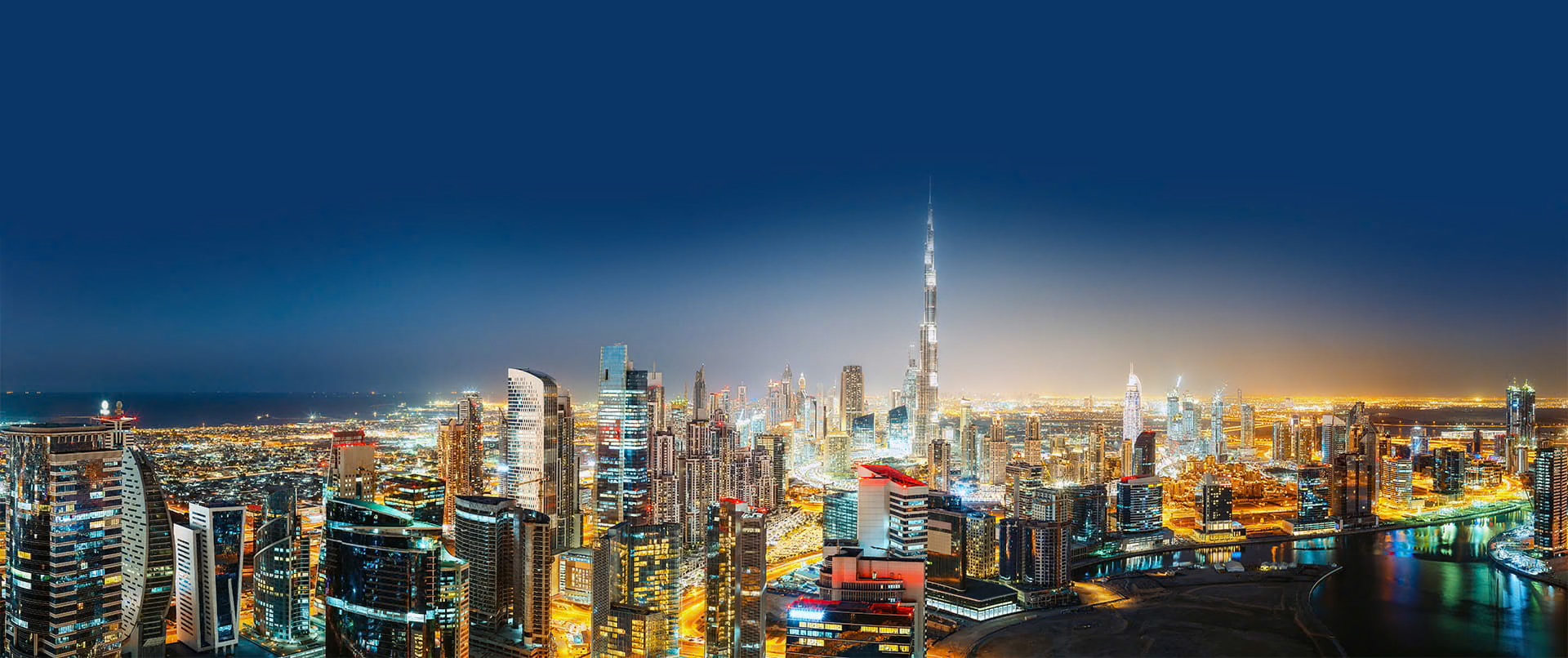
The Dubai real estate market reflected this dynamism with remarkable precision. According to Knight Frank UAE, Dubai recorded 435 residential sales above $10 million in 2024, surpassing the previous annual record and cementing the city’s position as the world’s leading market for ultra-luxury home transactions. On Palm Jumeirah, average transacted prices reached AED 7,305 per square foot by the end of 2024, a 15% year-on-year increase. The Marble Palace in Emirates Hills sold for AED 425 million in 2025, while a Jumeirah Bay Island villa changed hands for AED 330 million. By the end of Q3 2025, total residential transactions across Dubai exceeded AED 400 billion, up 15% on the same period in 2024.
These numbers describe a market that, at the headline level, has never been stronger. But headline data rarely captures what sophisticated wealth managers are actually thinking.
The Cracks Appear: A Region Reassessed
In June 2025, Israel launched large-scale strikes on Iranian military infrastructure, killing senior commanders and triggering a retaliatory wave of Iranian drone and missile attacks. Oil prices spiked by 9 to 14 percent to multi-month highs within days, triggering a global risk-off move as equity markets sold off and capital rotated into traditional safe havens. Airspace closures over parts of the Gulf became a temporary but viscerally real disruption for business travelers and private aviation.
The episode was significant not because it directly threatened Dubai’s physical security, but because it shattered a psychological assumption: that the Gulf’s geopolitical tensions would always remain peripheral, always managed, never structurally destabilising. Separately, intra-GCC competition between Riyadh and Abu Dhabi intensified over Yemen and Sudan, while the governance vacuum in post-war Gaza and Syria added layers of unpredictable regional friction.
For a family office whose principals hold wealth across multiple jurisdictions, these events trigger not panic but calculation. The question being asked in private banking offices from Geneva to Singapore is precise: what is the cost of being geographically concentrated in a region where the risk premium has just been repriced?
Dubai’s Real Estate Market: Strengths and Structural Vulnerabilities
It would be a serious analytical error to characterise Dubai’s property market as fragile. It is not. The city’s appeal rests on genuinely distinctive pillars: an absence of capital gains tax, income tax and inheritance tax; a residency-by-property scheme that offers Golden Visas to buyers above AED 2 million; a logistics and connectivity infrastructure that is arguably superior to any other city between Frankfurt and Singapore; and a rental market that delivers gross yields of 4 to 6 percent in prime locations, well ahead of Monaco’s more compressed returns.
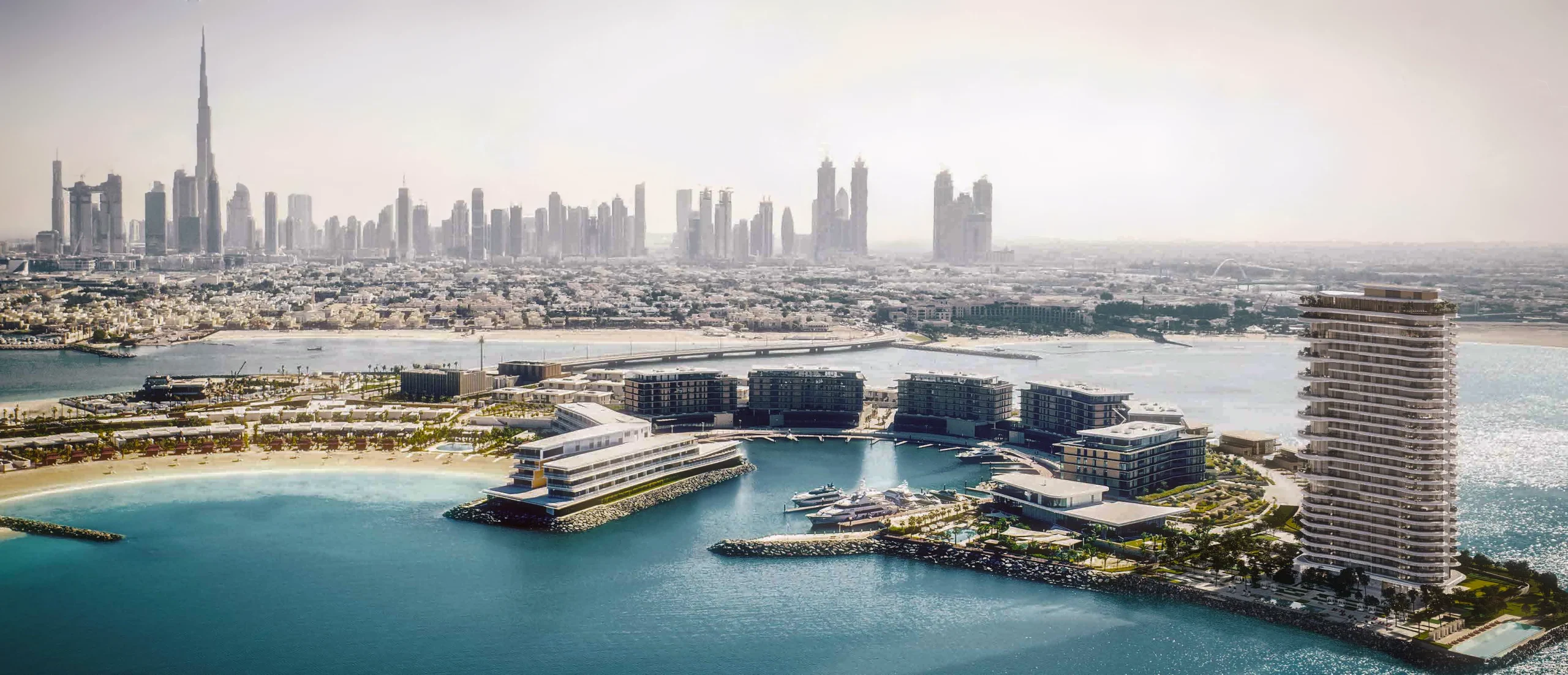
Yet a close reading of Dubai’s 2025 market data reveals structural vulnerabilities that long-term wealth managers are noting. Supply is expanding aggressively. Over 200,780 total transactions were recorded in 2025, with tens of thousands of new units coming to market annually. In prime zones, supply has historically been constrained enough to support prices, but the pace of development, particularly in off-plan, is testing that dynamic. Price growth, while positive, is showing signs of moderation in the mainstream market, with Knight Frank forecasting growth of around 1 percent by the end of 2026 in standard residential segments.
More consequentially, Dubai’s property prices, while high in absolute terms, remain sharply below Monaco’s on a per-square-metre basis. Palm Jumeirah’s most premium properties transact at around $6,000 per square metre in high-end zones, compared to Monaco’s average exceeding €57,000 per square metre. That gap reflects something important: Monaco does not compete with Dubai for volume, liquidity or yield. It competes on a fundamentally different value proposition.
The Monaco Proposition in 2026
Monaco is, in a sense, an anomaly that the modern world keeps validating. A sovereign principality of 2.02 square kilometres, a population of approximately 39,000, and a property stock so constrained that total resale transactions in 2025 reached a record €3.25 billion, according to the IMSEE Observatoire de l’Immobilier 2025. That figure represented a 49.1% increase on the prior year. In the Monte-Carlo quarter alone, resale values exceeded €1 billion for the first time in a single year.
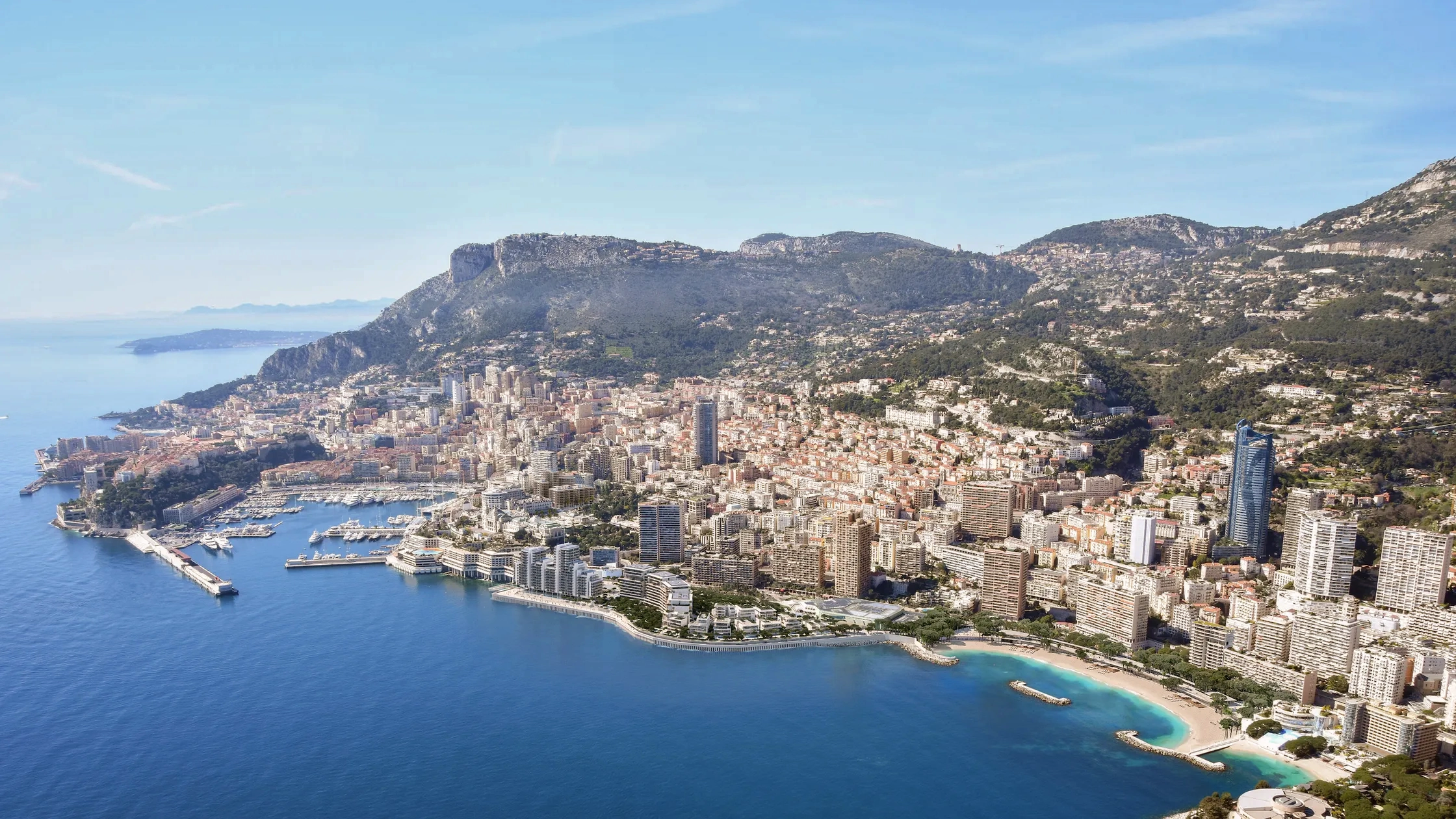
Aerial view of Monaco
What Monaco offers to a UHNWI family reassessing its geographic footprint is a specific and rare combination: European political stability, Swiss-level institutional security, zero personal income tax, zero capital gains tax, and genuine legal continuity rooted in centuries of constitutional governance. The Principality has not experienced civil unrest, a contested election, or a military threat in living memory. For a family whose business activities or nationality might attract scrutiny in certain jurisdictions, Monaco’s discretion and neutrality carry structural value that no fiscal calculation can fully capture.
The concept of geopolitical friction risk has become a formal variable in some family office portfolio frameworks in 2026. It refers to the probability that a given jurisdiction’s infrastructure could be disrupted by regional conflict: airspace closure, supply chain interruption, currency controls, or the visible presence of military activity. On this metric, Monaco’s position is essentially irreducible. It sits at the heart of Western Europe, flanked by France and Italy, protected by a bilateral defence agreement with France, and insulated from virtually every form of conventional security threat.
A Property Market Built on Scarcity
Monaco’s real estate market functions unlike any other on earth. There is no mechanism by which supply can meaningfully expand to absorb new demand. The Principality covers 2.02 square kilometres of largely built-out land. The only notable addition of supply in the past decade has been Mareterra, Monaco’s new six-hectare land reclamation district, inaugurated in 2024 and now partially occupied. With approximately 110 residential units across the entire development, even Mareterra is a marginal addition to a stock that numbers in the low thousands.
This supply constraint is not merely a historical condition. It is a structural feature that gives Monaco property its pricing resilience. When a UHNWI family acquires a flat in Monaco, they are acquiring a finite, irreplaceable asset in a jurisdiction that cannot replicate itself. The city-state’s residential resale market recorded price appreciation across the majority of its eight districts in 2025, with the Larvotto quarter recording a near-fivefold increase in total resale volume driven by new prime-position buildings entering the market for the first time.
Monaco vs Dubai: The Investor’s Comparison
Framing Monaco and Dubai as competitors is, in important respects, a category error. They serve different functions in a multi-jurisdictional wealth architecture. Dubai delivers operating base functionality: business infrastructure, talent access, connectivity, liquidity, and mid-to-high rental returns. Monaco delivers what structurally cannot be delivered in Dubai or anywhere else in the Gulf: a permanent European residence with sovereign-level security guarantees, zero personal taxation, and a resale market whose price floor has never collapsed in modern history.
That said, for families currently holding their primary residence in Dubai, the practical question is whether the calculus has shifted enough to justify establishing or strengthening a Monaco position. On at least three dimensions, 2025 and 2026 data suggest it has.
First, the geopolitical risk premium in the Gulf has risen. Not to the point of flight, but to the point where families who previously felt no urgency about a European anchor are now acting on it. Second, Monaco’s market is at a cyclical moment of strong institutional demand, with international buyers competing for a stock that will not grow. Waiting for a better entry point in Monaco has historically been a losing strategy. Third, the tax environment in several key jurisdictions that have historically supplied Dubai with UHNW residents, including the United Kingdom and several European states, has become meaningfully less favourable in recent years, pushing more internationally mobile families toward permanent residency structures anchored in Monaco. Our analysis of where global wealth is moving in 2025 and 2026 examines this trend in detail.
Residency in Monaco: The Practical Path
Monaco residency is available to any non-Monegasque national who can demonstrate financial self-sufficiency, maintain a primary residence in the Principality, and pass the standard due diligence process administered by the Section des Résidents of the Direction de la Sûreté Publique. There is no minimum property value requirement for residency itself, though the practical reality of Monaco’s rental market means that a furnished apartment, typically requiring a security deposit of three to four months’ rent and rent paid quarterly in advance, represents a significant initial commitment.
The residency card, valid for one year initially and renewable, confers immediate access to Monaco’s social environment, healthcare system, and the practical benefits of having a formally recognised domicile in Europe. For UHNWI families whose citizenship or business interests might complicate long-term residence in France, Italy or other EU states, Monaco offers a path to a recognised European address that carries no political conditions, no wealth reporting to a foreign government, and no exposure to the EU’s cross-border wealth sharing frameworks.
What the Off-Market Activity Is Signalling
Official IMSEE data captures only registered resale transactions. The off-market layer of Monaco’s property market, which accounts for a significant proportion of the highest-value transfers, operates beyond formal reporting channels and is accessible only through established agency relationships. What agencies active in this segment are observing in 2025 and early 2026 is an increase in discreet acquisition mandates from Middle Eastern-connected wealth, including families whose primary operating base is Dubai, Abu Dhabi or Riyadh, but who are now formalising a longstanding intention to establish a permanent European presence.
The profile of these buyers differs from the stereotypical trophy asset purchaser. They are often seeking properties in the €5 million to €25 million range, with a preference for larger flats rather than ultra-prime penthouses, practical layouts suitable for family use, and proximity to international schools and private medical facilities. You can explore the property opportunities suited to this profile in our section on Monaco’s rental and investment market.
The Broader Context: A New Category of Wealth Decision
What is happening between Dubai and Monaco is not a simple migration story. It is an example of a more sophisticated wealth management response to a world where geopolitical risk has become an asset allocation variable as relevant as interest rates or currency exposure. Knight Frank estimates there are now 626,619 individuals globally with net assets exceeding $30 million. That cohort is increasingly managing not just financial portfolios but jurisdictional portfolios, distributing residence, assets and legal identity across multiple stable sovereign environments.
Monaco, with its unique combination of European legitimacy, fiscal neutrality, and physical scarcity, fills a specific and irreplaceable slot in that architecture. It is not a substitute for Dubai’s dynamism, nor is it intended to be. It is the anchor point, the address that holds when others are tested.
The families moving assets and attention toward Monaco are not fleeing Dubai. They are completing a portfolio that Dubai’s own strengths, and its new vulnerabilities, have made them recognise as incomplete.
Conclusion: The New Wealth Geography
Dubai will remain one of the world’s preeminent wealth hubs. Its structural advantages, a business-friendly sovereign government, a globally mobile population, and a proven ability to reinvent its offer, are not in question. But for UHNWI families whose wealth architecture requires a permanent European foundation with sovereign-level security and tax neutrality, Monaco is no longer a luxury aspiration. It is a rational necessity.
The data from Monaco’s own market confirms this shift is already priced in. Record resale volumes, sub-2% vacancy rates in prime residential stock, and an off-market pipeline that remains consistently active tell the story more clearly than any geopolitical forecast. The question for UHNWI families based in Dubai is not whether Monaco belongs in their portfolio. For a growing number, the question is simply how quickly they can act.
For further analysis of the investment case and price dynamics in Monaco’s market, read our detailed reports on rental yields in Monaco and the Principality’s record-breaking 2025 resale market.
Acquire in Monaco with Baldo Realty Group
Baldo Realty Group specialises in discreet, off-market property acquisition for ultra-high-net-worth clients seeking a permanent presence in Monaco. Whether you are establishing a first European residence or expanding an existing portfolio, our team provides unrivalled access to the Principality’s most sought-after properties.
Sources
- IMSEE, Observatoire de l’Immobilier 2025 (Principauté de Monaco, February 2026)
- Knight Frank UAE, Dubai Luxury Residential Market 2024 Annual Report
- SpecialEurasia, Middle East Geopolitical Risk 2026 (December 2025)
- Map Homes Real Estate, Geopolitical Instability and Dubai’s Real Estate Market (January 2026)
- Empaxis, Family Offices in the Middle East: Outlook and Services 2025
- Petrini Exclusive Real Estate, Middle East Instability: Dubai Fortunes Look to Monaco
- Arabian Business, Palm Jumeirah Villa Sold for $44M (September 2025)
- The Luxury Playbook, Dubai Real Estate Market Overview and Forecast 2025 & 2026