Post 7 min read
This guide explains how to buy property in Monaco, from the first brief to the signature of the final deed. It sets out the duties payable at each stage and the ownership structures that change them. It also covers the rules on older buildings, which catch many newcomers by surprise.
Monaco sets no nationality conditions on ownership. Individuals and companies from anywhere in the world acquire freehold property on exactly the terms that apply to a Monegasque national, and no prior authorisation is required, with one exception explained below.
Ownership does not, on its own, grant residency. It does satisfy the accommodation requirement at the centre of every residency application. Buyers who intend to settle should read our guide to becoming a Monaco resident alongside the real-world residency timeline.
Supply is the permanent constraint in a territory of barely two square kilometres. Buyers who arrive prepared can move the moment the right residence appears, and our analysis of the 2025 resale market sets out the latest transaction data.
Every acquisition passes through the same eight stages. Select a stage to open the detail.
A large share of Monaco’s finest residences changes hands without a public listing. An agent with genuine off-market access turns a search across the Principality’s districts into a shortlist worth your time.
Our guides to off-market property in Monaco and buying without public listings explain how that access works in practice.
Decide who will own the property before you make an offer. The ownership vehicle determines the duty rate, and its name must appear on the preliminary agreement.
If you intend to borrow, open the conversation with a Monaco bank early. Lenders in the Principality assess the wider banking relationship, and approval takes time.
Agents, notaries and banks in Monaco are bound by the anti-money-laundering obligations of Law No. 1.362, supervised by the Autorité Monégasque de Sécurité Financière. Expect to provide identity documents, proof of address and documented evidence of the source of funds.
Companies add their articles of association, a recent register extract and a declaration of beneficial ownership, apostilled where required. A complete file prevents delays at the notary’s desk.
The apartment is only half the story. Request the documents that reveal the condition and governance of the building as a whole:
Our Monaco due diligence guide covers each document in depth.
The offer states the price, the timetable and any conditions, such as mortgage approval. Under Monegasque civil law, a sale is formed once the parties agree on the property and the price.
An offer countersigned by the seller therefore commits both sides. Every condition you need must appear in the offer itself.
The notary drafts the compromis de vente, which records the conditions precedent and the completion date. On signature, you pay a deposit of 10% of the price into the notary’s escrow account.
Notaries in Monaco are public officers who act for the transaction as a whole. Our article on the role of notaries in Monaco explains what that means for a buyer.
The interval between preliminary agreement and final deed commonly runs two to three months. During this period the bank issues its loan offer and, for older buildings, the State decides whether to exercise its right of pre-emption.
If a condition fails within the agreed timeframe, the preliminary agreement governs the return of the deposit.
The acte authentique is signed before a Monegasque notary, in person or through a notarised power of attorney. The balance of the price, the duties and the fees all pass through the notary’s account.
The deed is directly enforceable without recourse to a court. Registration follows, and the keys are yours.
For a resale apartment bought in your own name, acquisition costs come to 6.25% of the price. That figure combines a registration duty of 4.75% with notary fees of about 1.5%. The duty rate rose from 4.5% under Law No. 1.548, applying to deeds registered from 1 October 2023.
The buyer’s agency fee comes on top. Under the scale published by the Chambre Immobilière Monégasque, it stands at 3% plus 20% VAT, or 3.6% of the price. A conventional purchase therefore costs close to 10% above the agreed price.
The structure you buy through changes the figure considerably, as the table shows.
| Buyer profile | Registration duty | Notary fees | Total before agency fee |
|---|---|---|---|
| Individual, or Monegasque SCI meeting the transparency criteria | 4.75% | about 1.5% | about 6.25% |
| Purchase of shares in a Monegasque SCI holding the property | 4.75% of the property value | notary or lawyer fees | from 4.75% |
| Non-transparent company represented by an accredited Monegasque tax agent | 7.5% | about 1.5% | about 9% |
| Non-transparent company without an accredited tax agent | 10% | about 1.5% | about 11.5% |
| New build or off-plan (VEFA), VAT included in the developer’s price | about 1% | about 1.5% | about 2.5% |
| Property dealer regime (professionals, resale within four years) | none if resold in time | about 1.5% | about 1.5% |
| Life annuity purchase (viager) | 4.75% of the capital plus ten years of annuities | about 1.5% | about 6.25% |
Financing with a mortgage adds a registration duty of roughly 0.92% of the loan amount. Monaco levies no annual property tax, so once the deed is signed your recurring outgoings are limited to co-ownership charges, insurance and upkeep. Our full breakdown of buying costs examines each line.
Set the price and choose how you will buy. The figures update as you go.
Indicative figures based on the rates in the table above. Notary fees follow a sliding scale, and your notary confirms the exact amount before signature. Agency terms on new developments can differ.
Most private buyers acquire in their own name or through a Monegasque société civile immobilière (SCI). An SCI whose partners are identified individuals counts as transparent and pays the standard 4.75%. It also simplifies shared family ownership and the later transfer of shares.
Foreign and offshore companies remain permitted, at a cost. For a company that fails the transparency test, duty rises to 7.5% when an accredited Monegasque tax agent represents it, and to 10% when none does. Our guide to SCI, SCP and SAM structures compares the options, while our piece on Monaco property as a generational asset turns to succession.
One category of property follows its own rules, and it deserves attention before any offer on an older building.
Buildings completed before 1947
Apartments in residential buildings completed before 1 September 1947 fall under Law No. 1.235. Before any sale, the owner or the notary must file a declaration of intent with the Minister of State. The State then has one month to acquire the property itself, at the declared price and on the declared terms.
Where the apartment is let, the sitting tenant holds a secondary right of pre-emption once the State declines. These units also carry letting restrictions. Tenants must come from protected categories, including Monegasque nationals and long-standing residents, and rents are set by reference to comparable properties. Anyone planning a rental investment should confirm the building’s status before making an offer.
The notary registers the deed and the transfer of ownership, then provides your copy of the title. Keep it close: the title deed serves as proof of accommodation in any residency application.
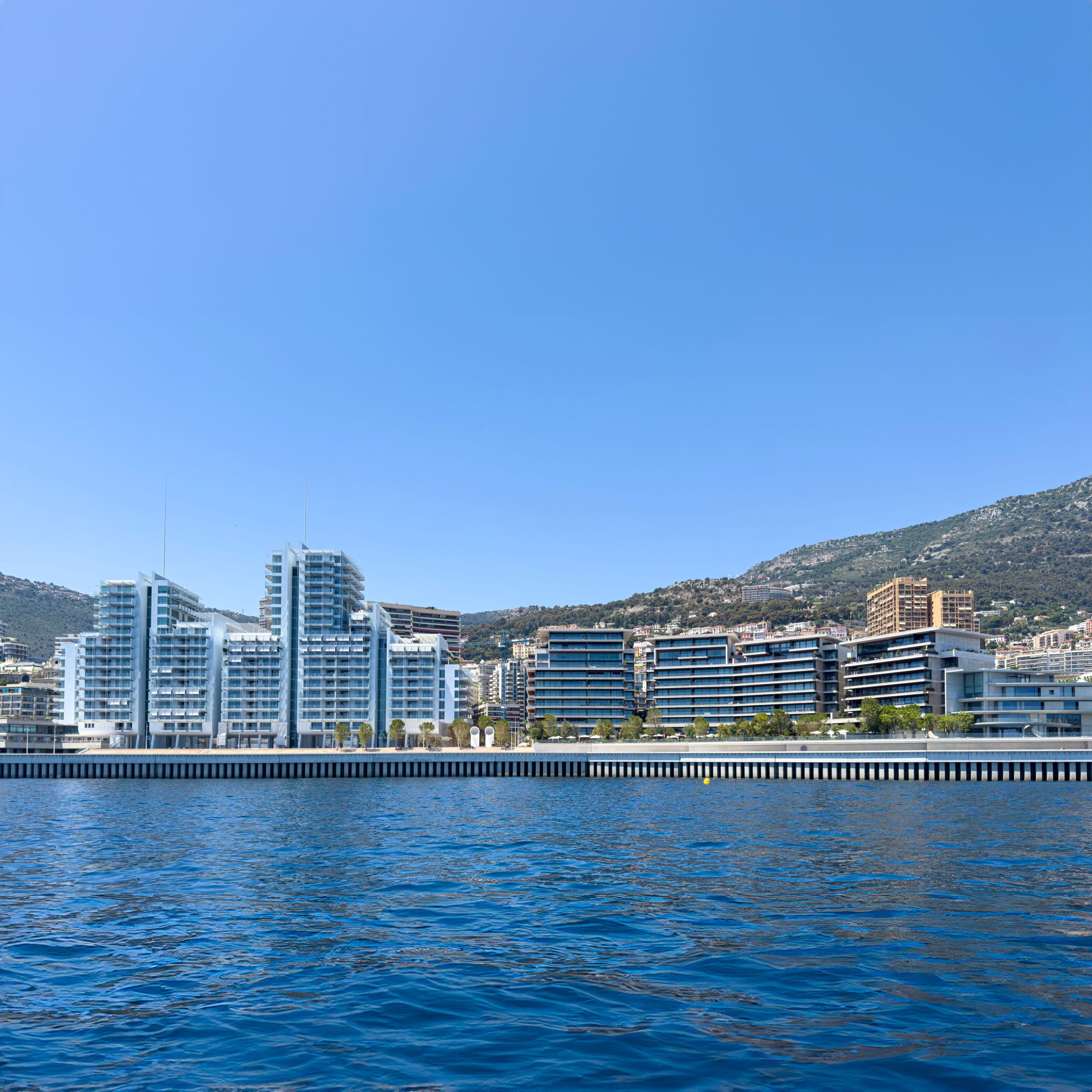
New developments follow a different rhythm, with staged payments tied to construction progress. Buyers considering the Principality’s newest district will find the specifics in our Mareterra buyer’s briefing.
Baldo Realty Group represents buyers in every district of the Principality, with access to residences that never reach a public portal. Arrange a confidential consultation to discuss your brief, or browse our current selection.